Social Sculpture II (2025), Performance & Interactive Installation; 1h 40min; clothing fabrics, yarn strings, color-filtered lights, pocket camera, eyeshadow compact, notepad, pens, UV pens, fake flowers, holographic foil sheets, scissors, mirror pieces; Toronto, Canada
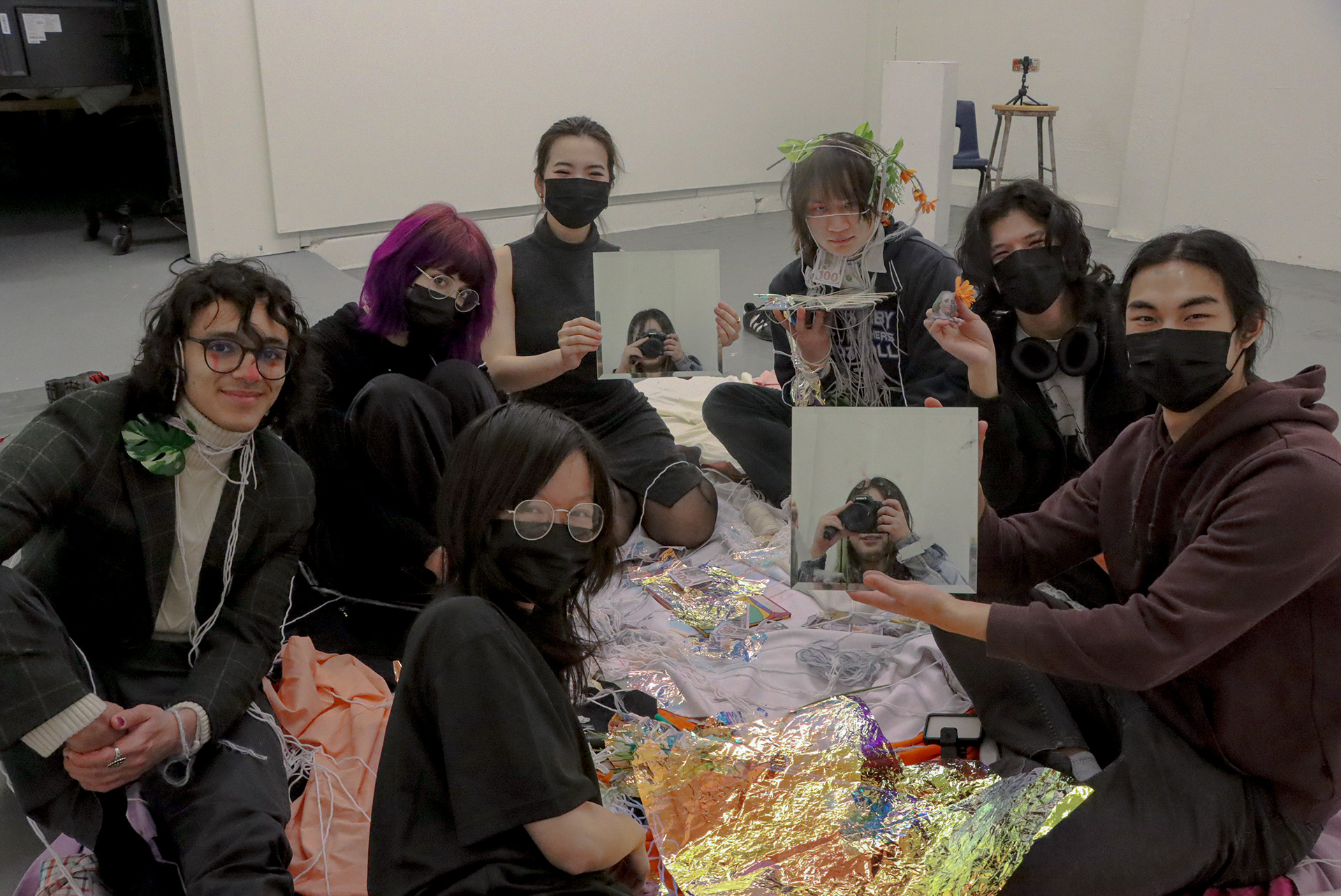

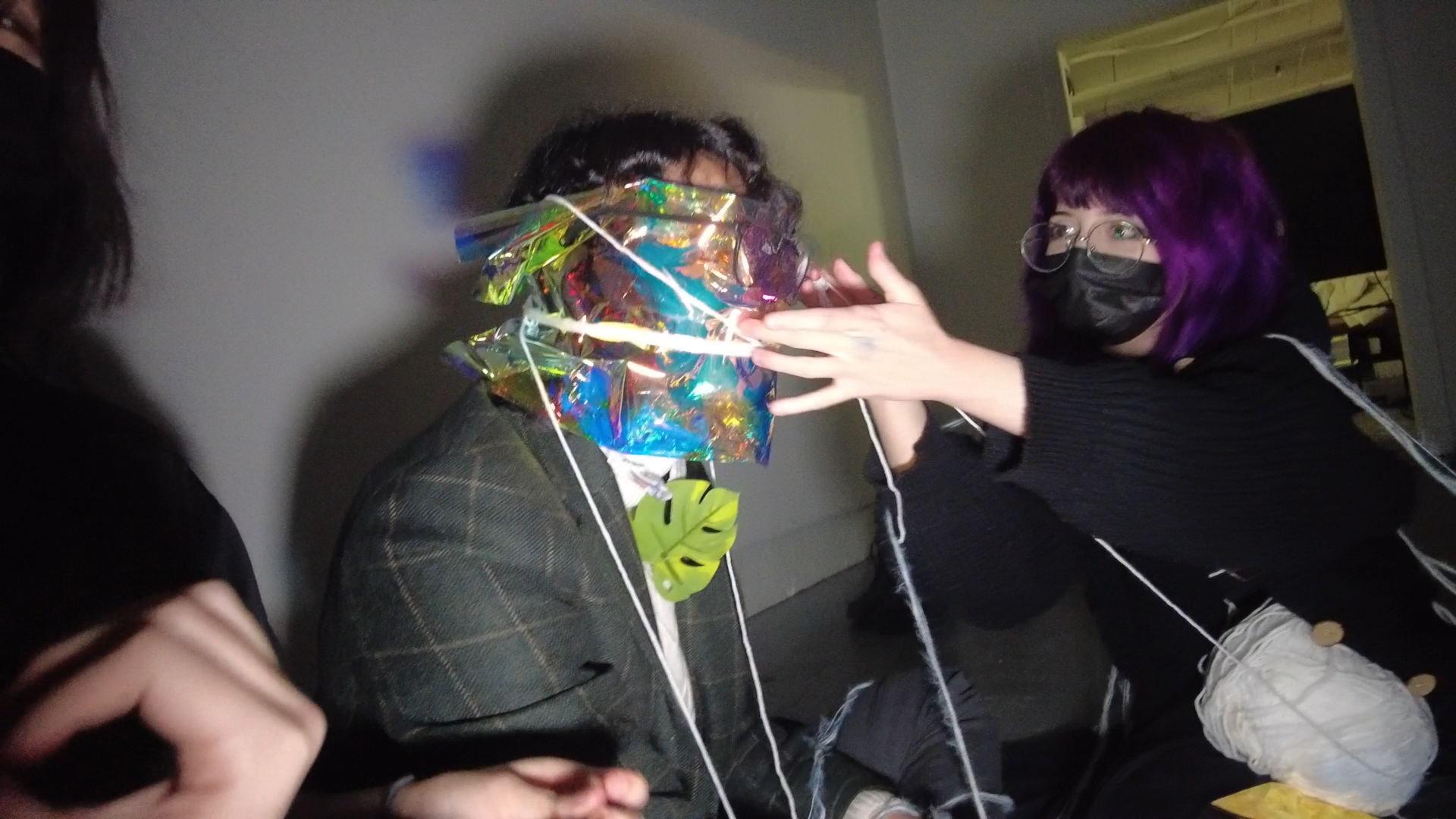
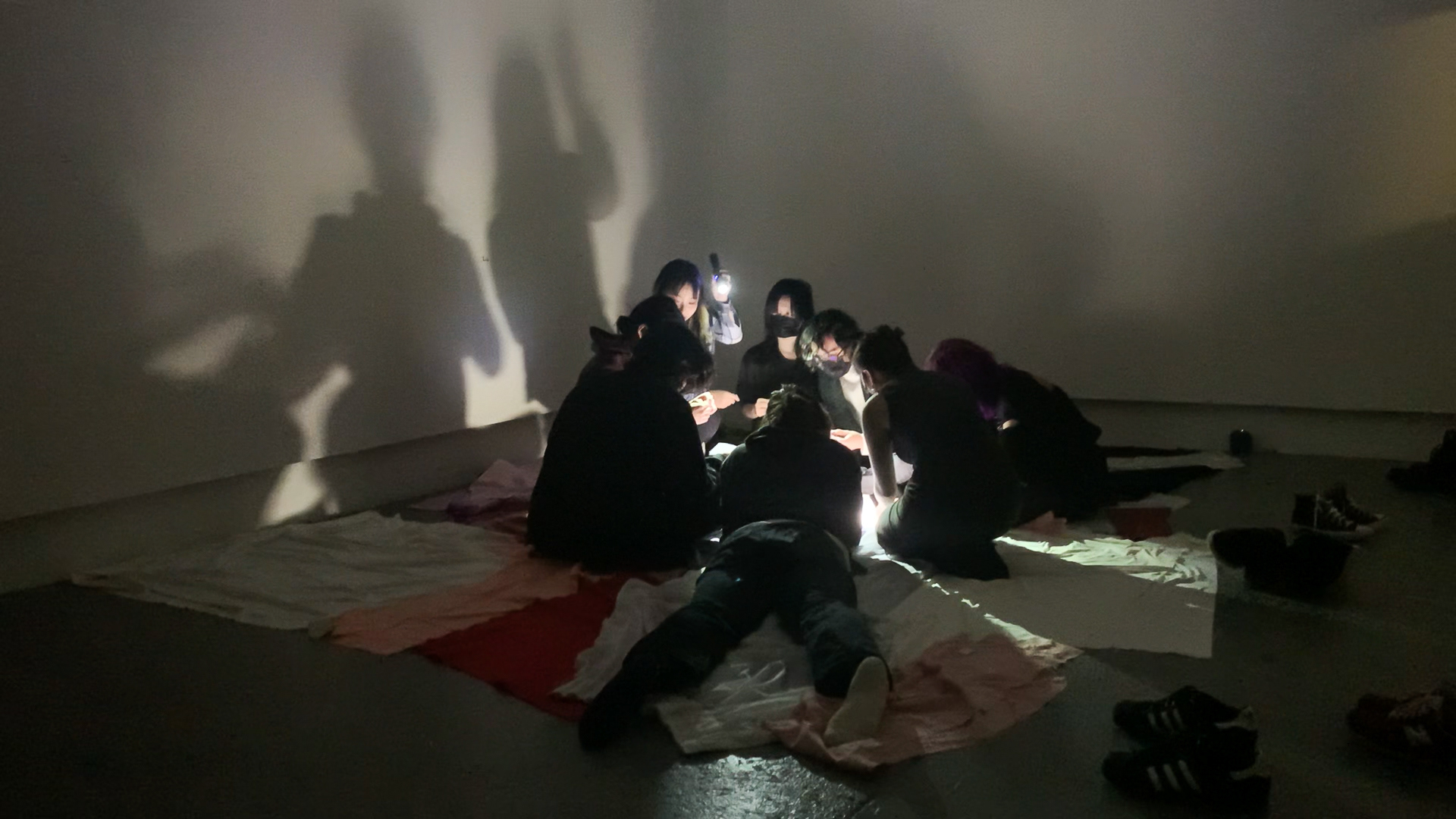
This work invites the participants to sit in a circle, with the only instruction that verbal communication is forbidden. The artist sequentially presents a series of objects to the participants. By engaging with these objects functioning as "social agents", this work explores non-verbal, decentralized modes of interaction to revolt against the sense of alienation individuals experience under neoliberal capitalism.
Specifically, Social Sculpture raises questions to both participants and the world: if language inevitably inherits the systemically rigid and vertical nature of hierarchical social structures, thereby perpetuating such alienation, how might physical objects serve as "social agents" to reconfigure relational possibilities among people? Can we cultivate non-verbal, decentralized interaction as resistance?
Full documentation video (1h48mins): https://www.youtube.com/watch?v=7nfhLBgWQPU
Edited documentation video (6mins): https://youtu.be/PTjdDf7-uK8
Screenshots from the pocket camera & the DSLR camera aside, in the chonological order they were taken:

Introduction of flashlight
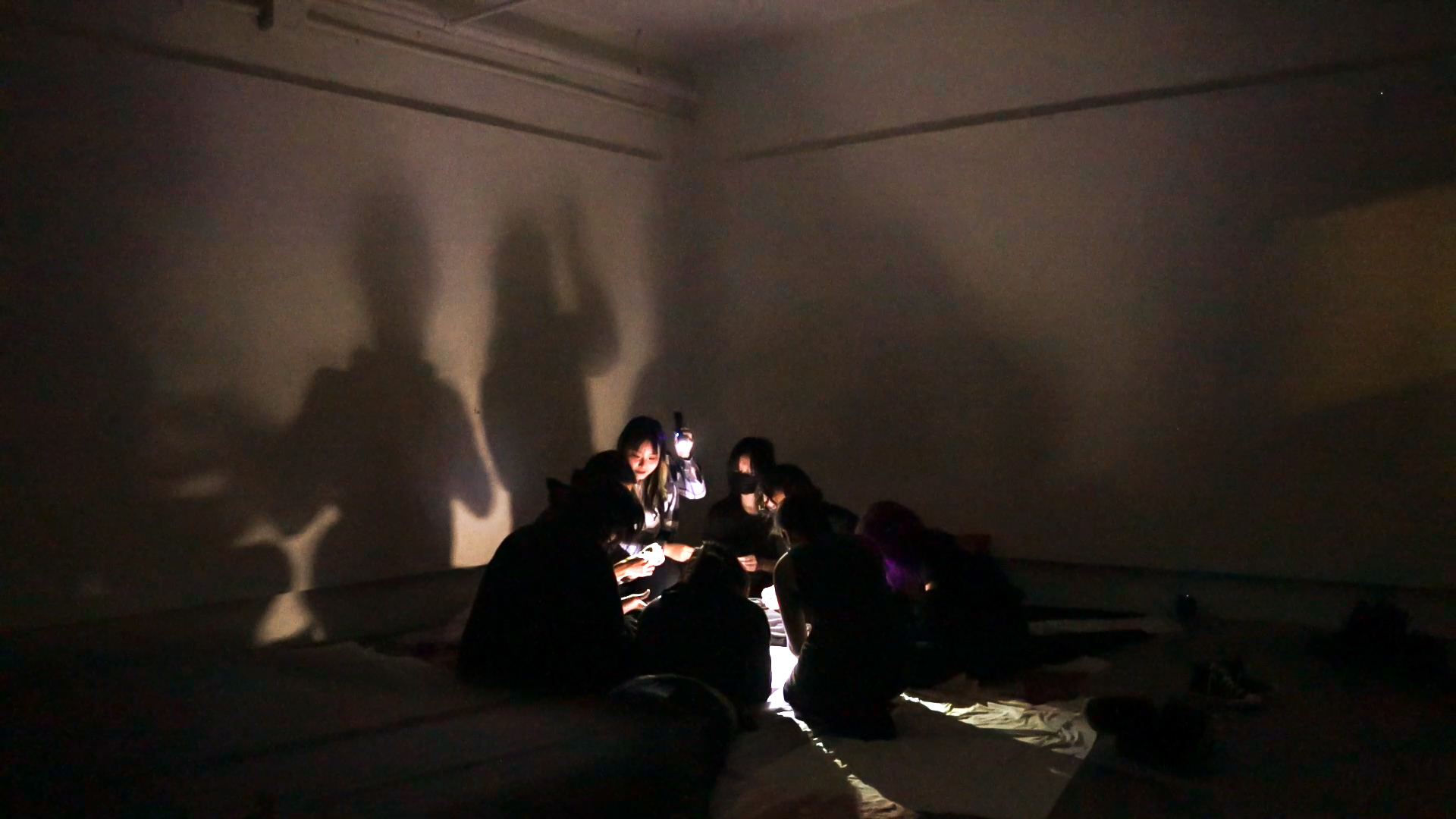
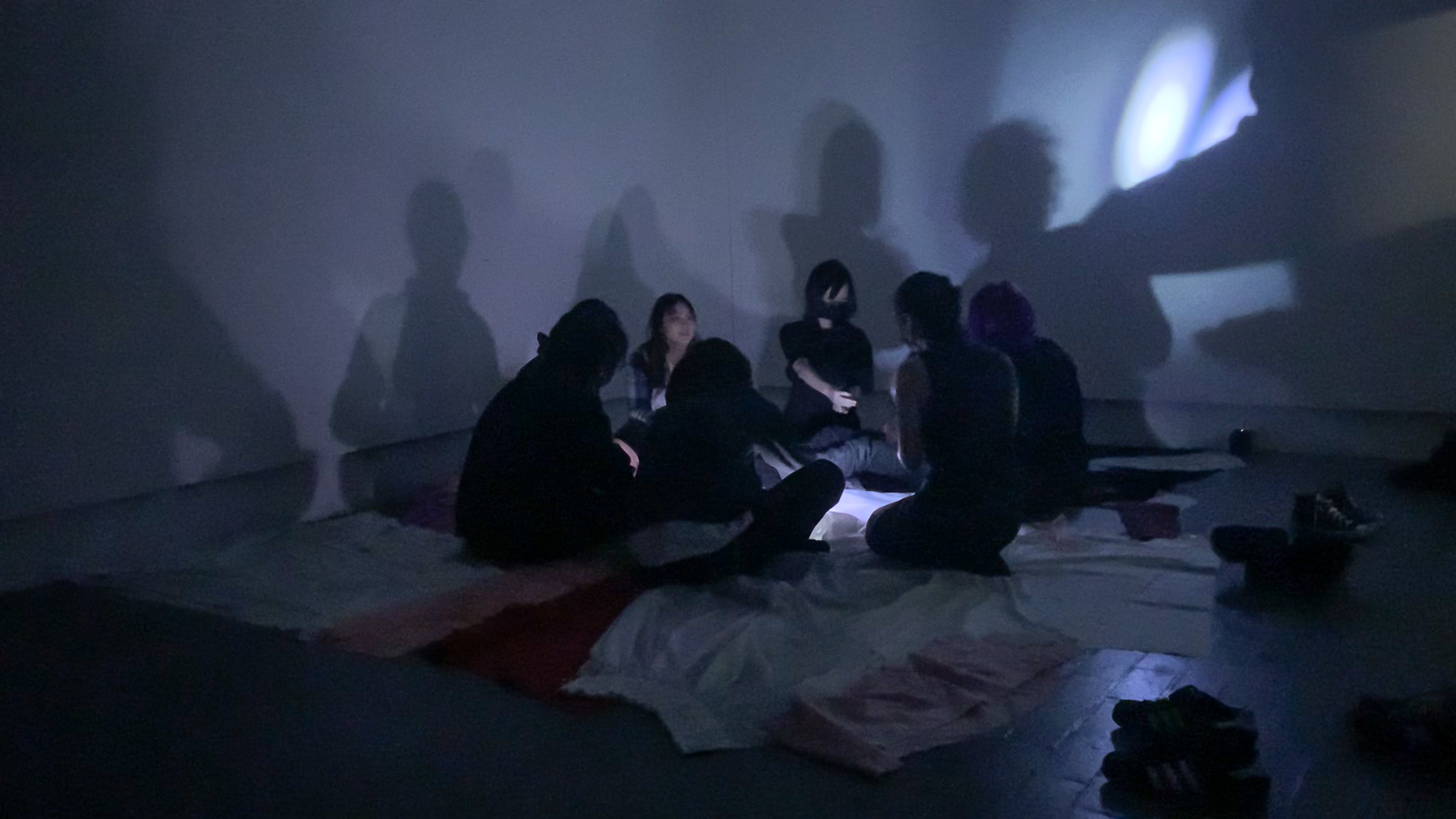

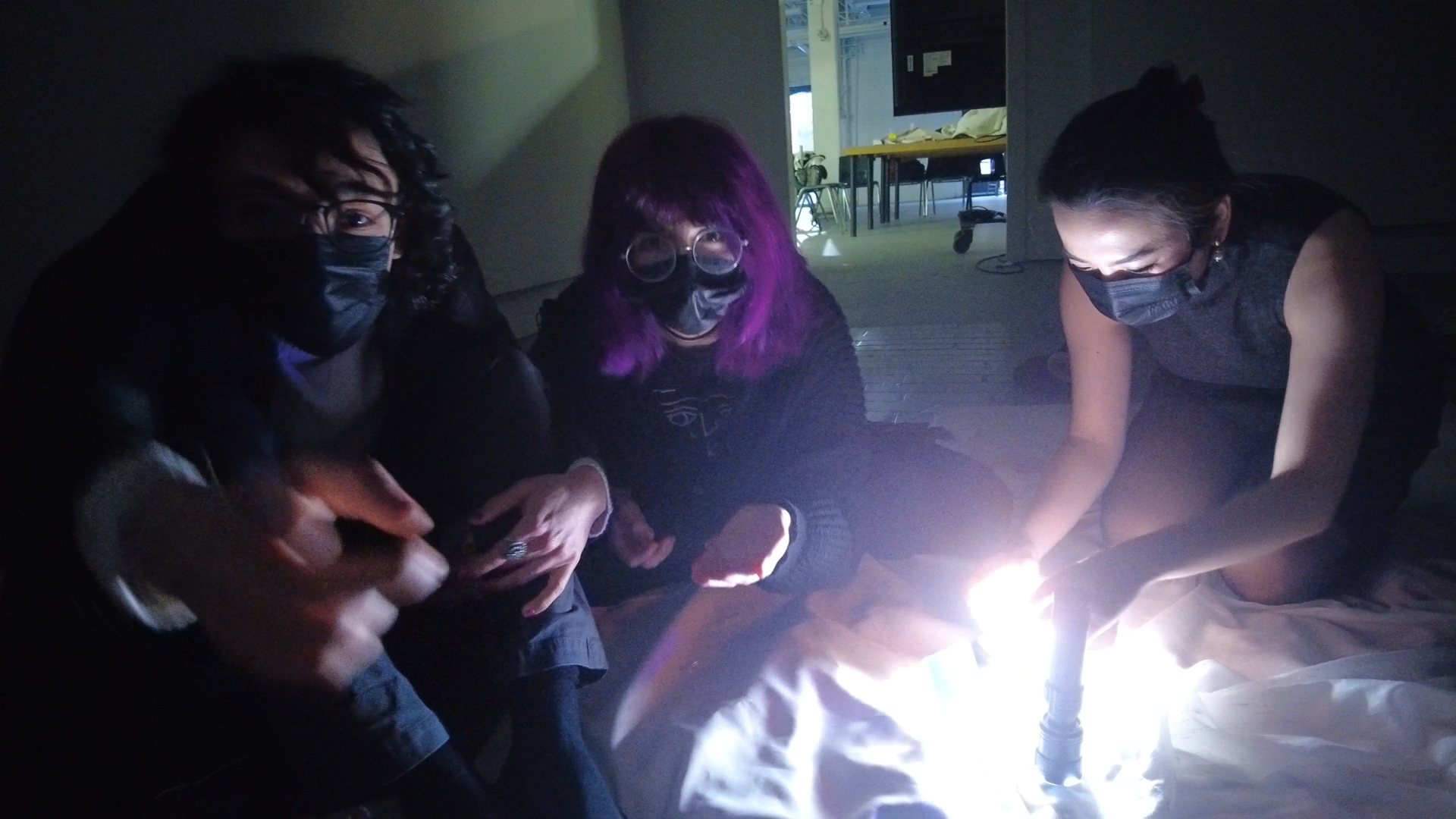
Introduction of the pocket camera
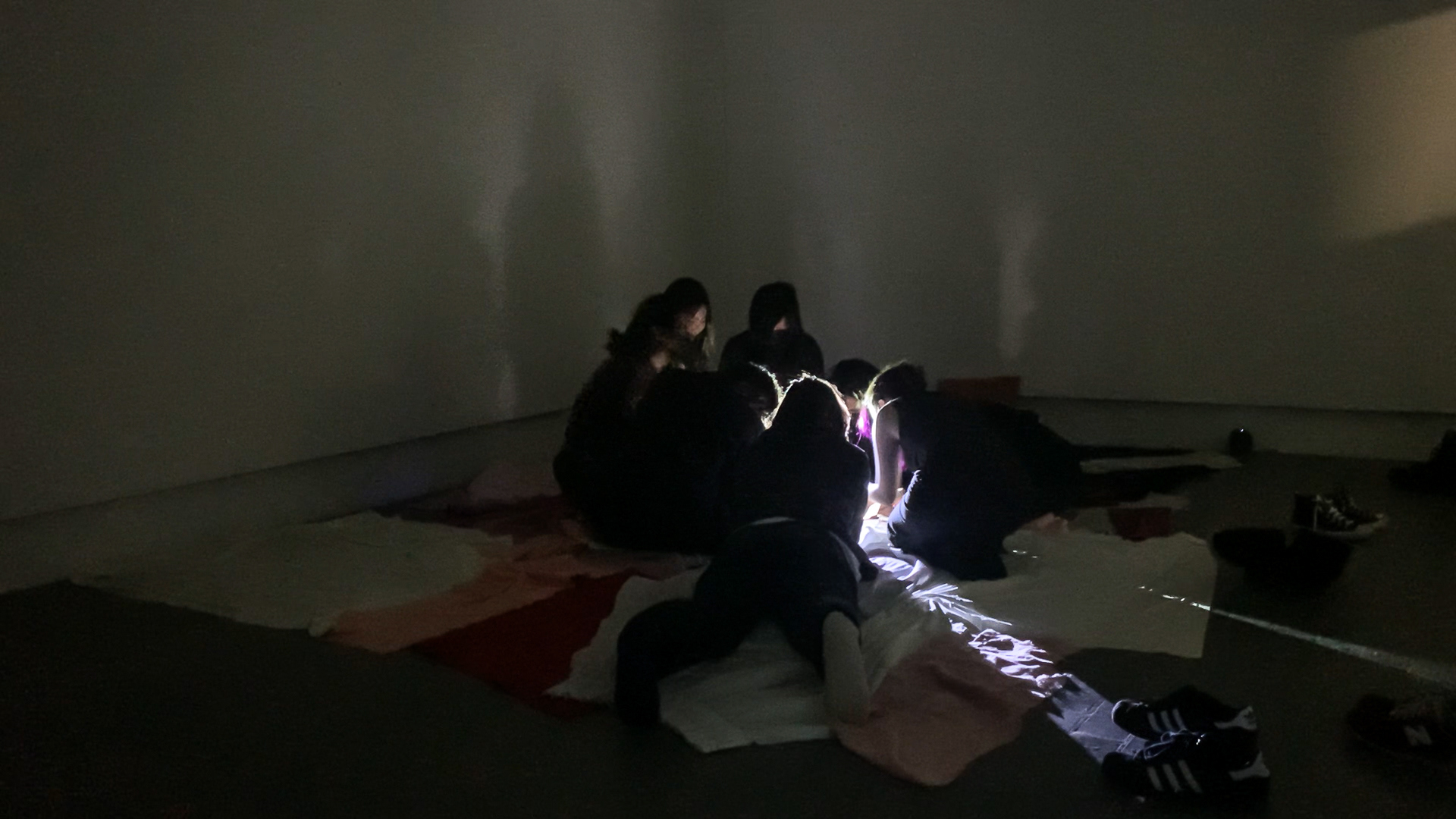
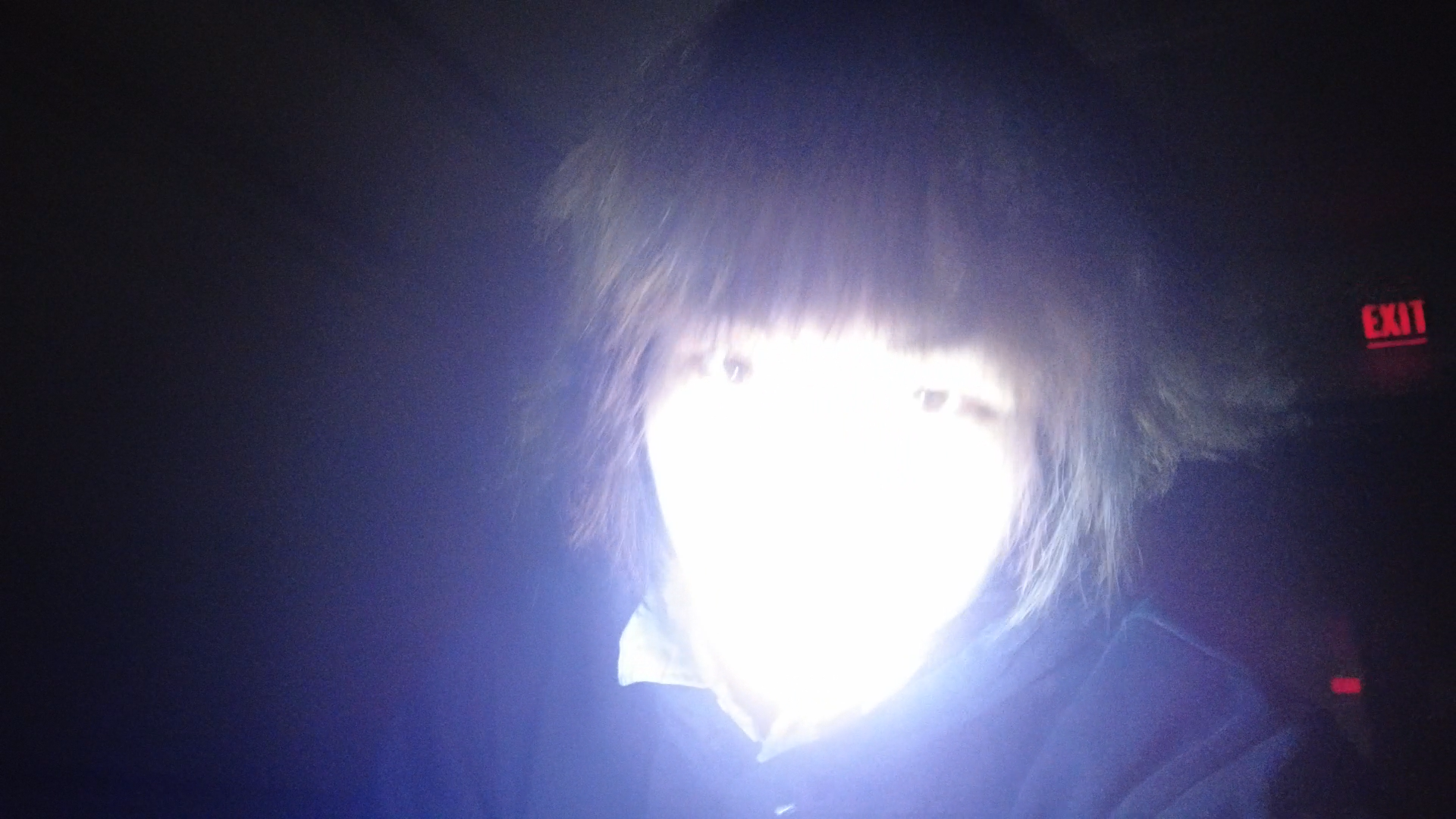

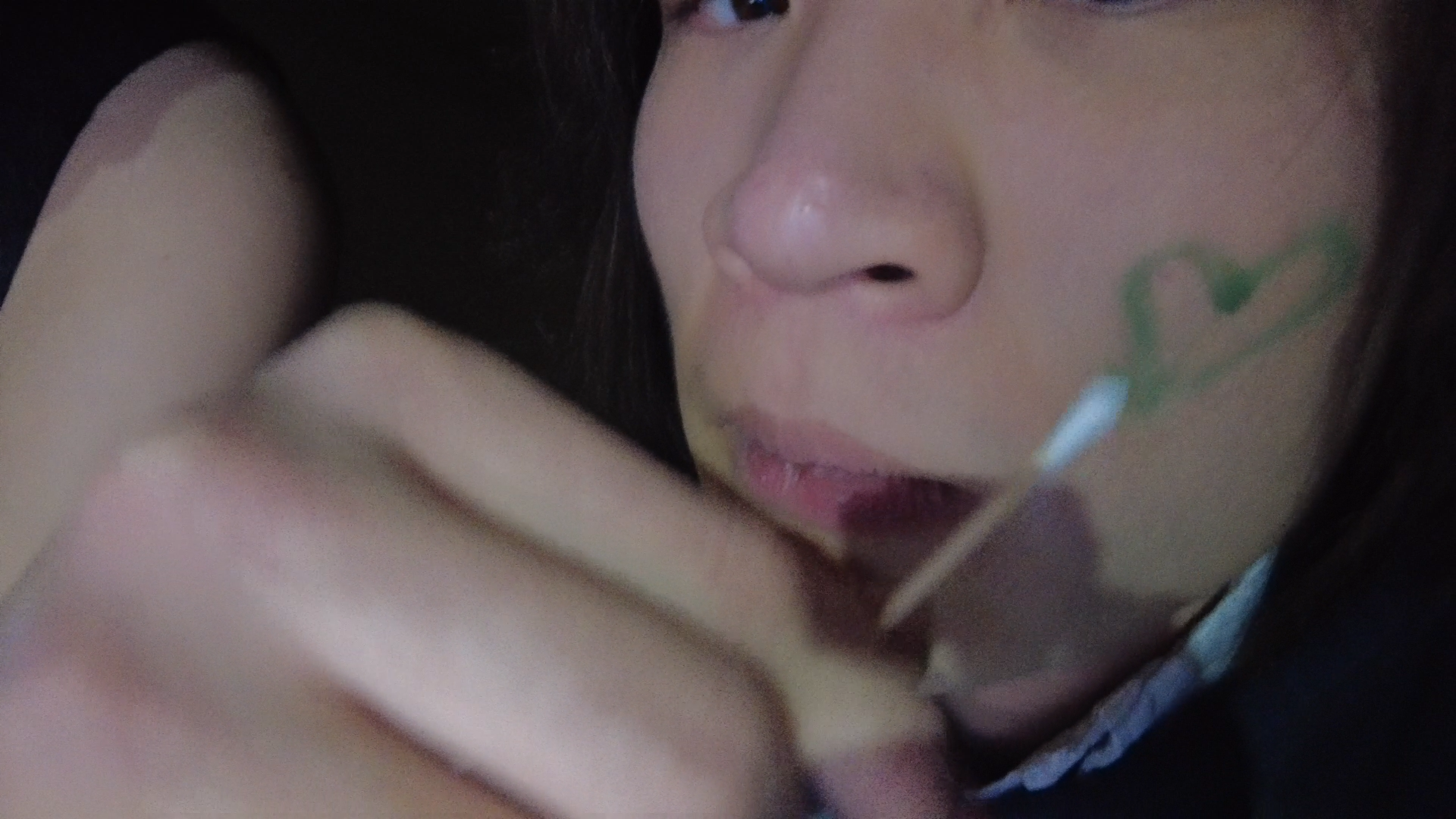
Introduction of eyeshadow compact
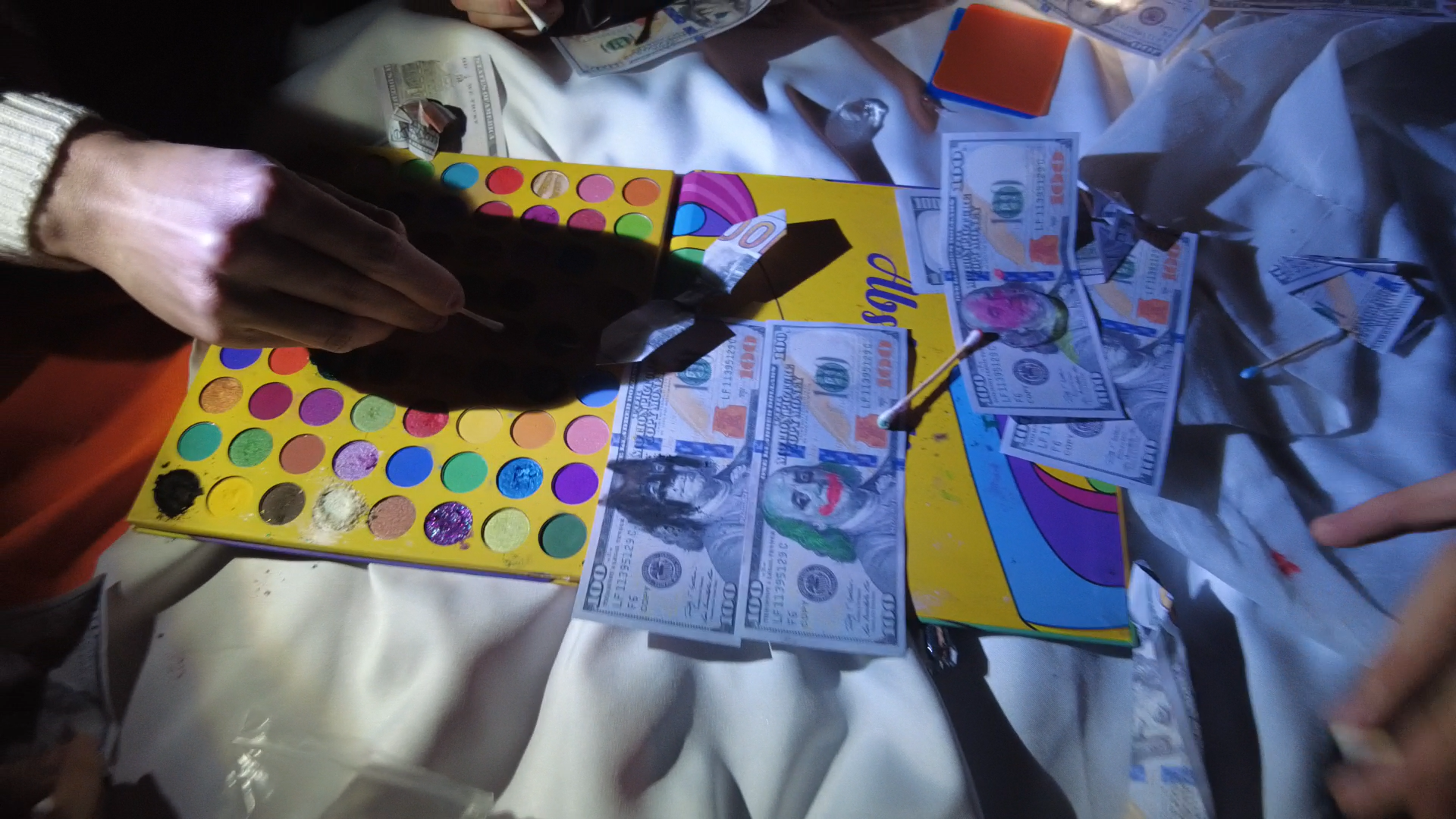
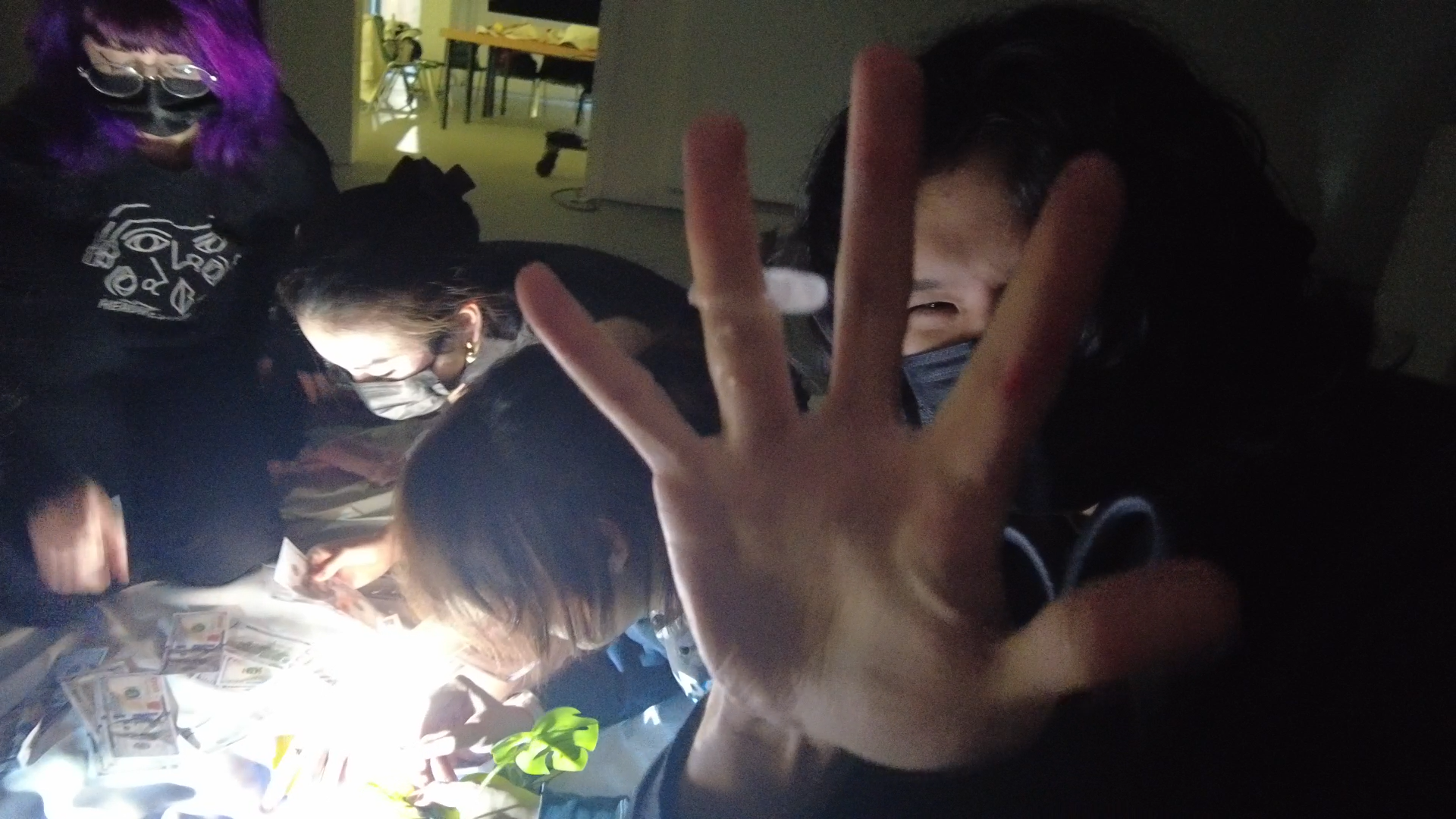
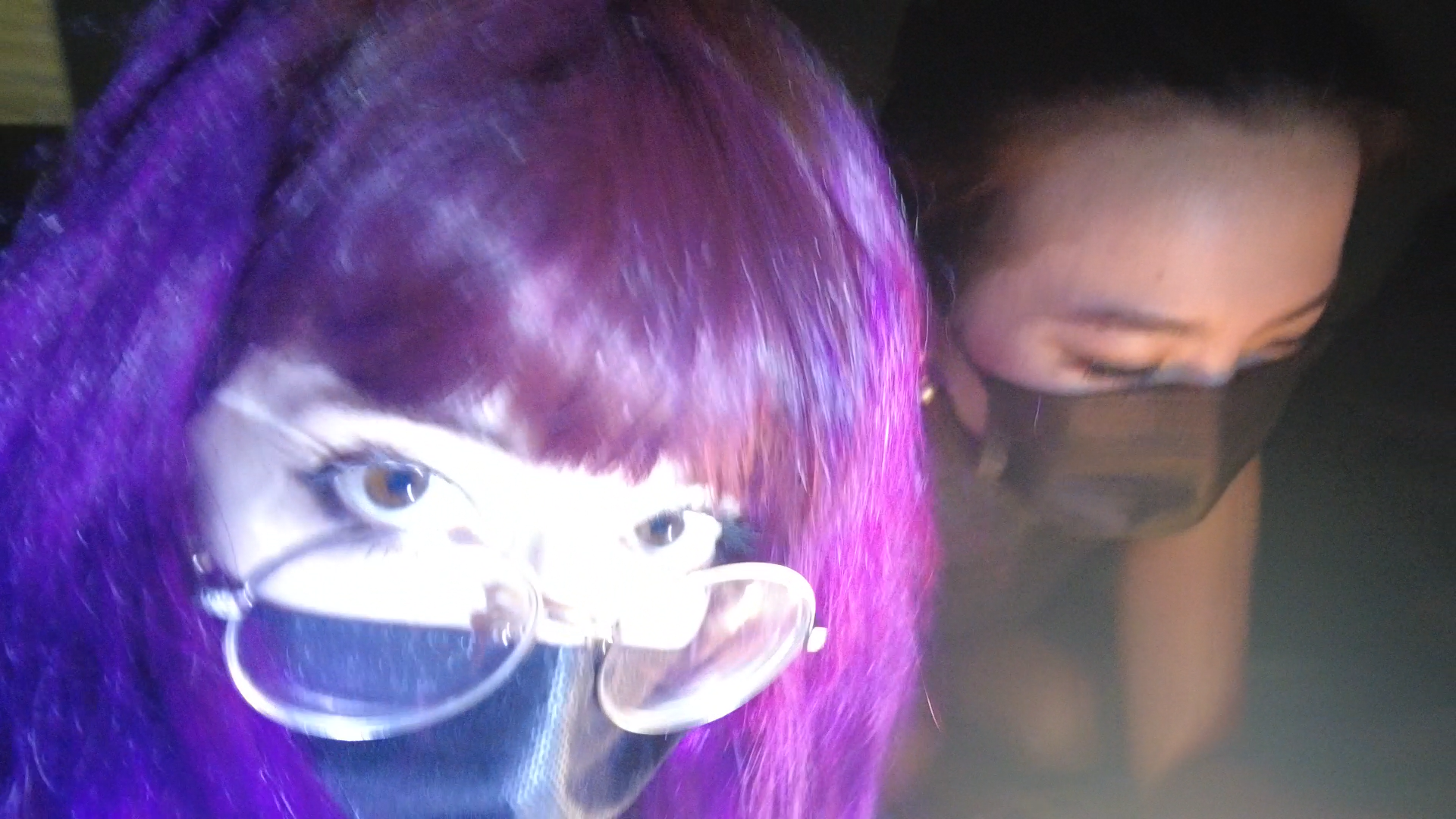
(from the pocket camera)

(from the pocket camera)
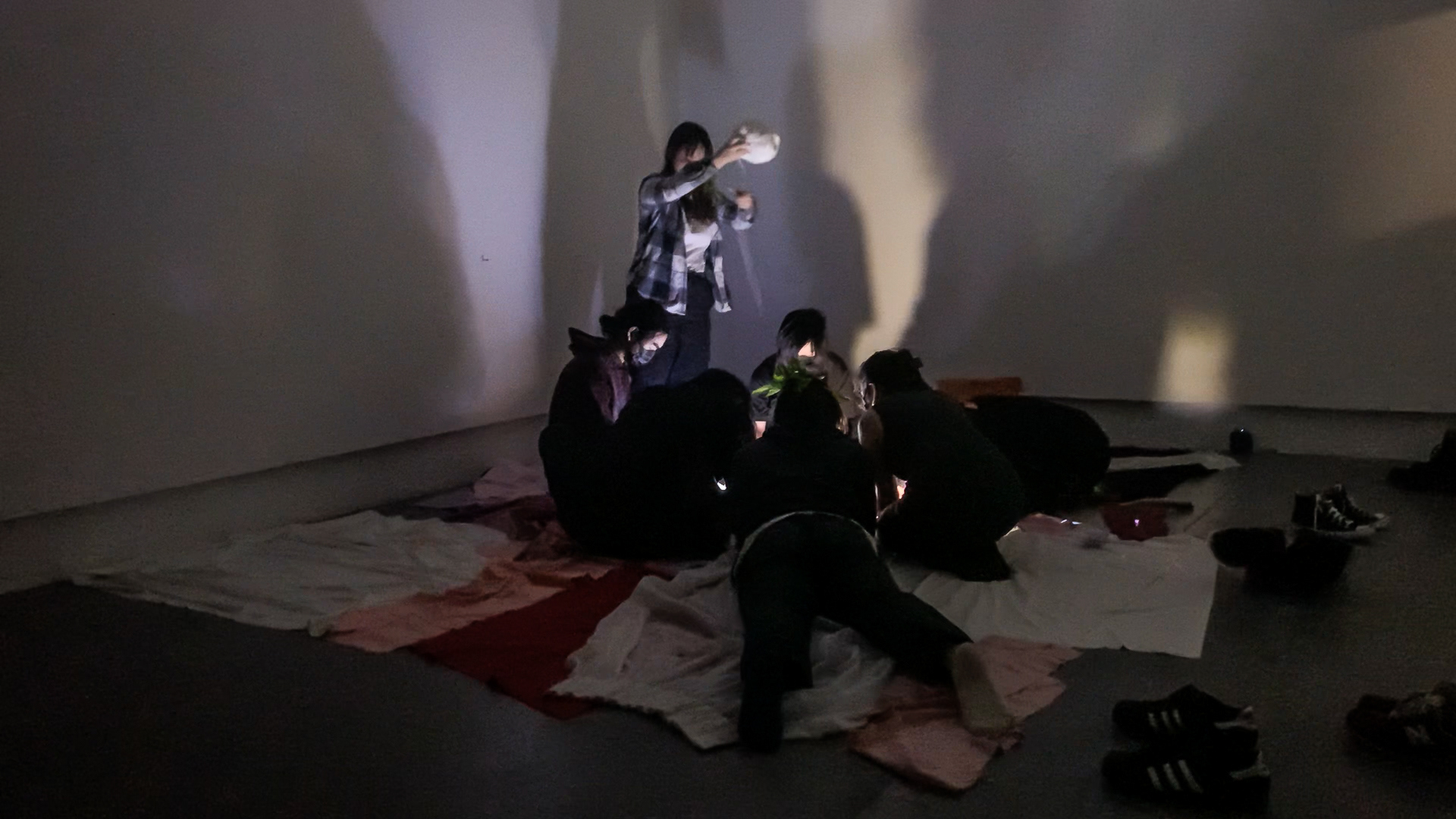
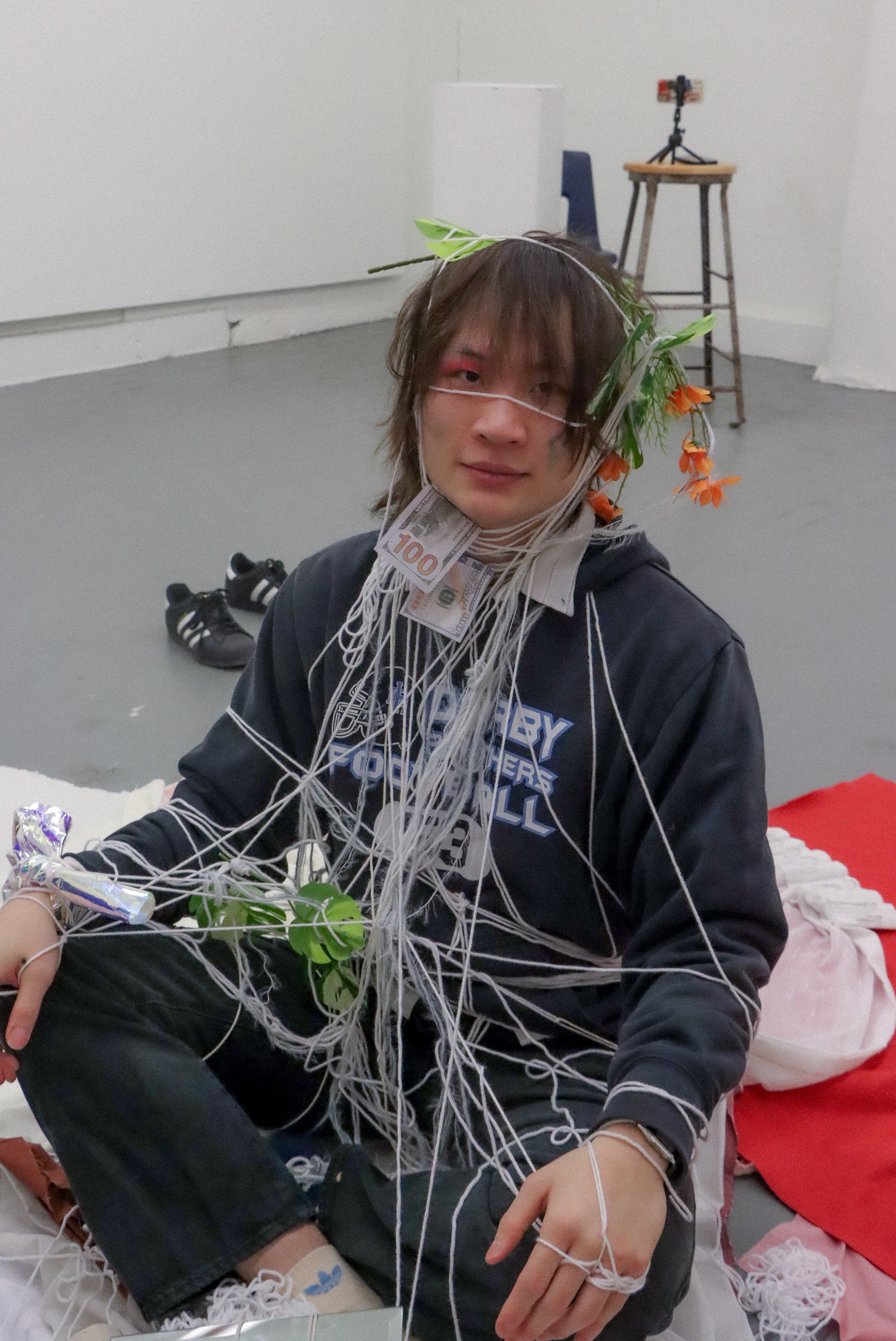
wrapping yarn
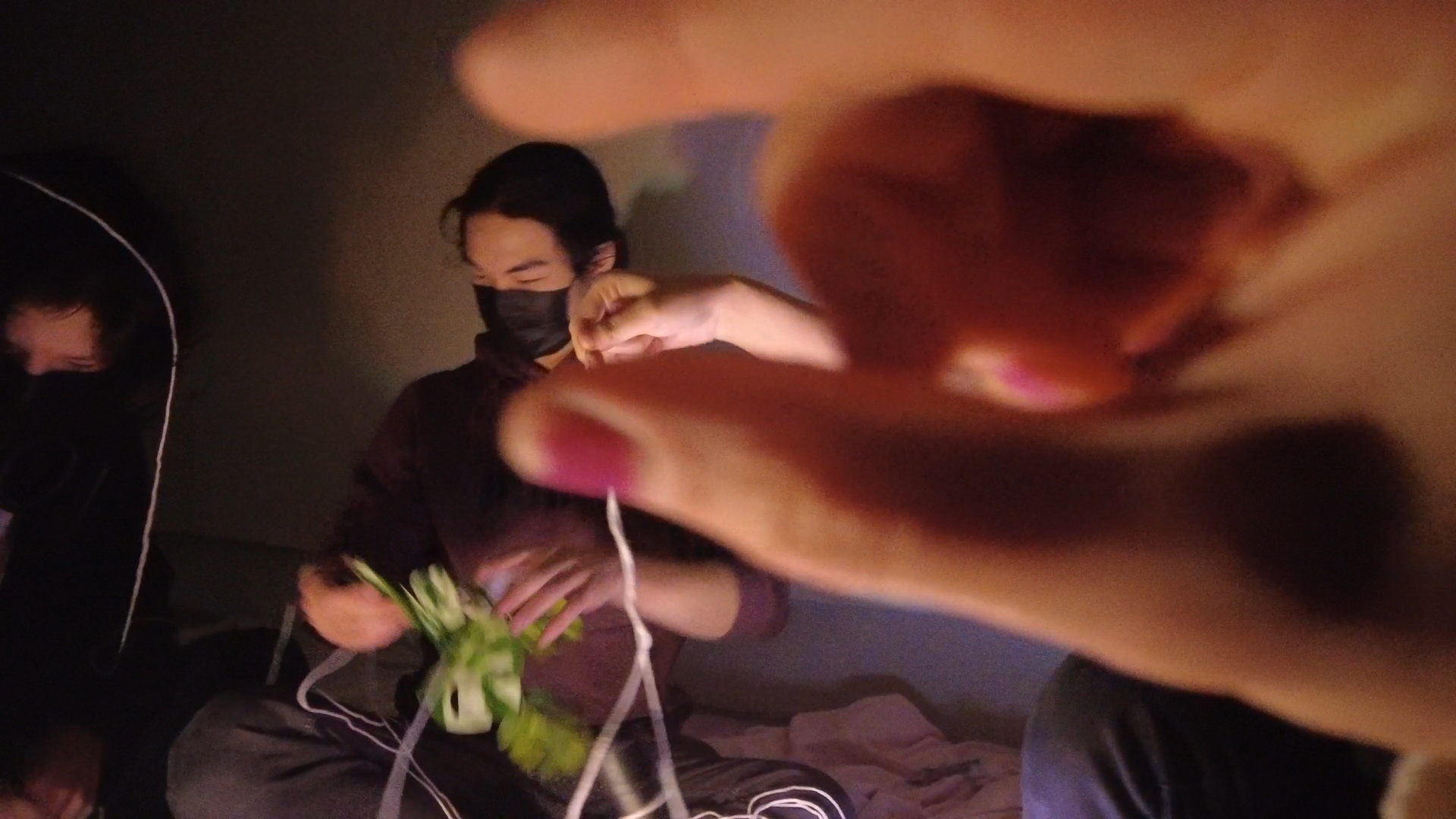
(from the pocket camera)
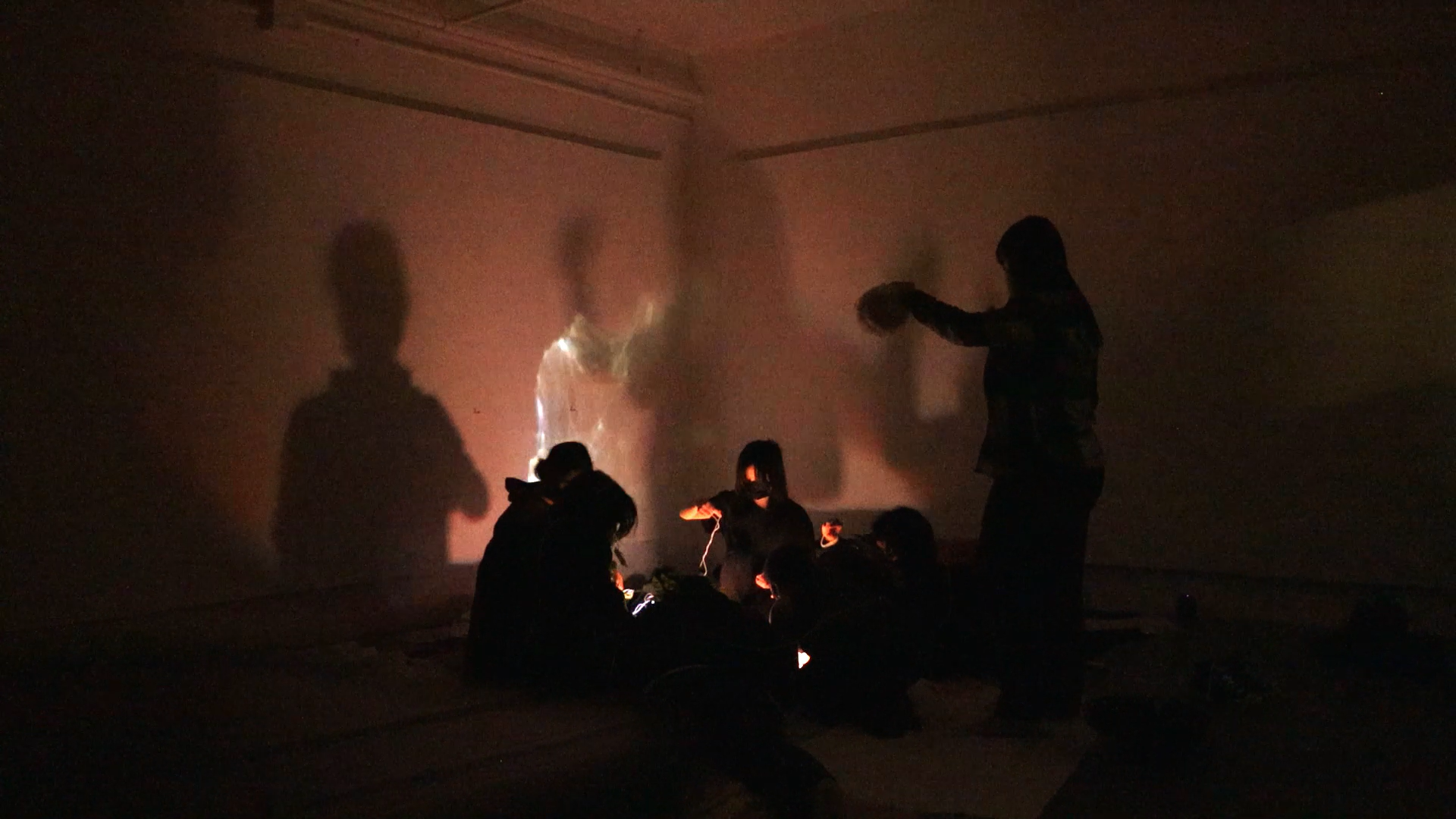
reflection of the holographic paper

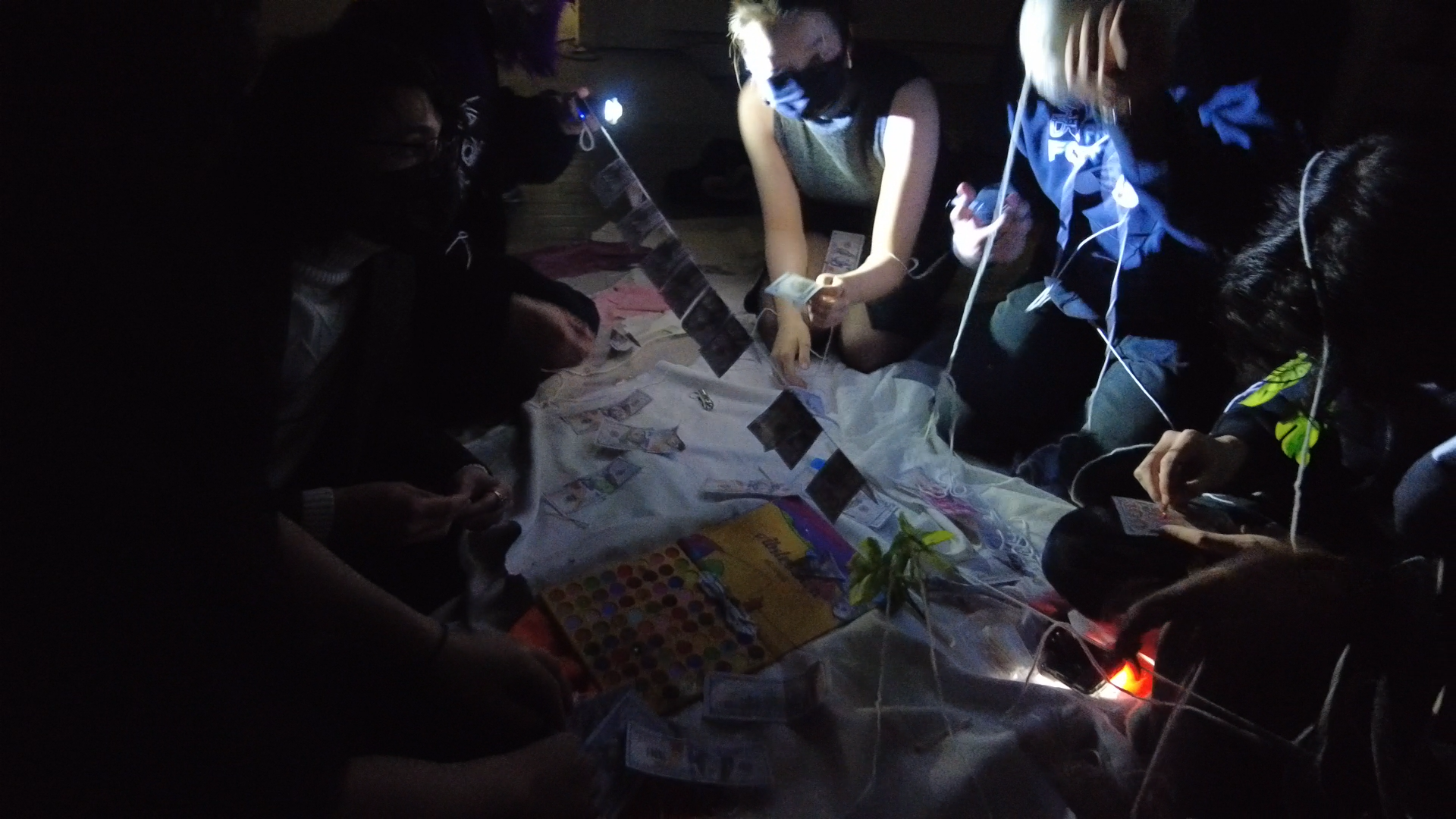
participants hanging the painted counterfeit money on a piece of yarn


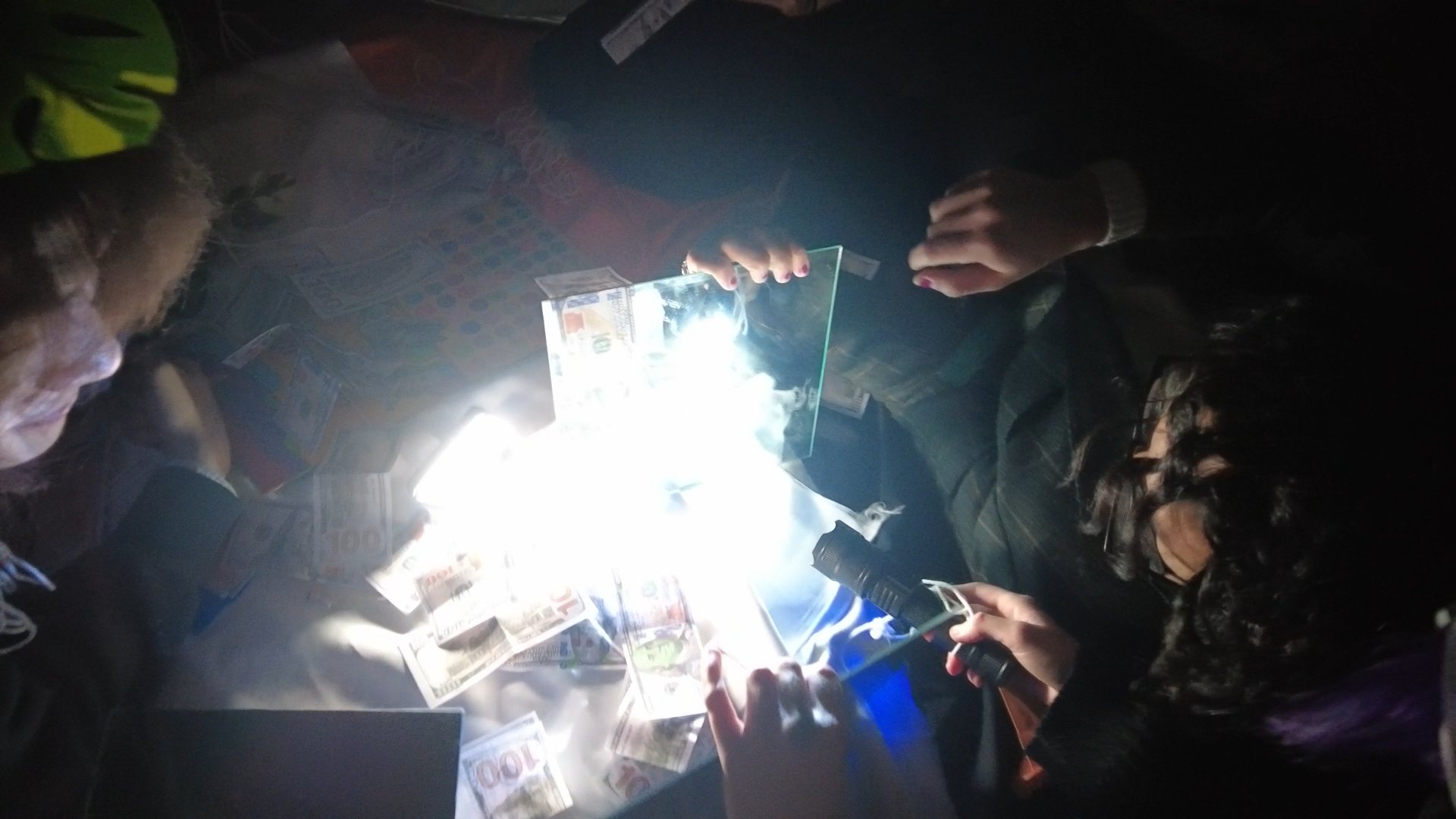
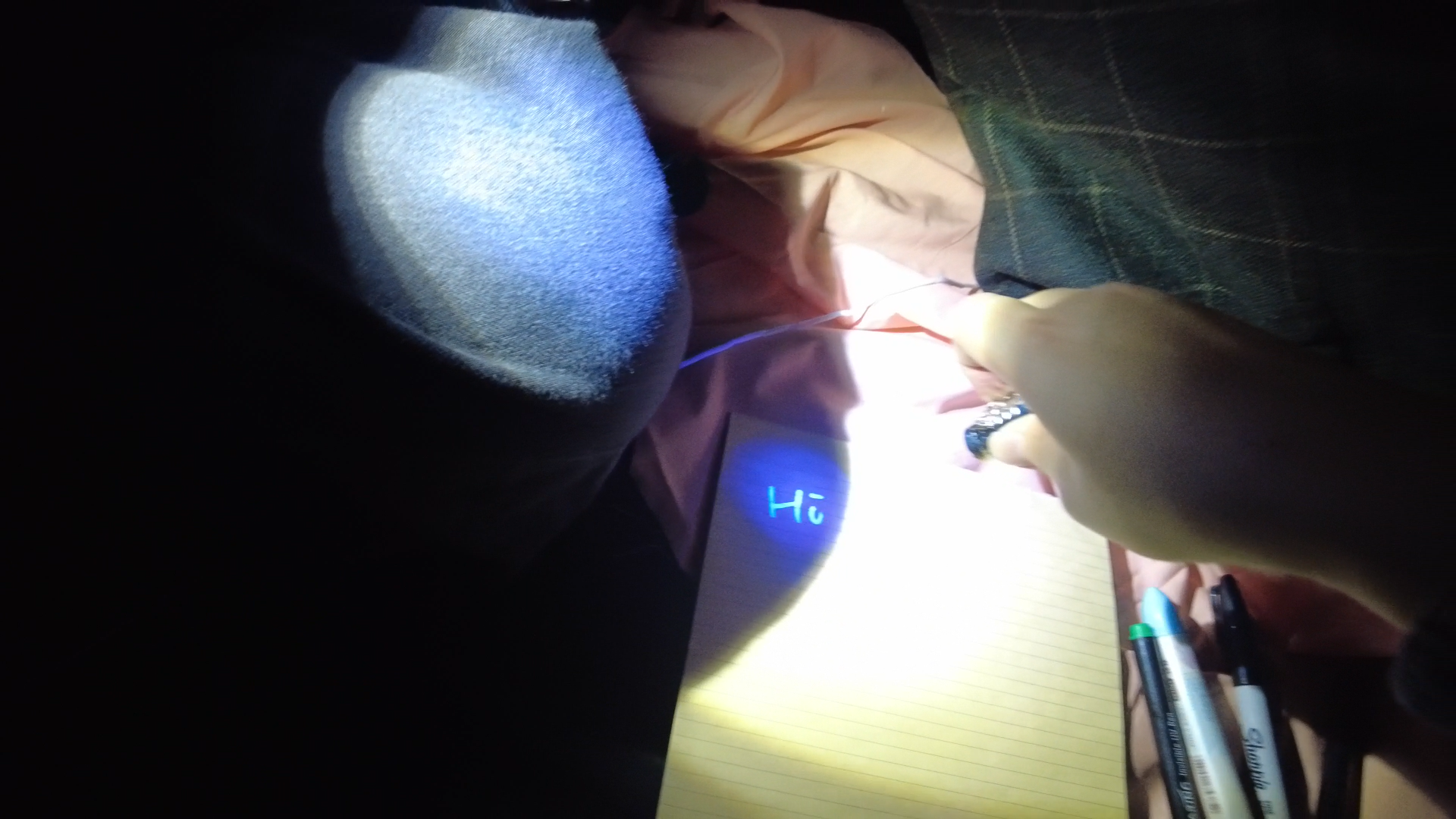
introducting the paper pad and the UV pen
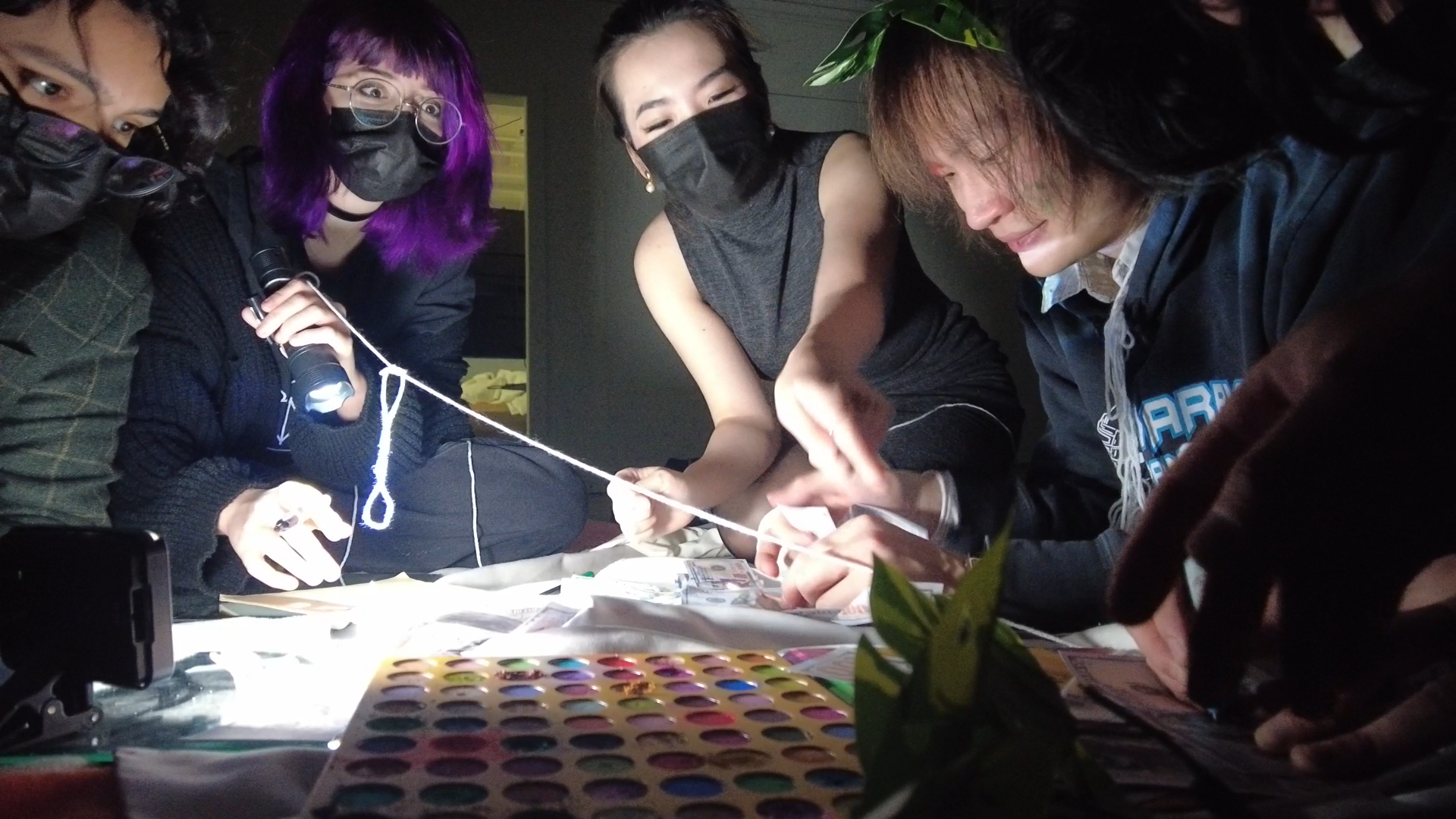
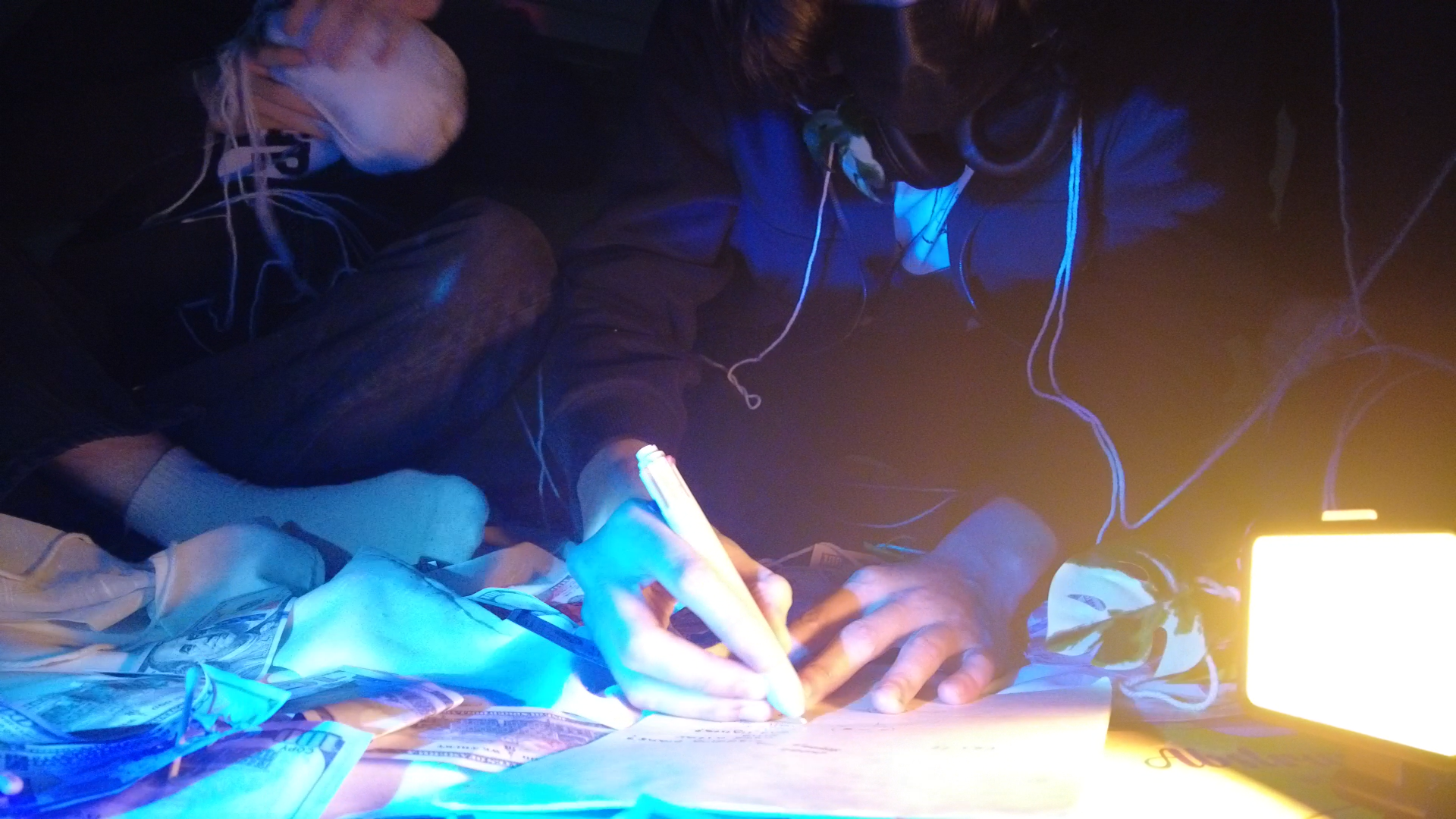

participants putting the pocket camera inside the holographic paper
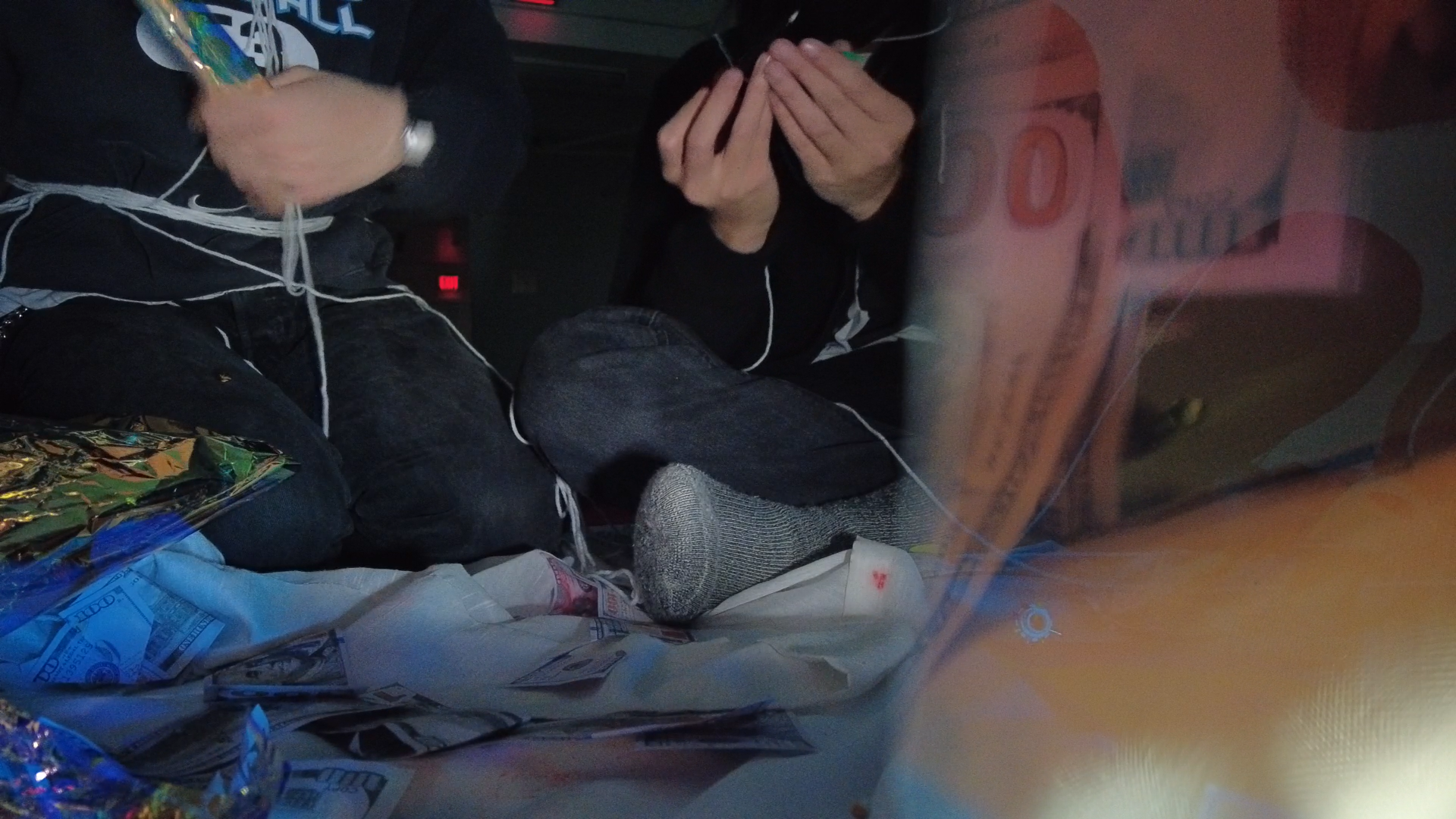
participants putting the pocket camera inside the holographic paper
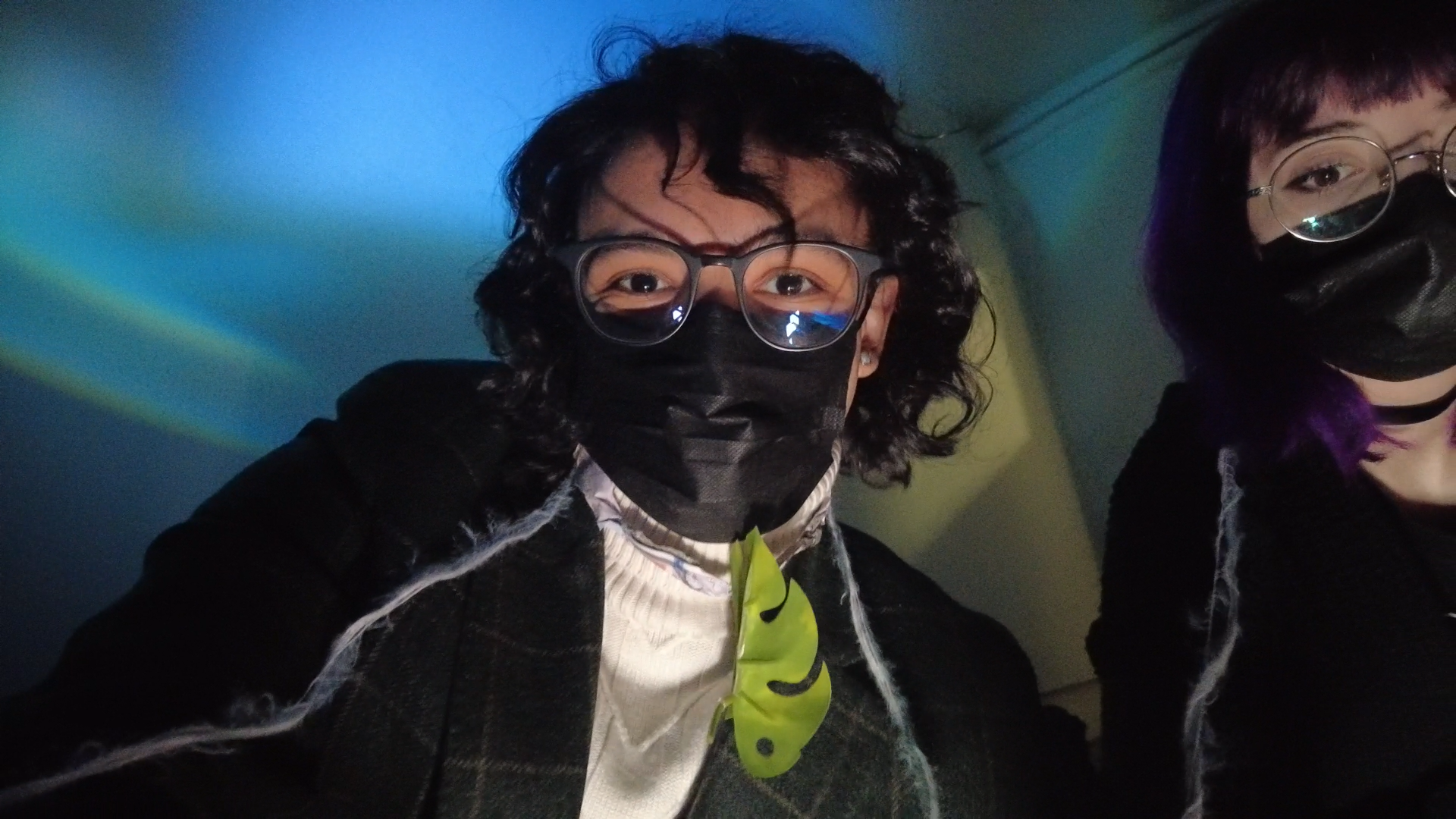
(from the pocket camera)

reflection of the light-mirror assemblage that participants made

reflection of the light-mirror assemblage that participants made

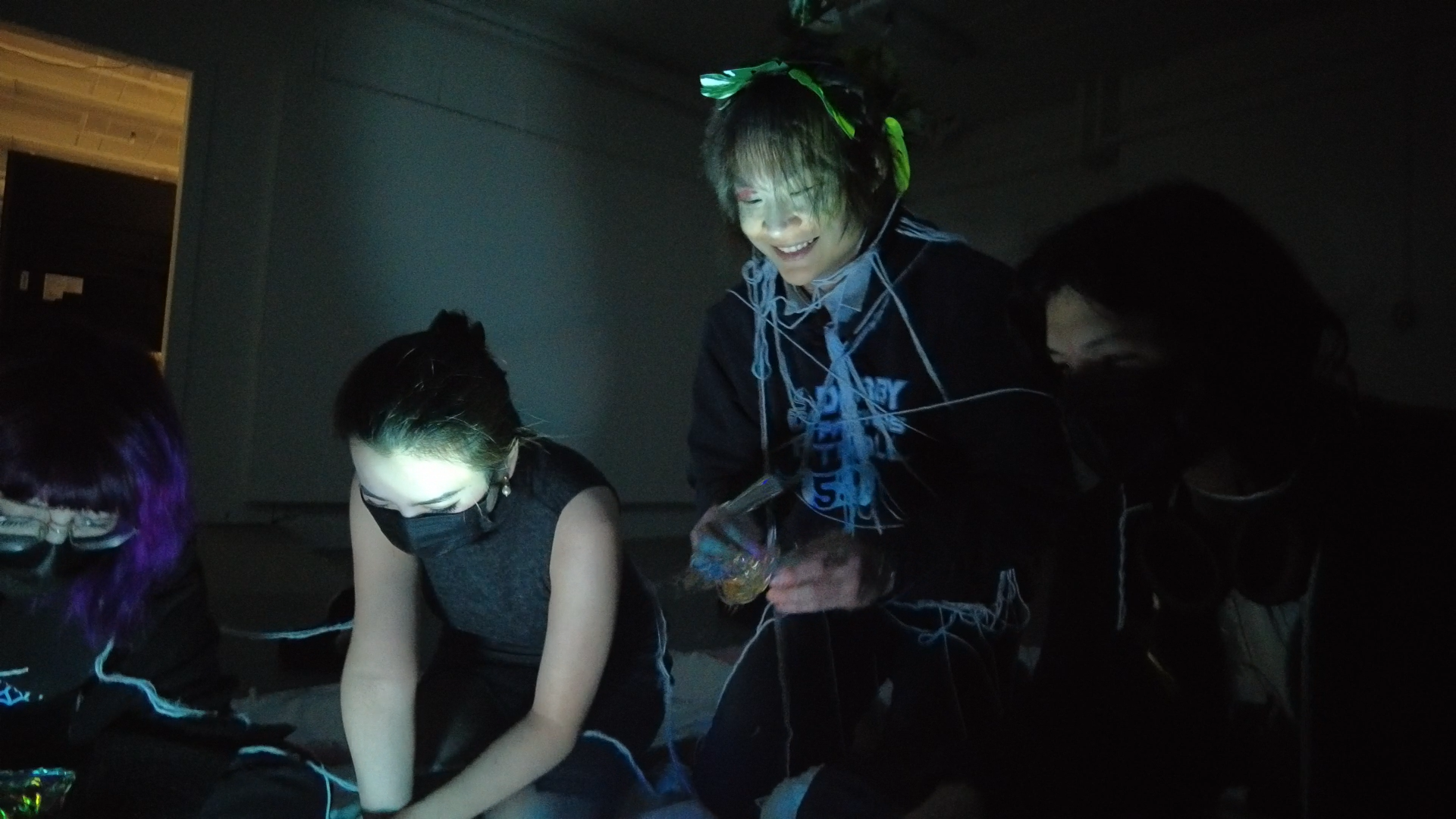
participant wrapping themselves
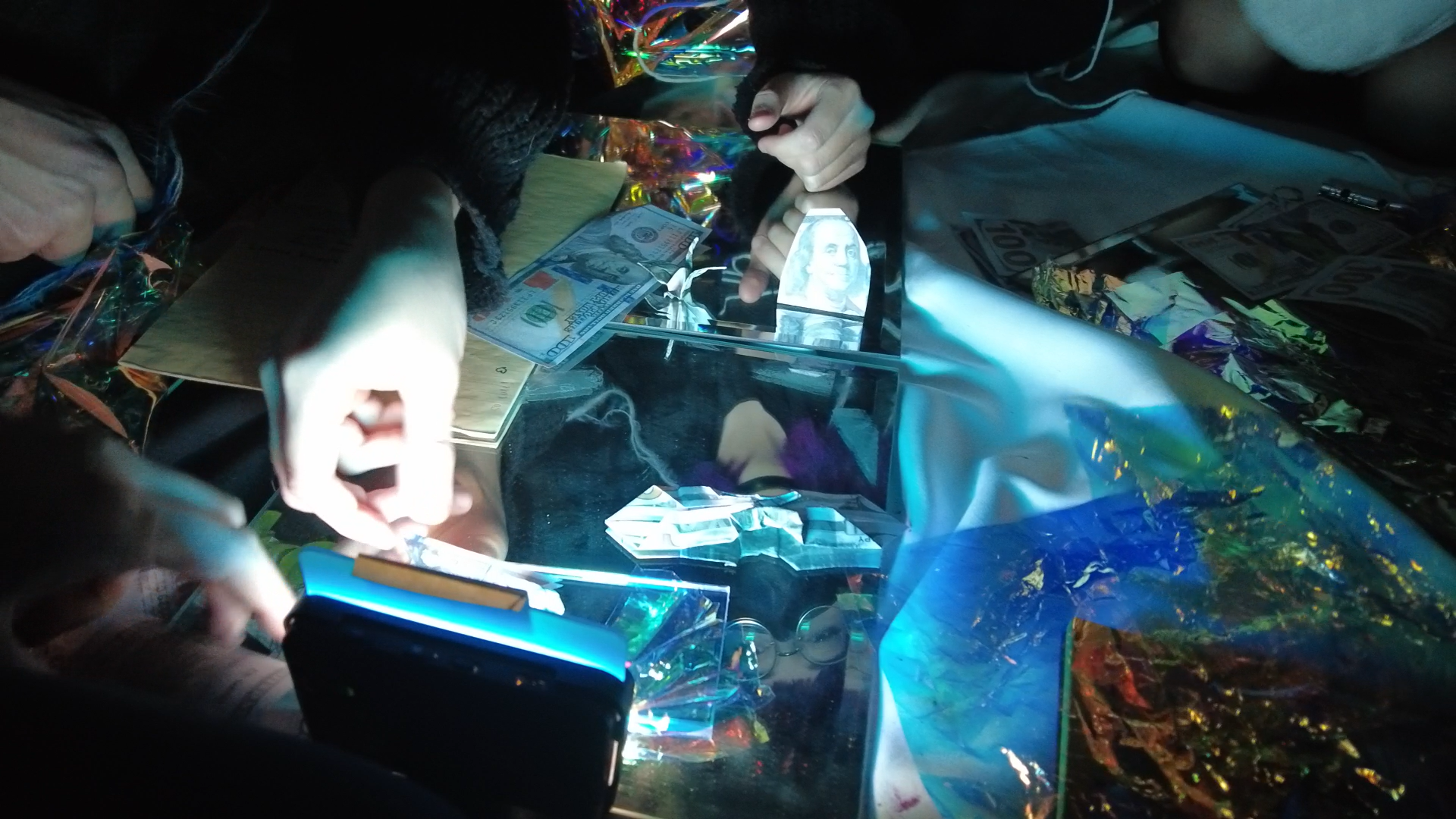

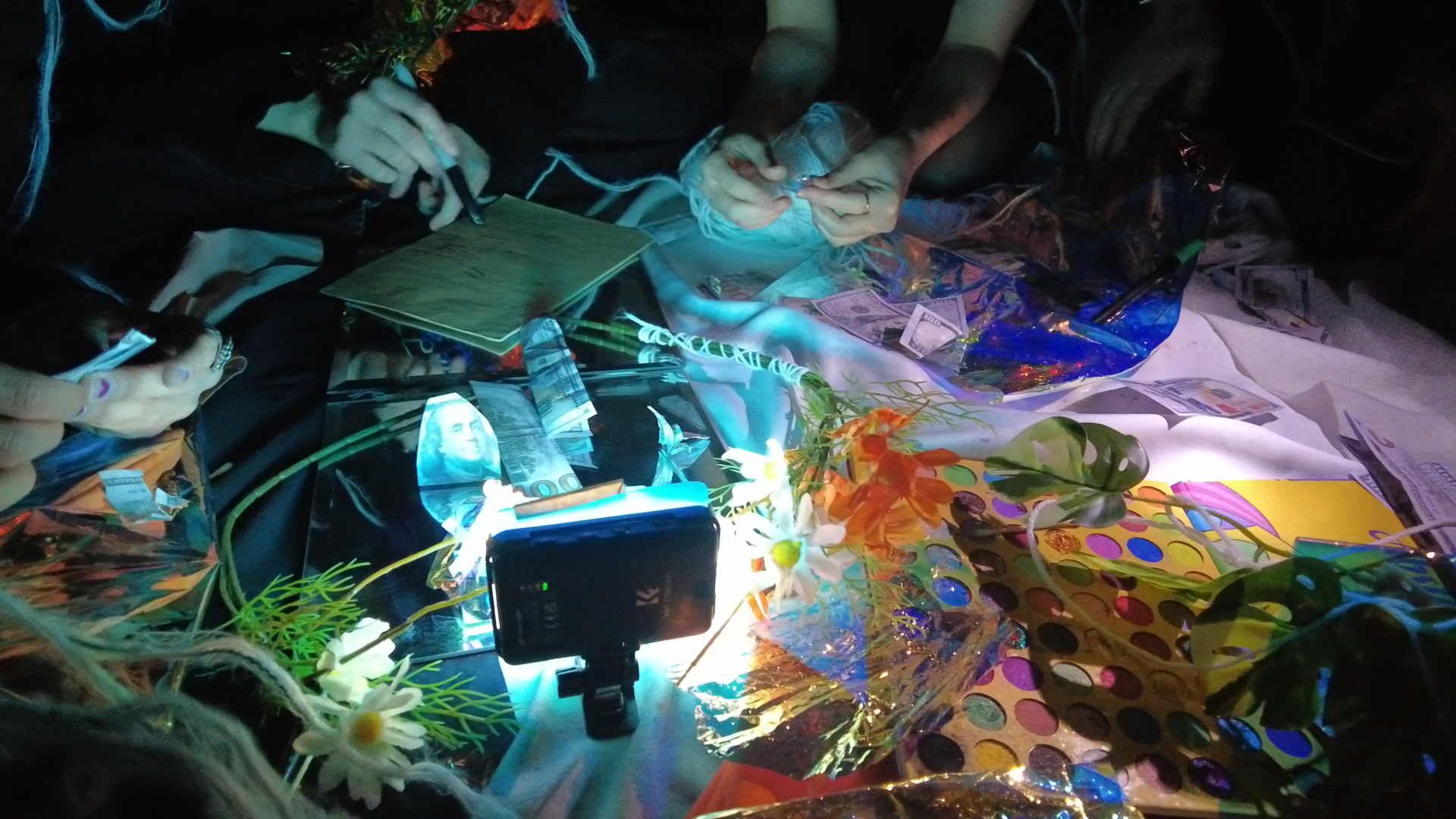

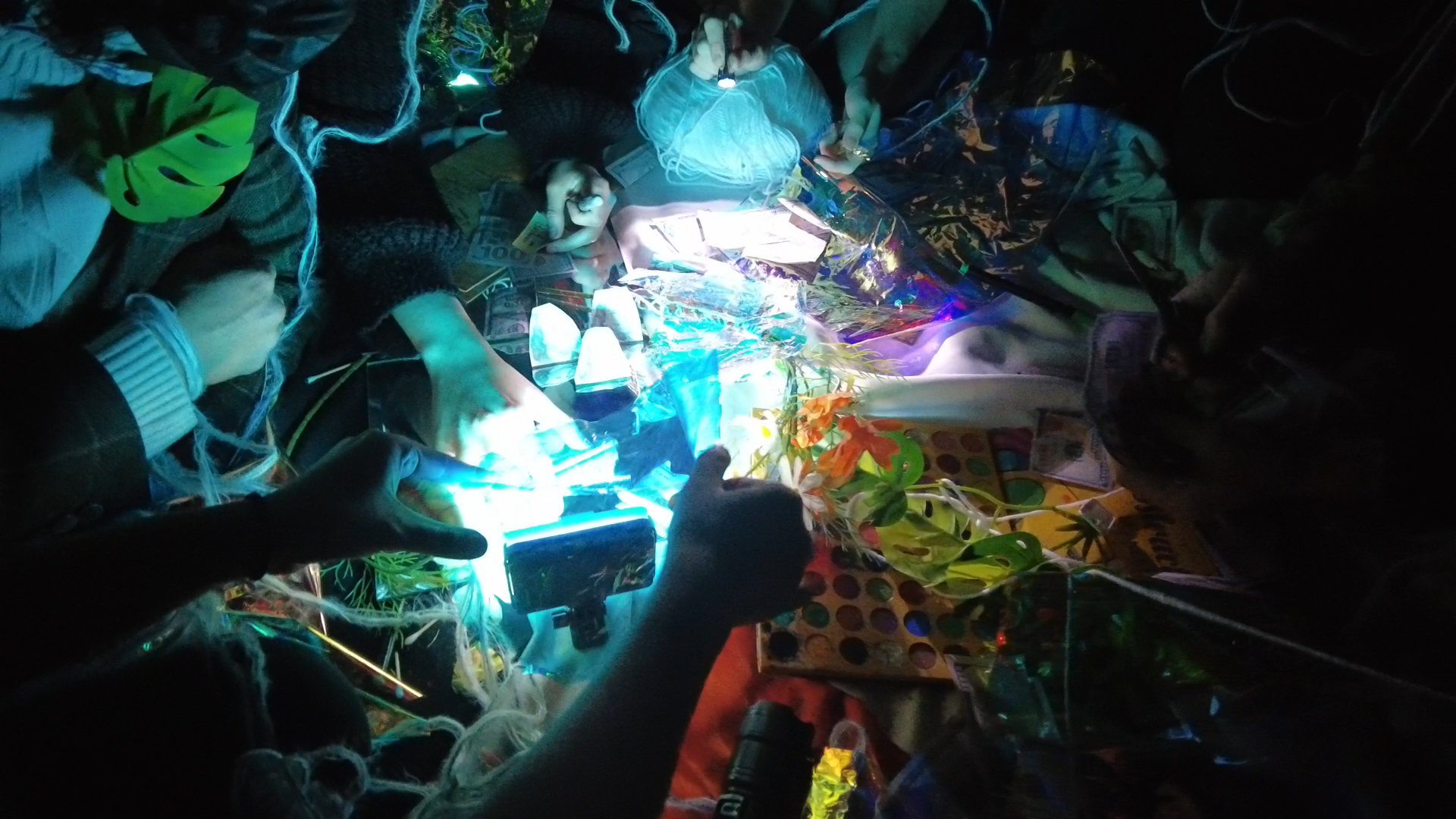
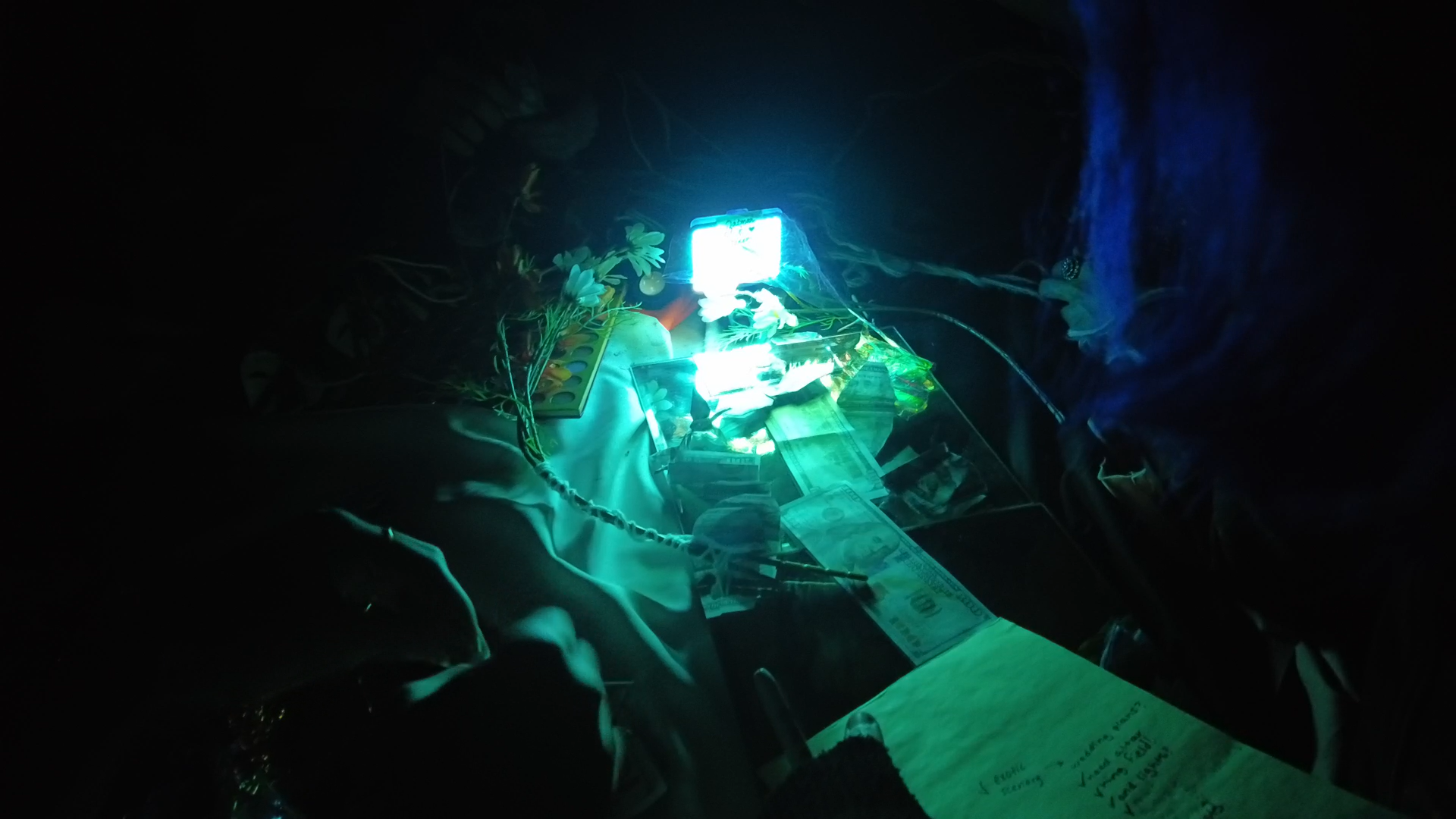
wedding between Batman & Joker that participants hosted
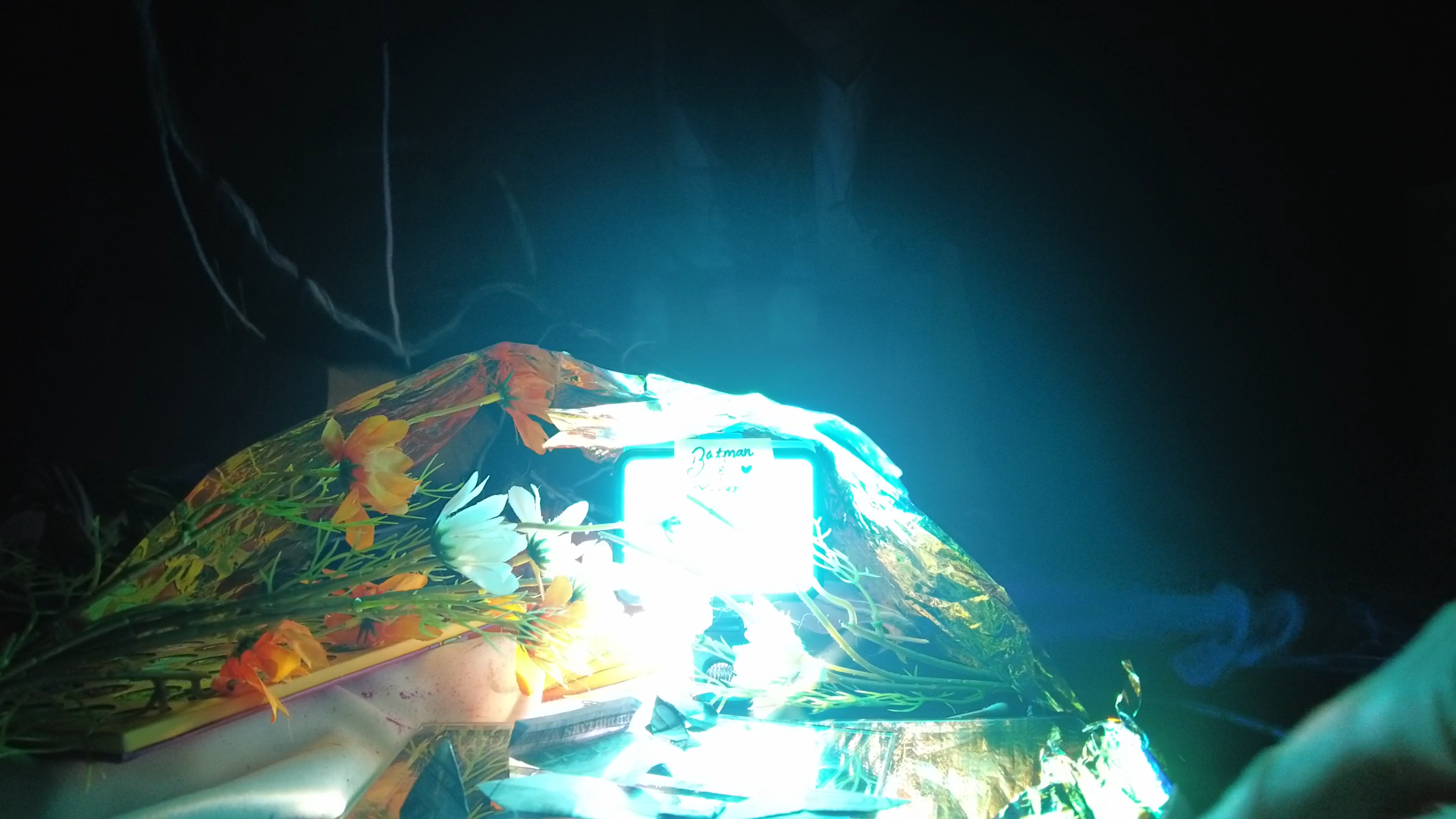
wedding between Batman & Joker that participants hosted
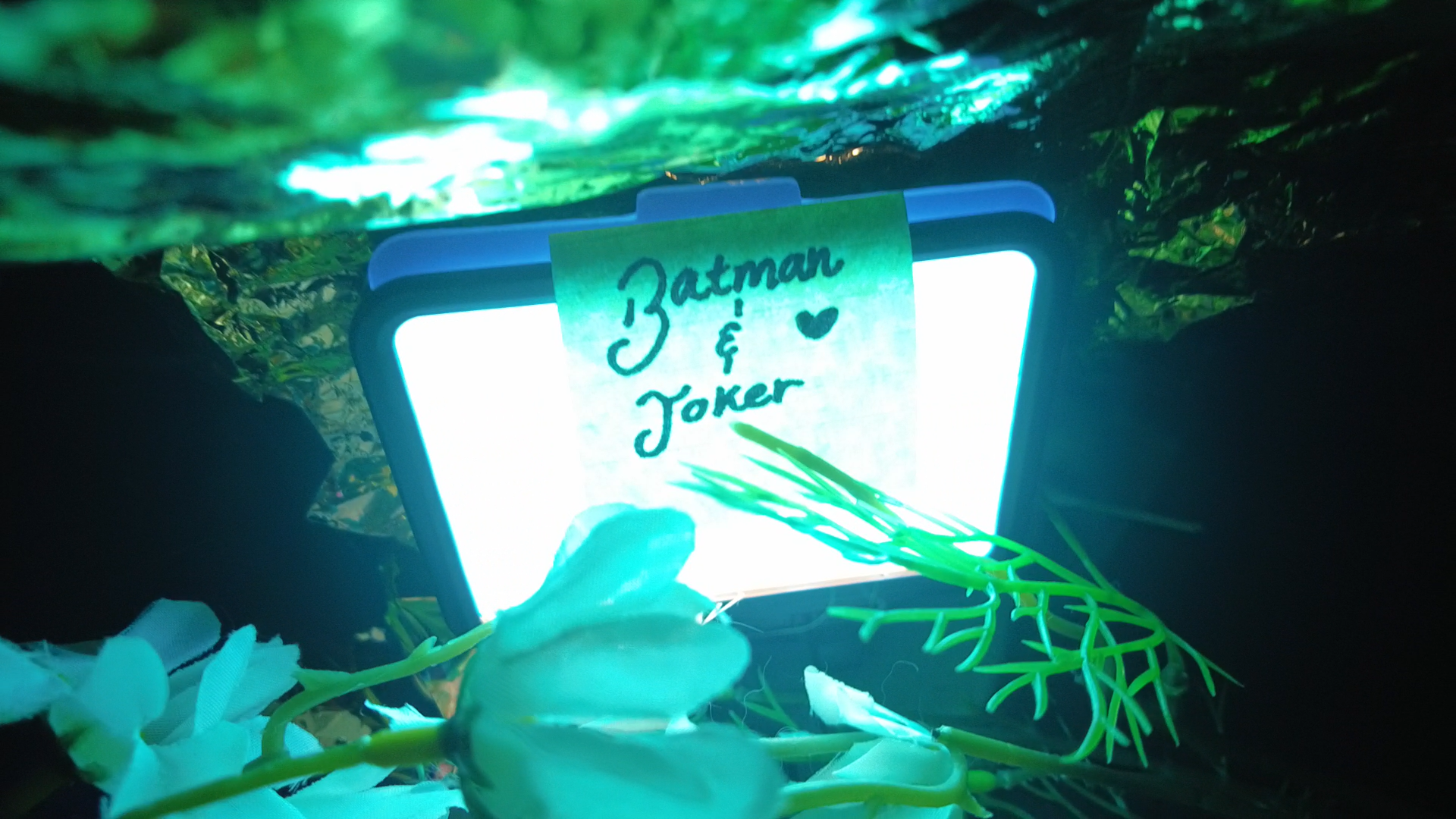

wedding plan...
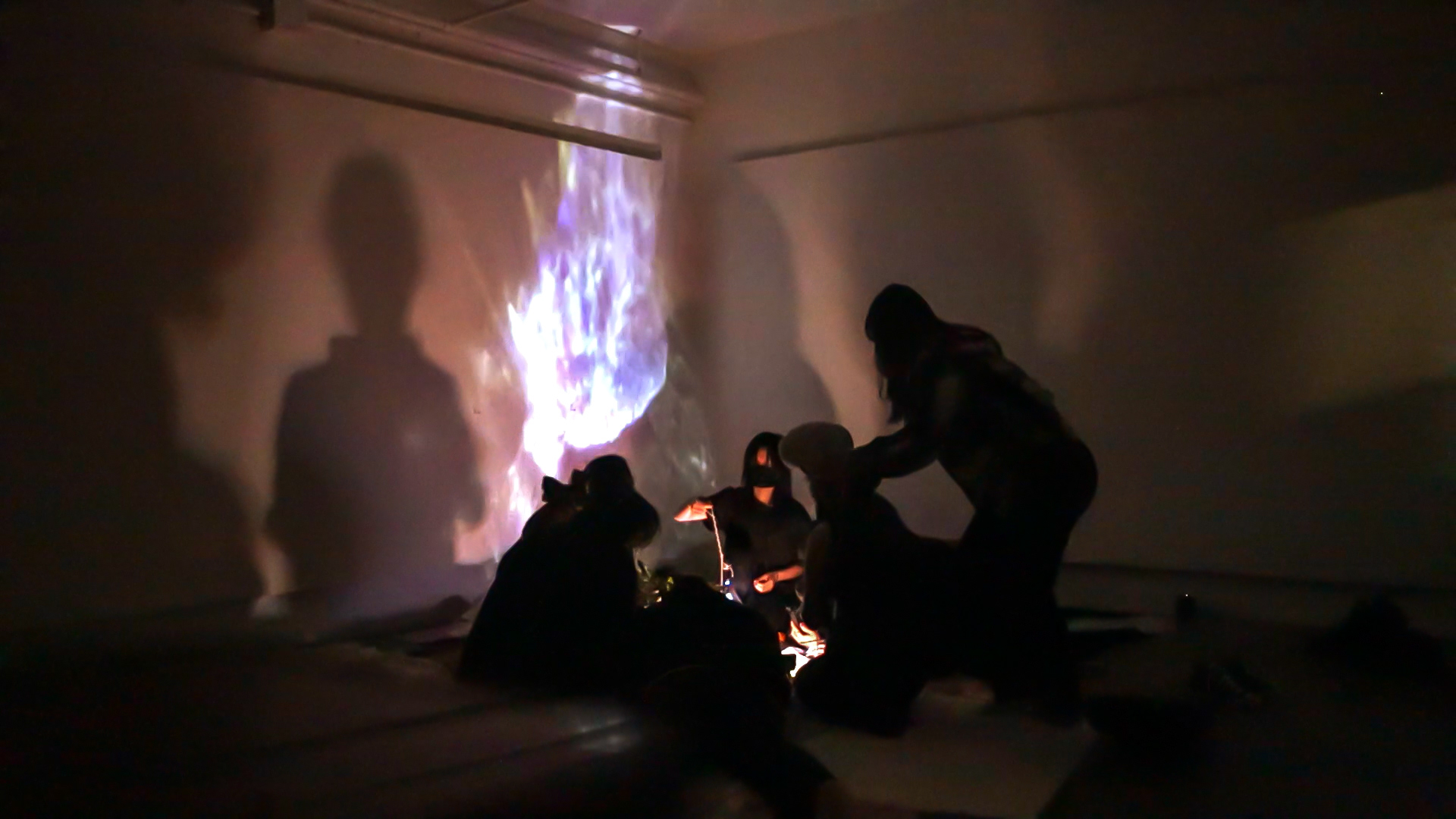
reflection of the holographic paper

playing with the UV flashlight
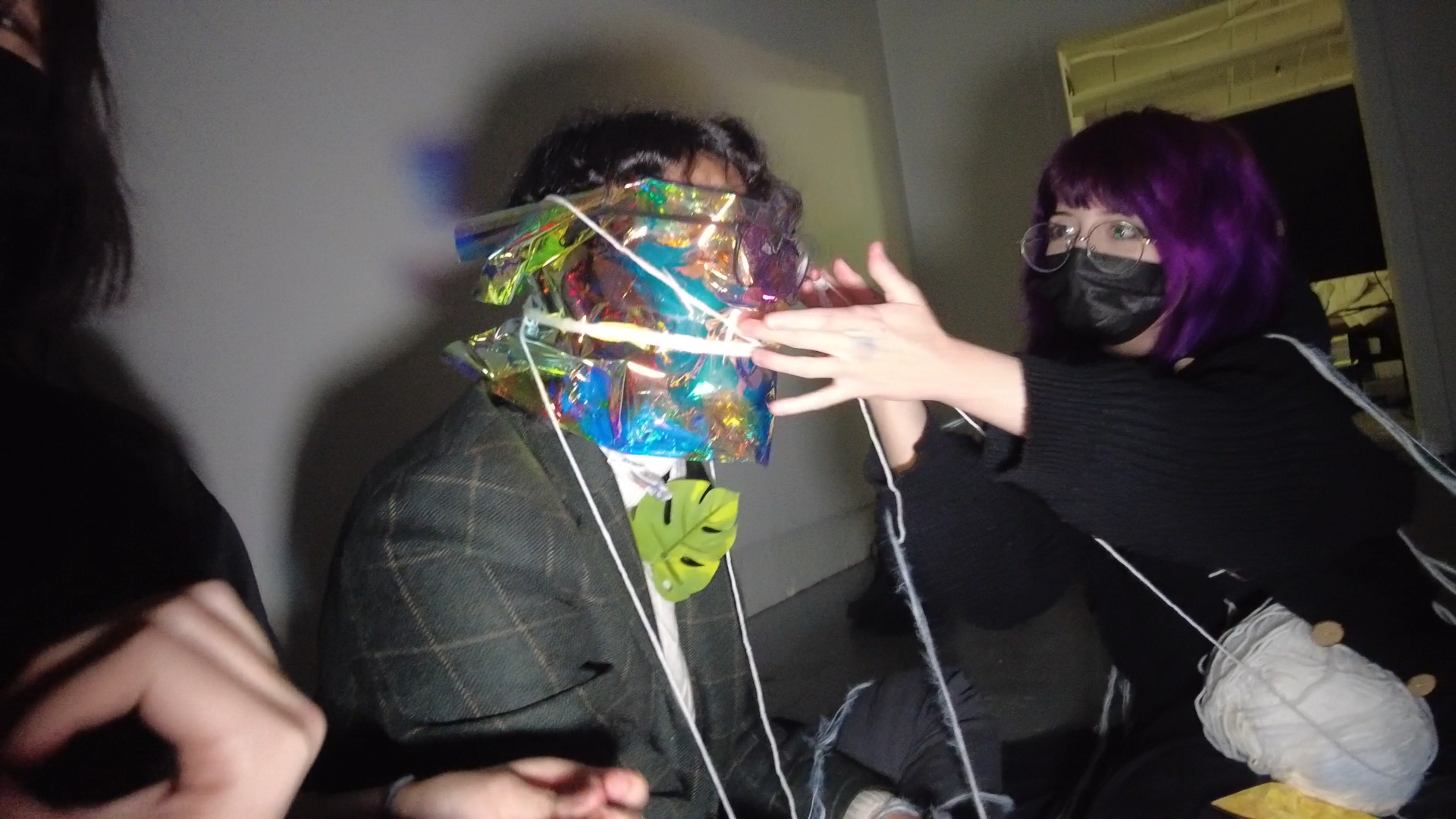
participants wrapping each other
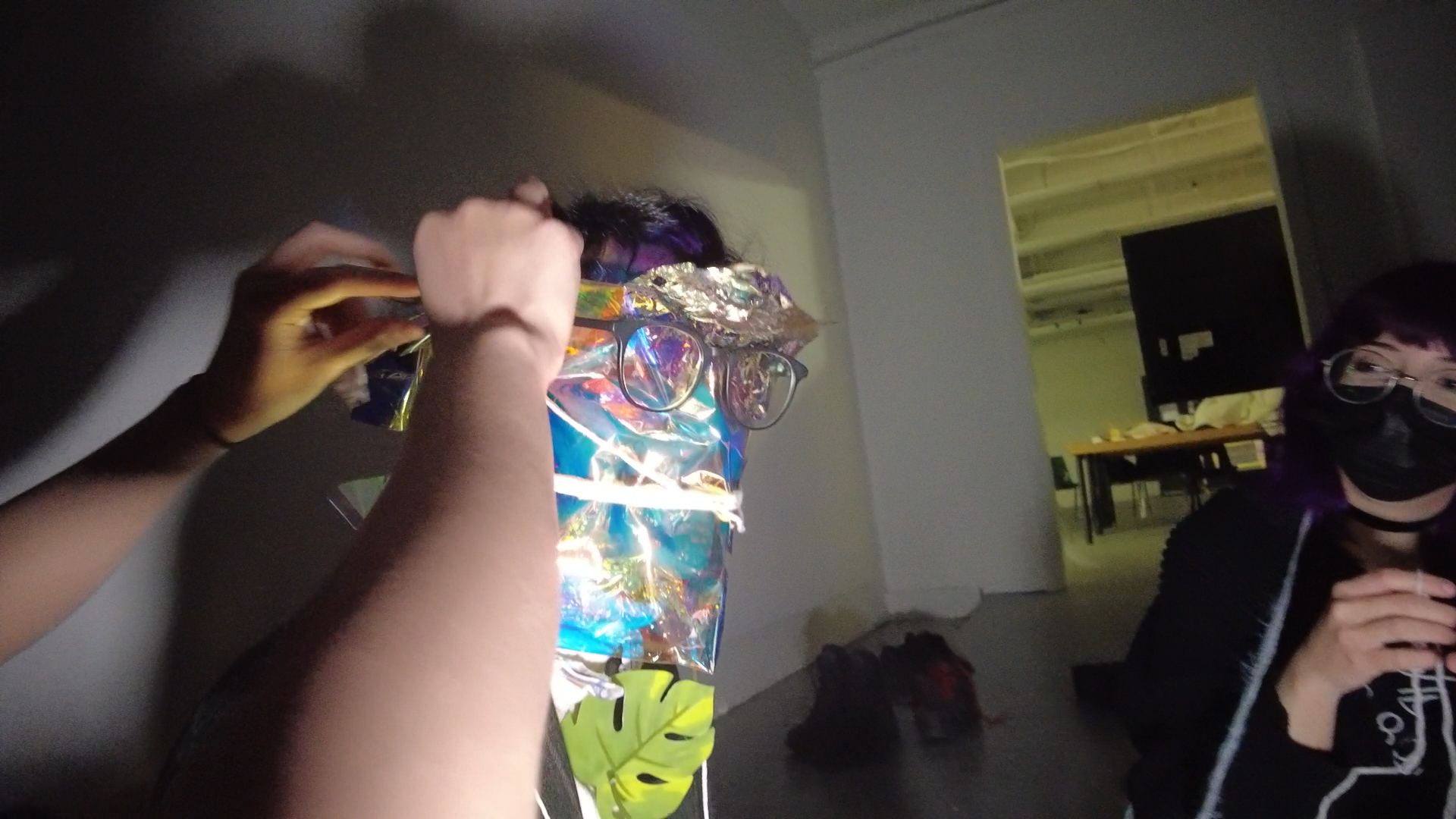
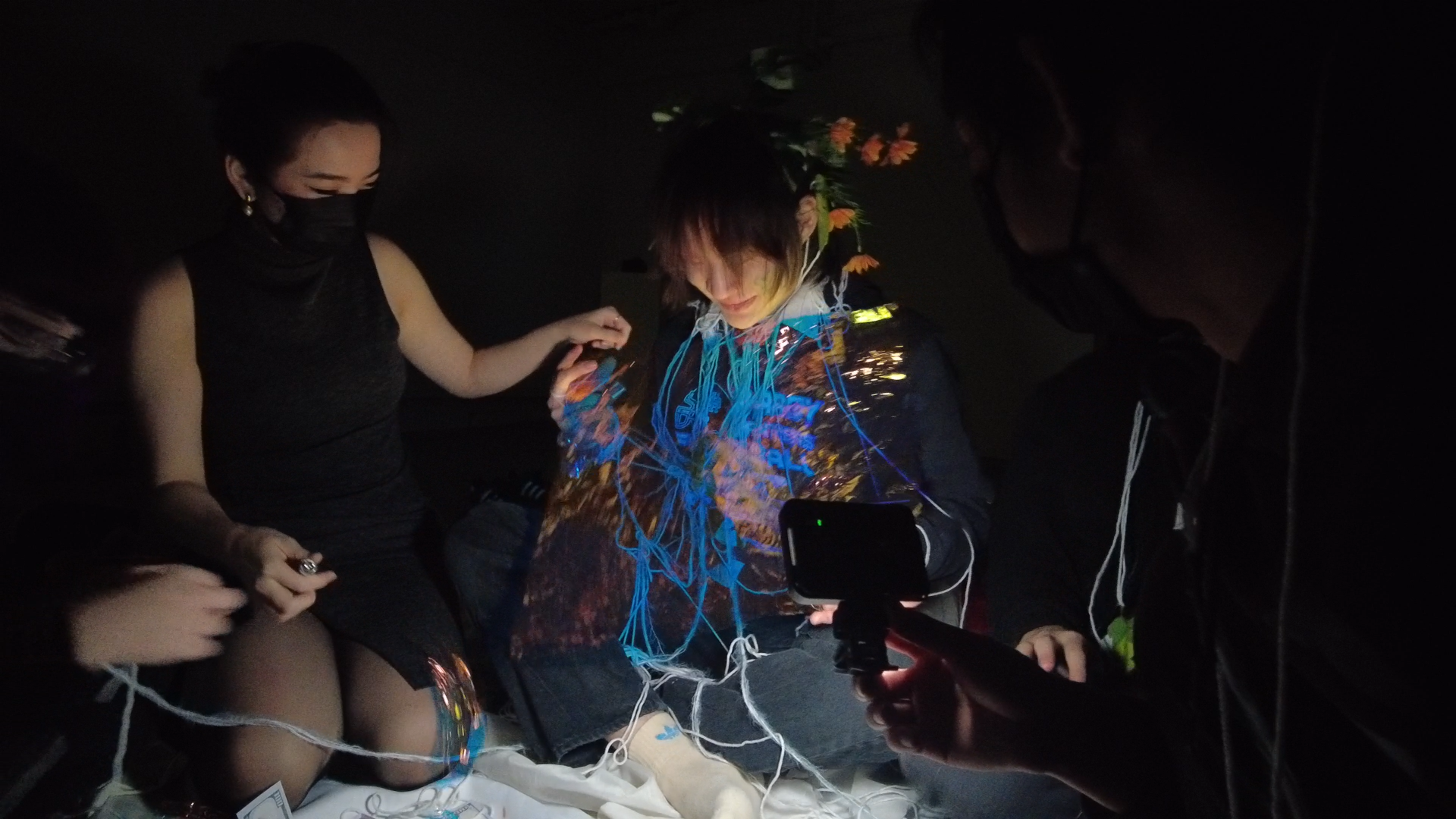
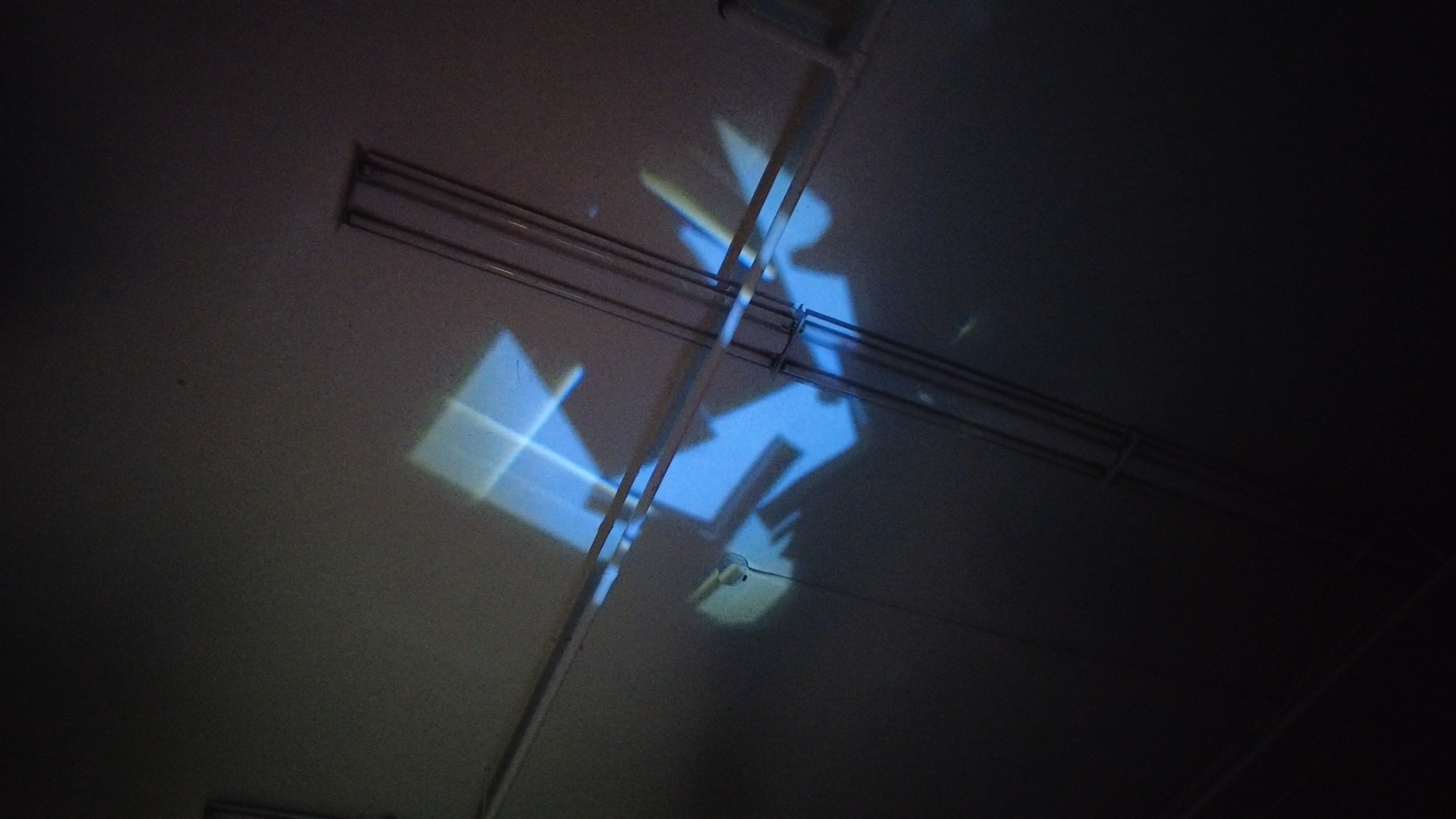
reflection of the light-mirror installation that participant made

the installation

a vase (?)
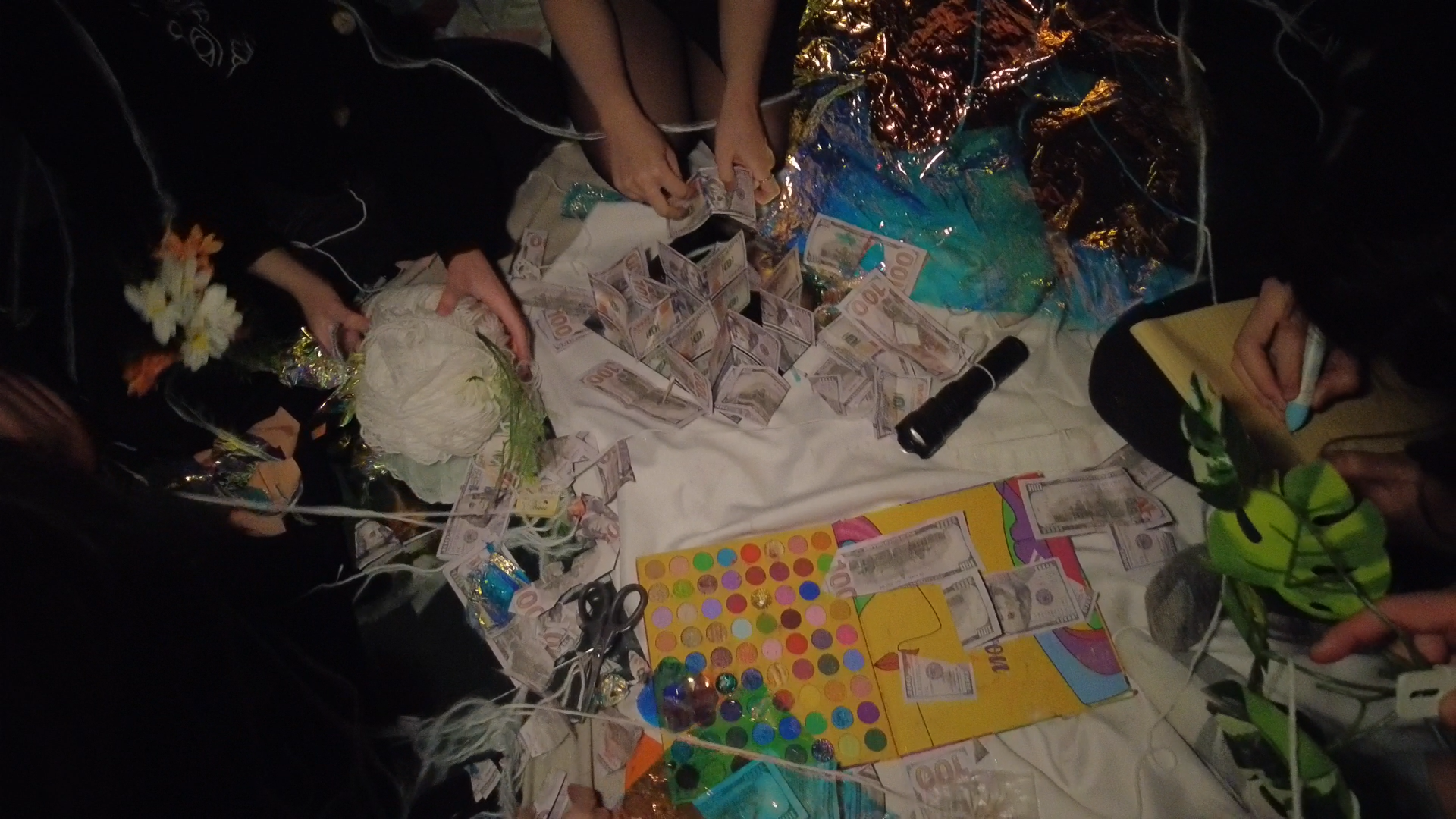
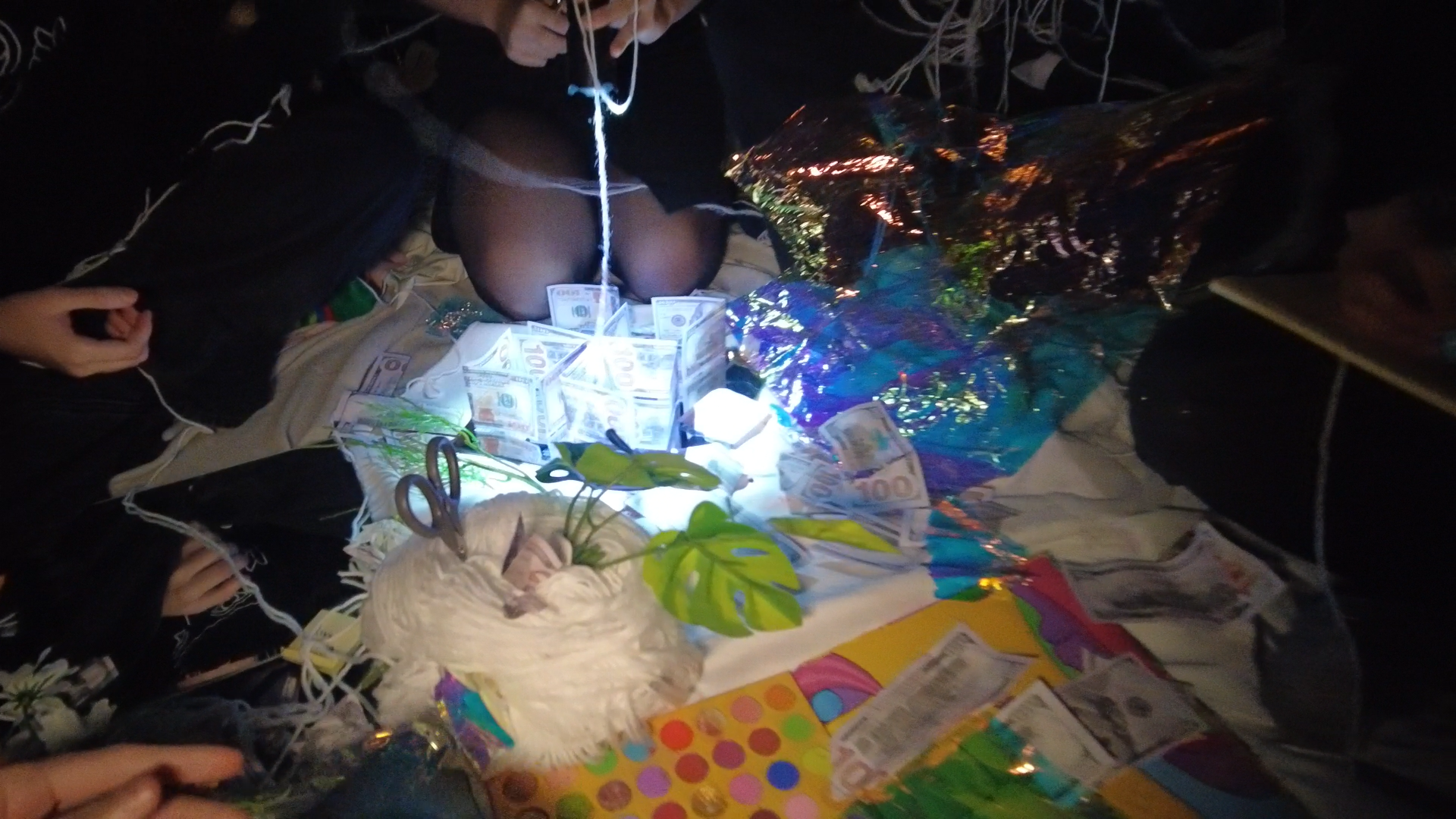

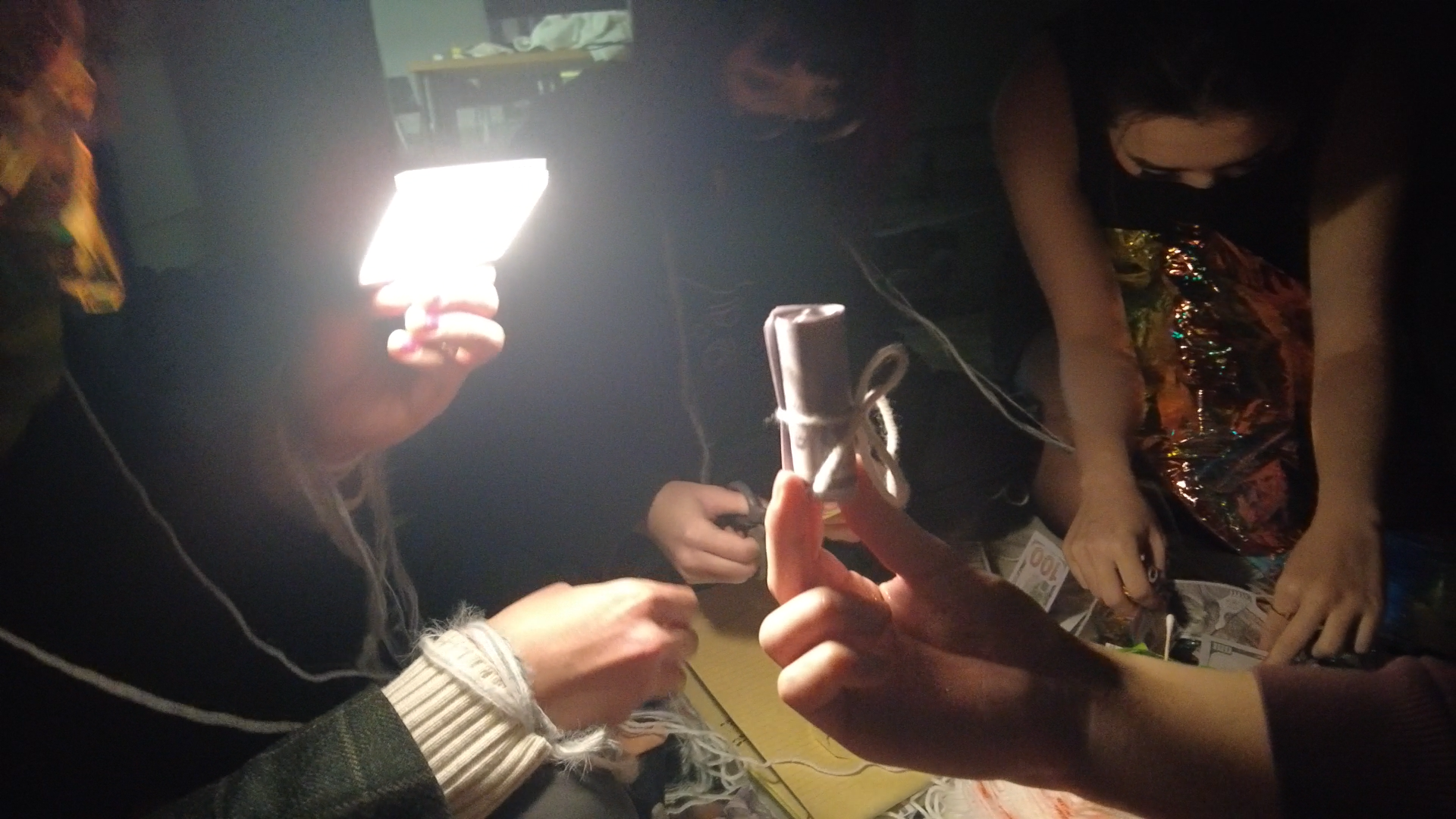

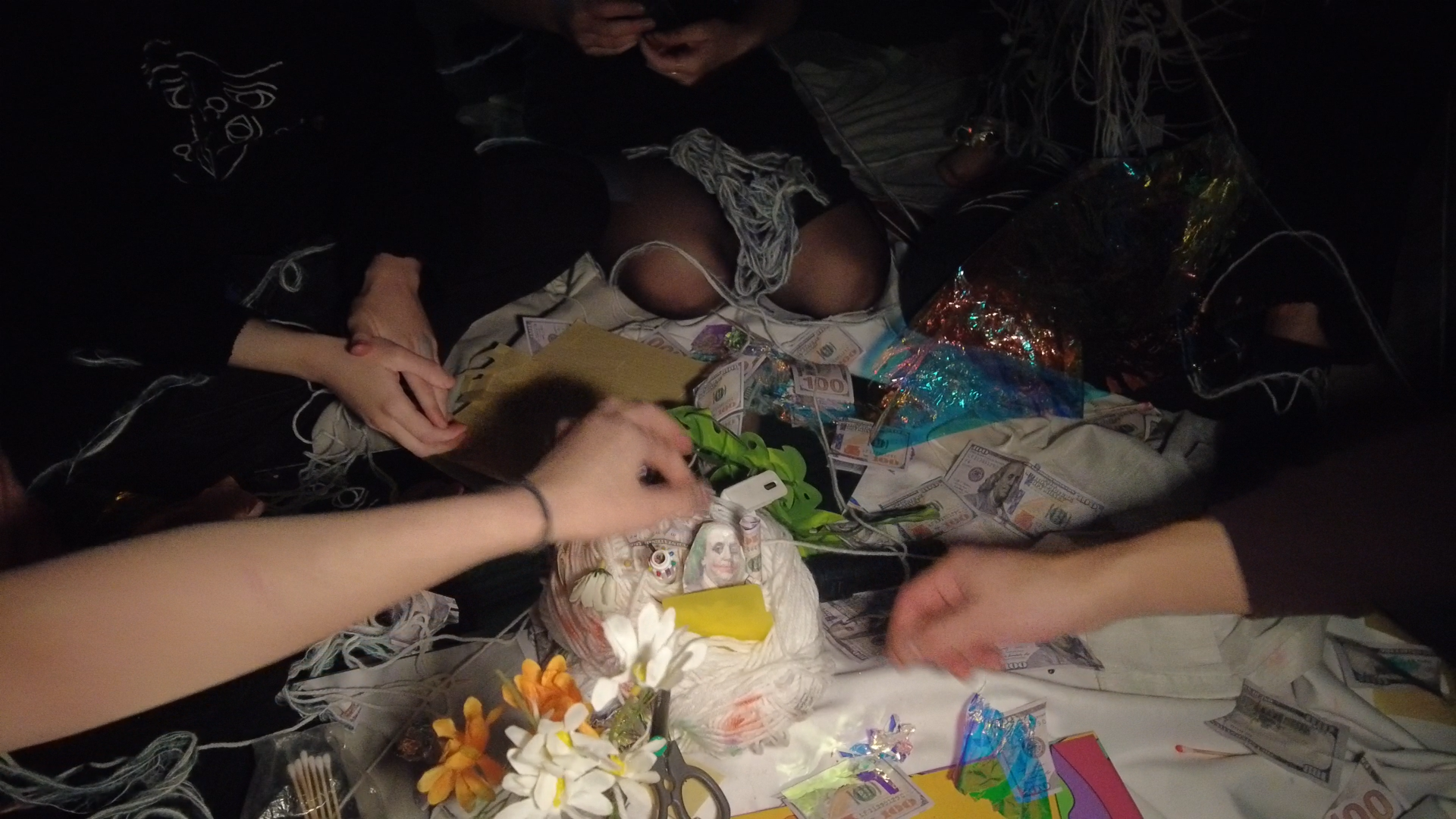

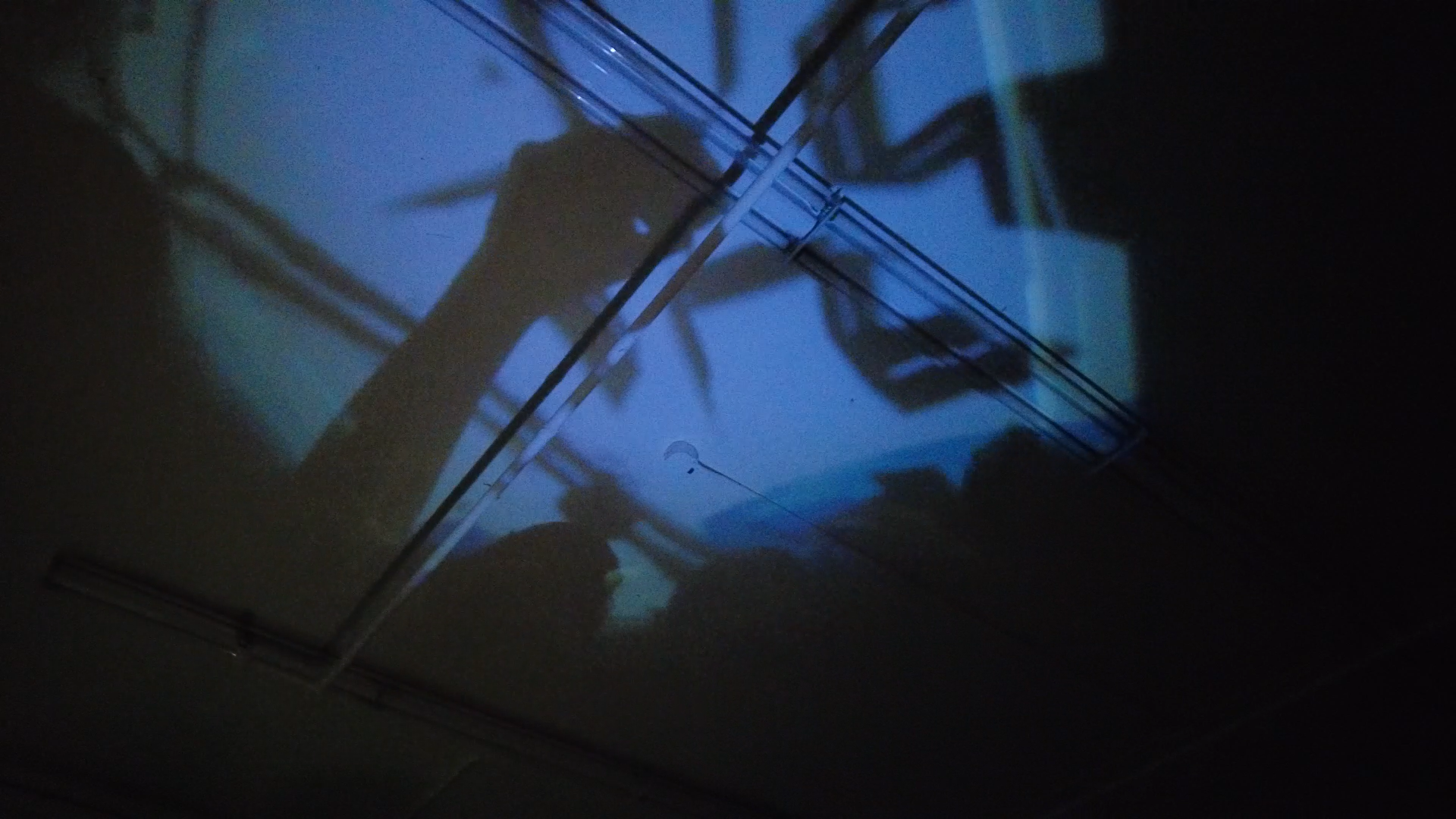
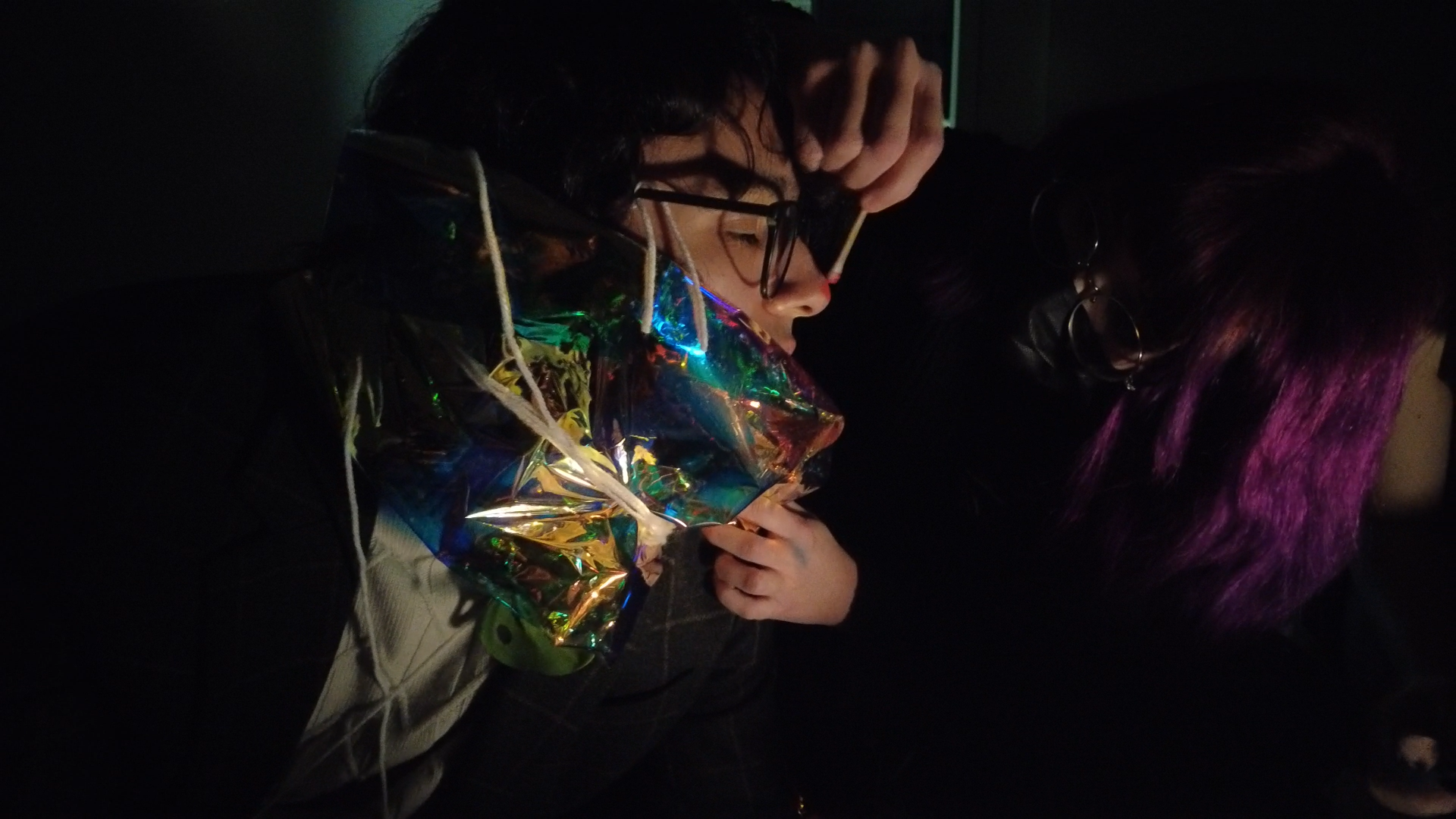
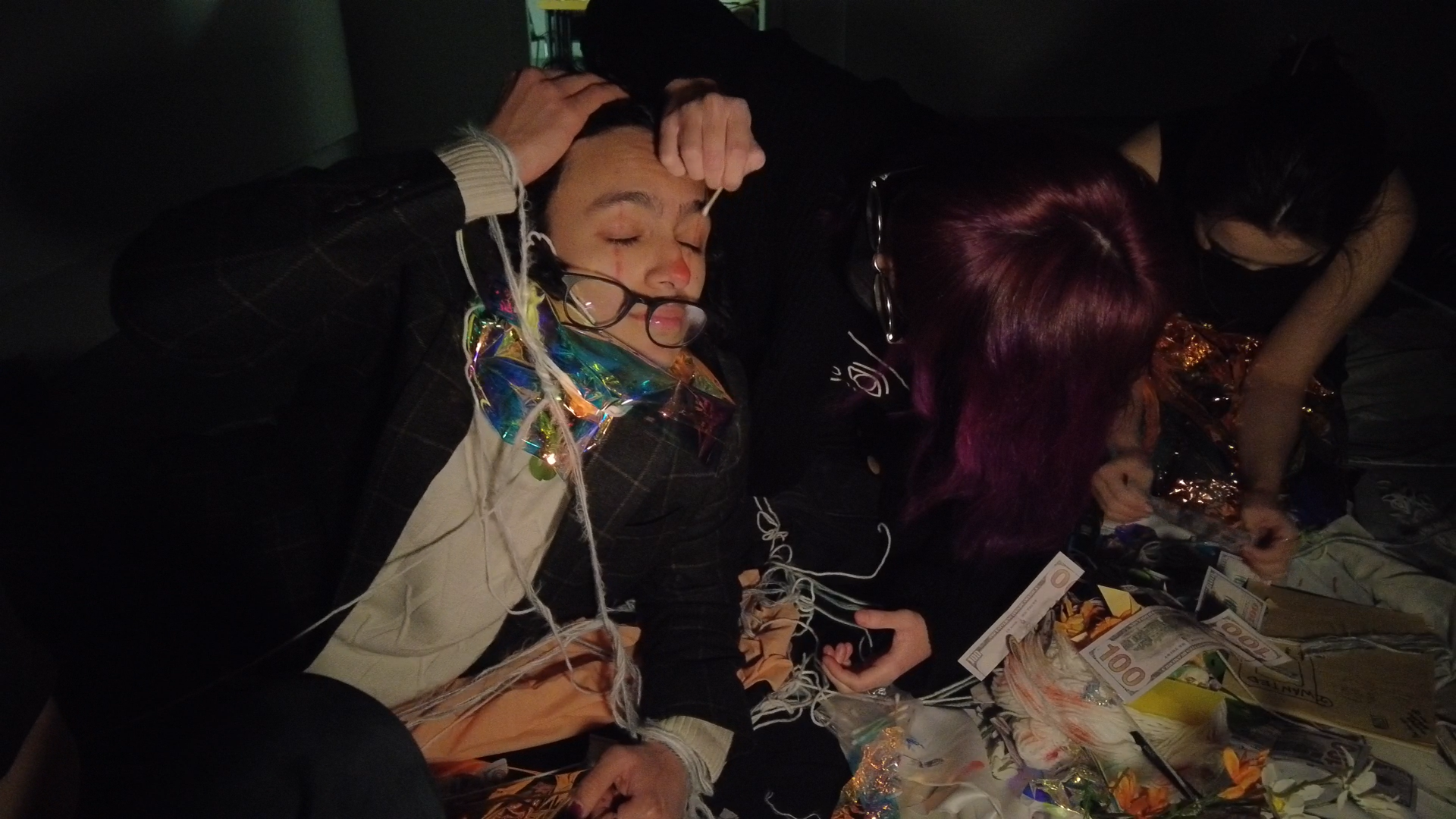
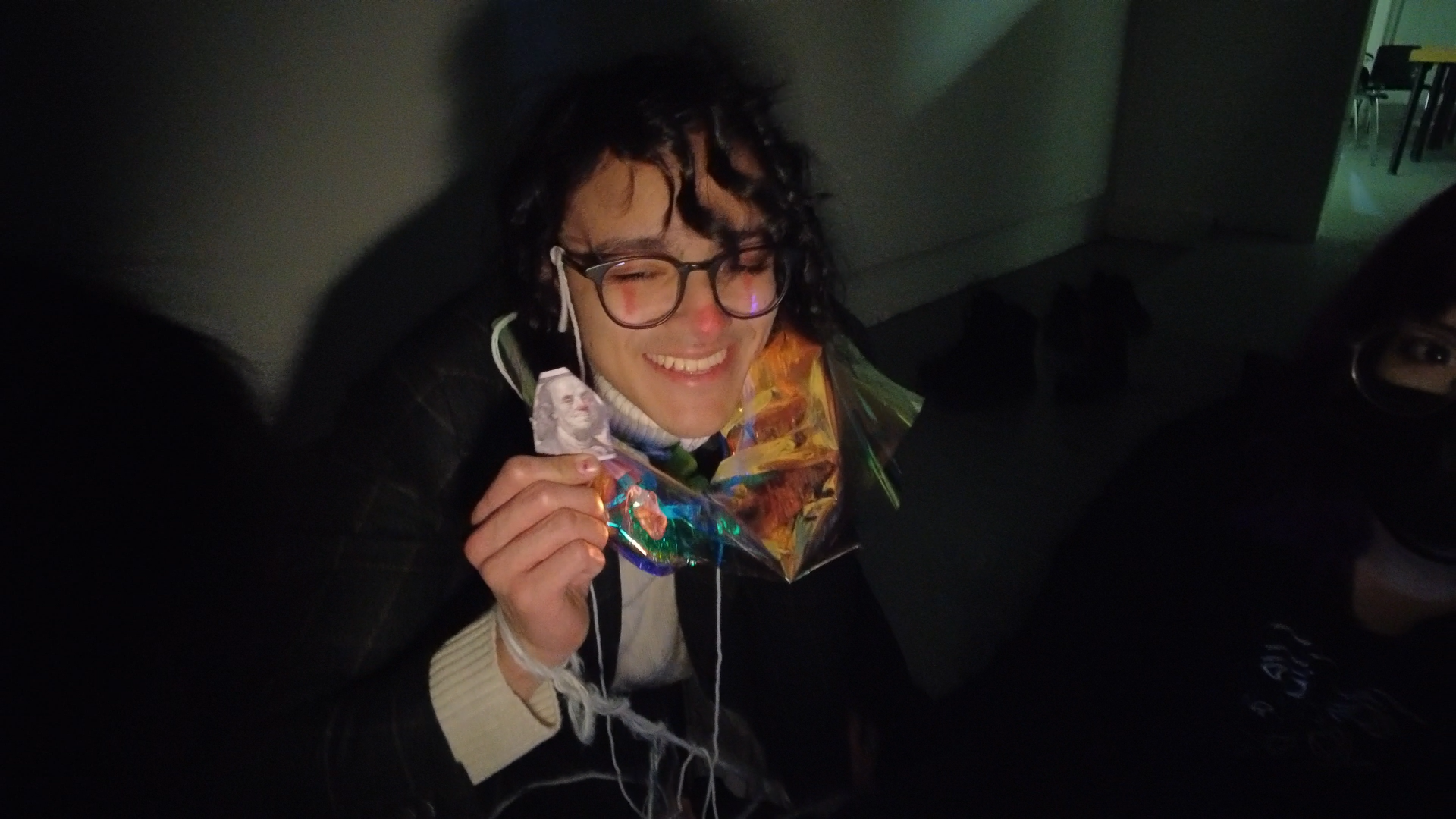
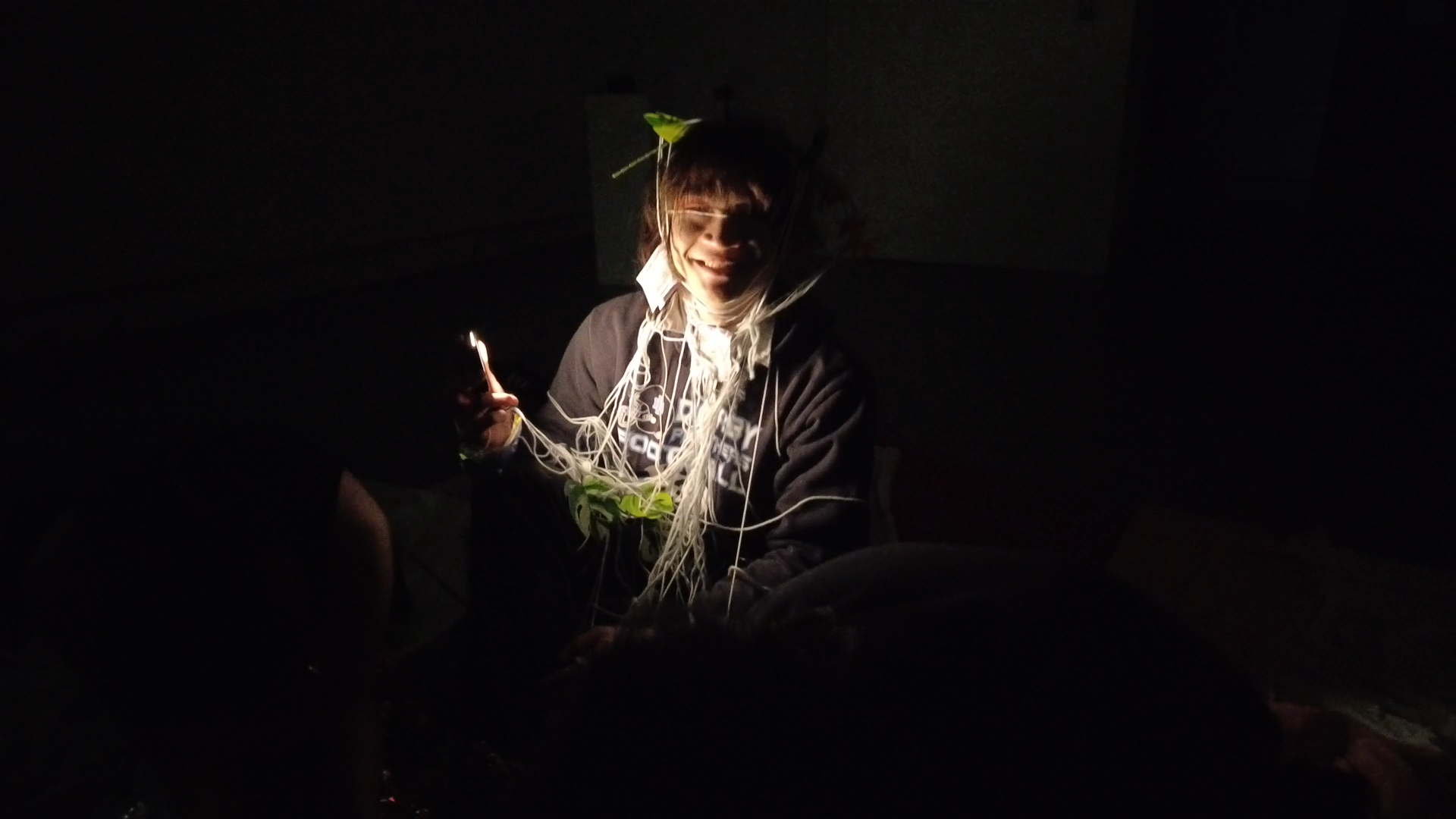
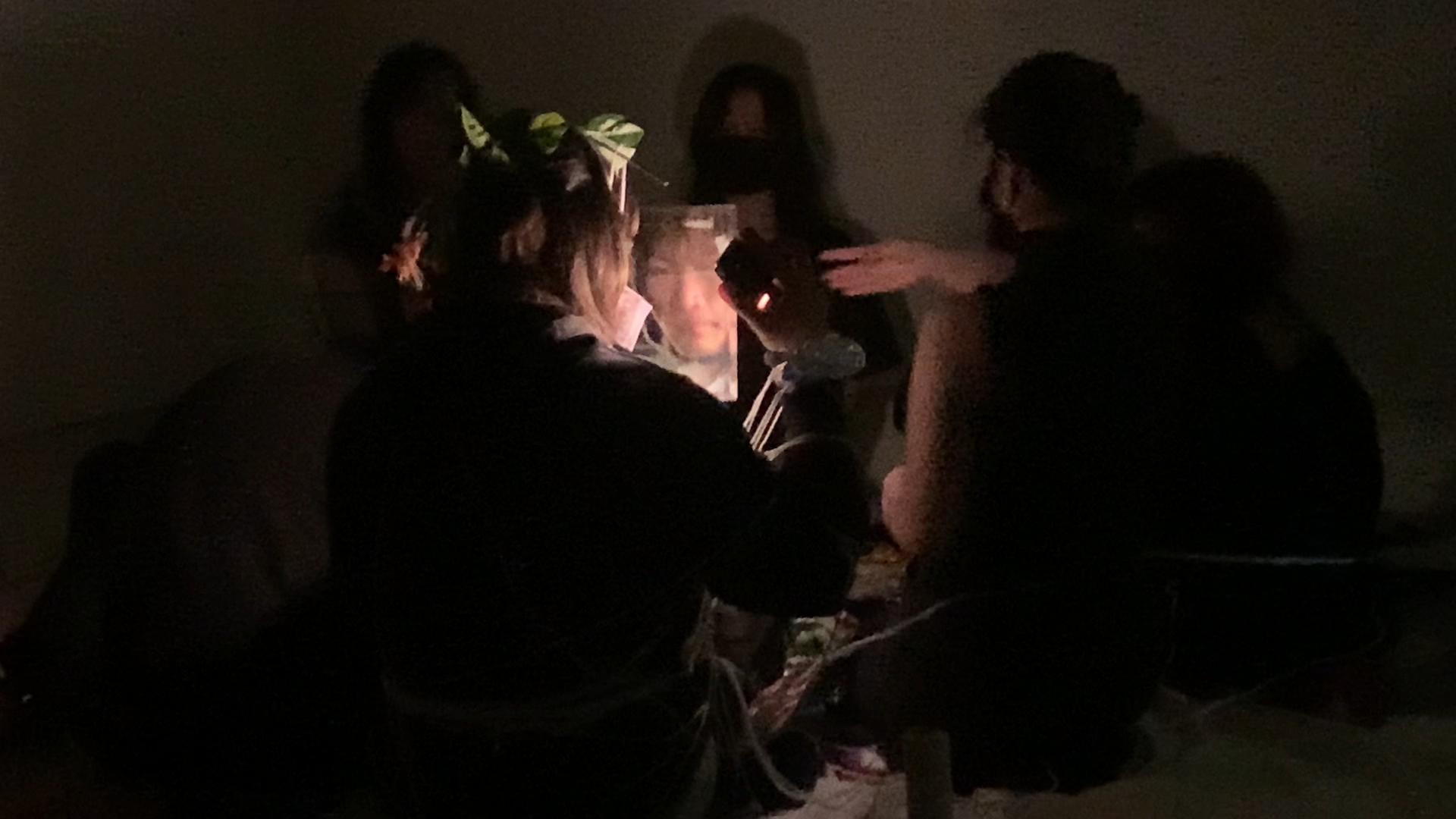
(from the camera view)
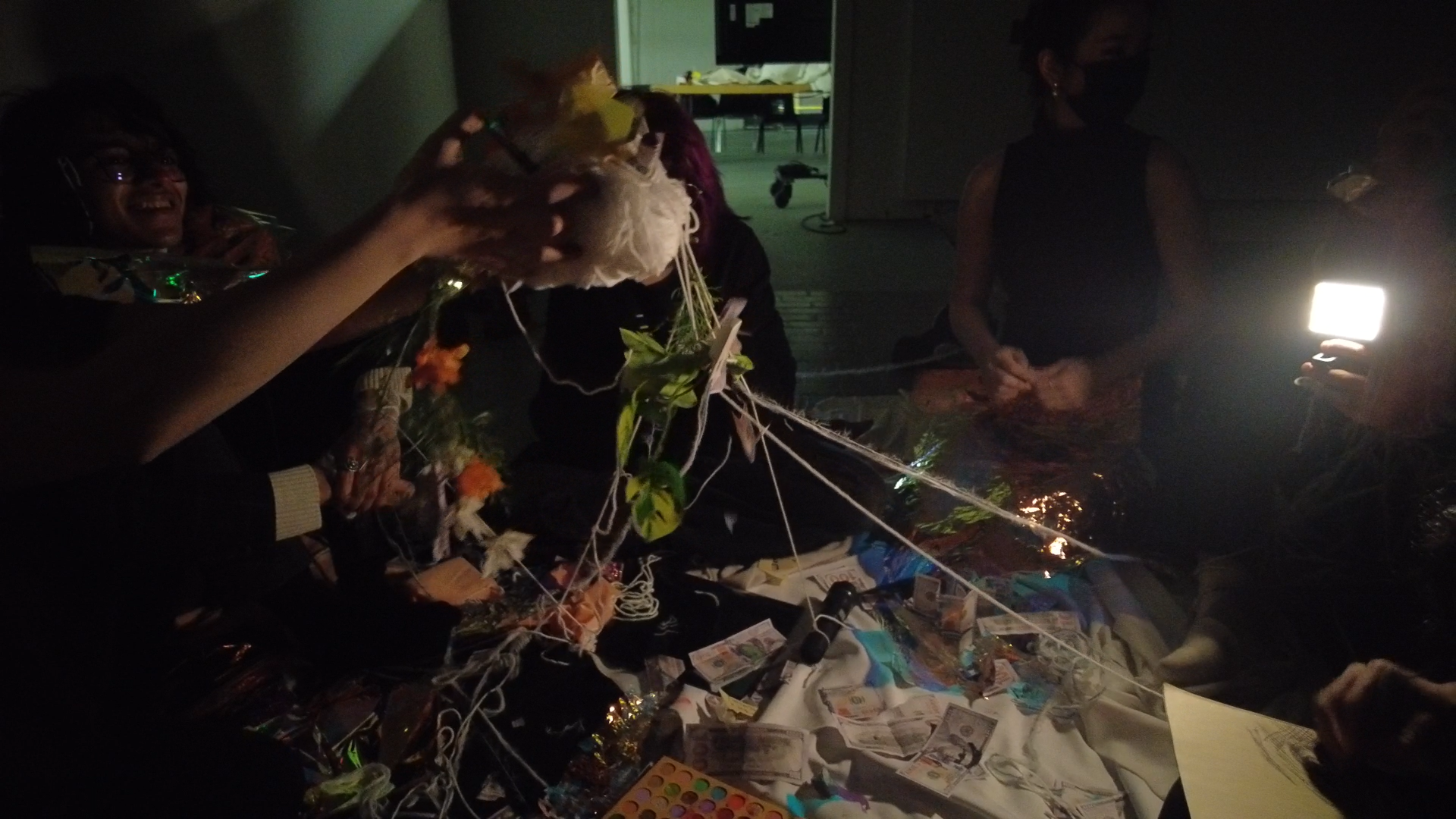
participants throwing the yarn
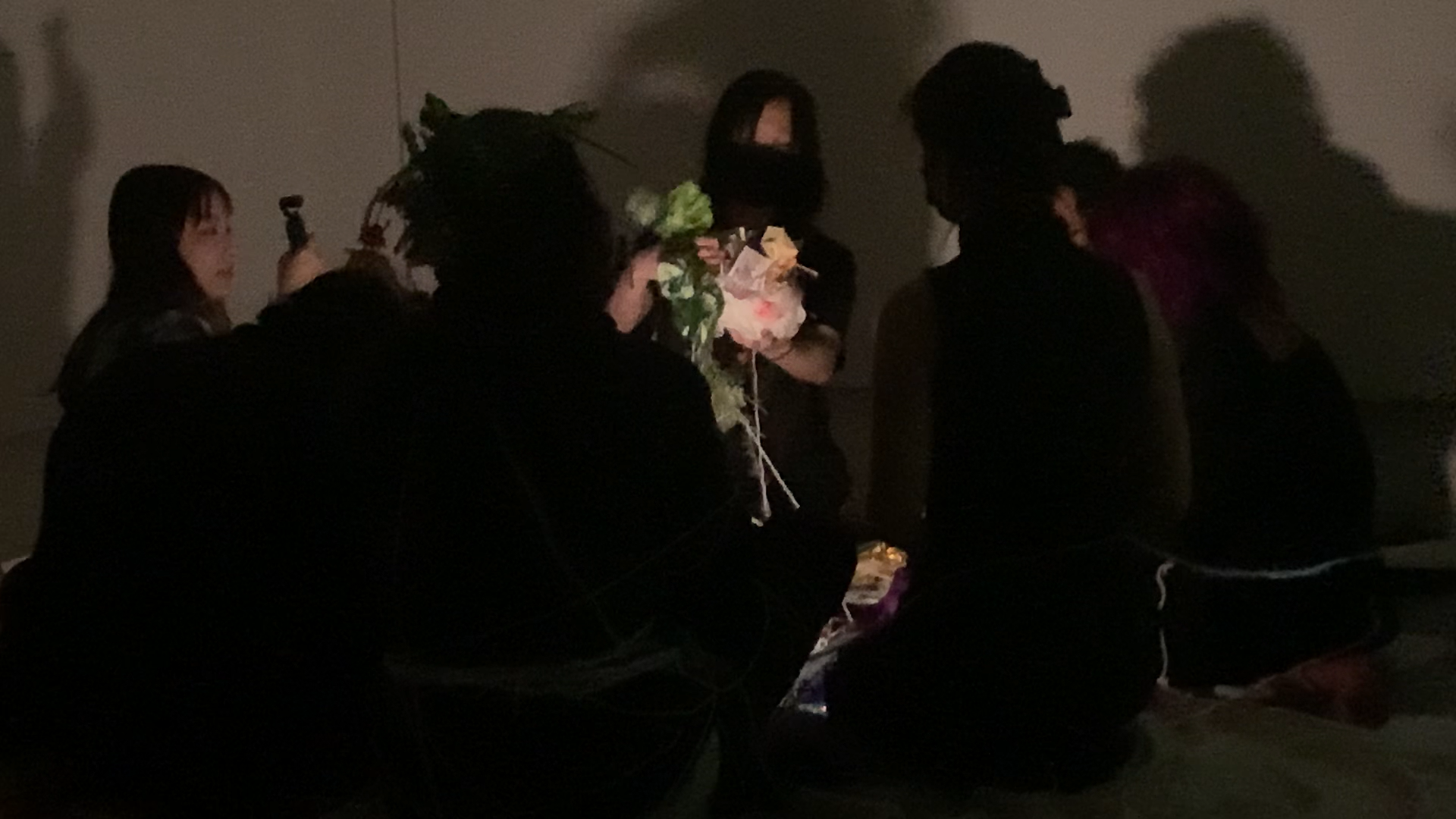
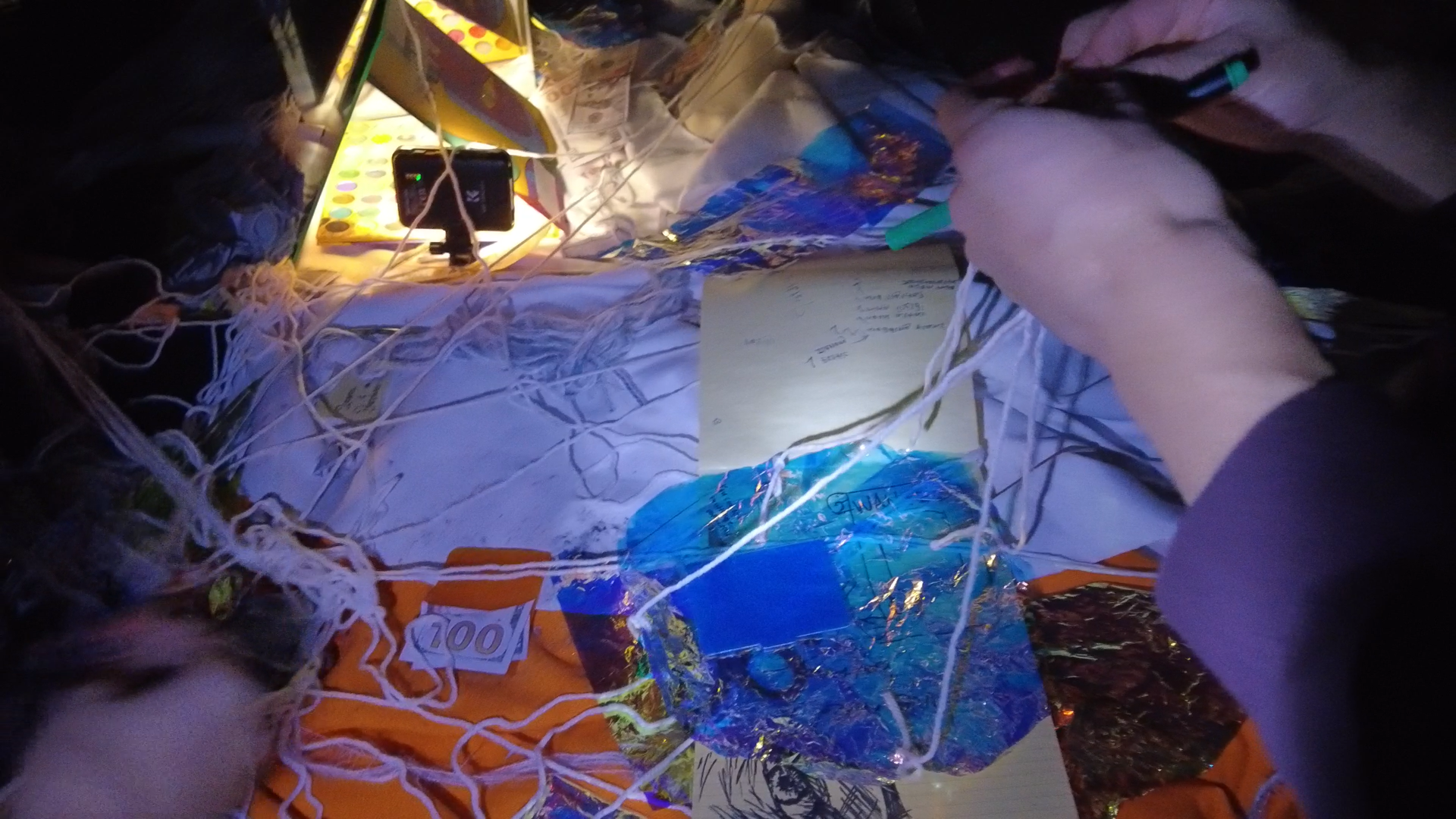
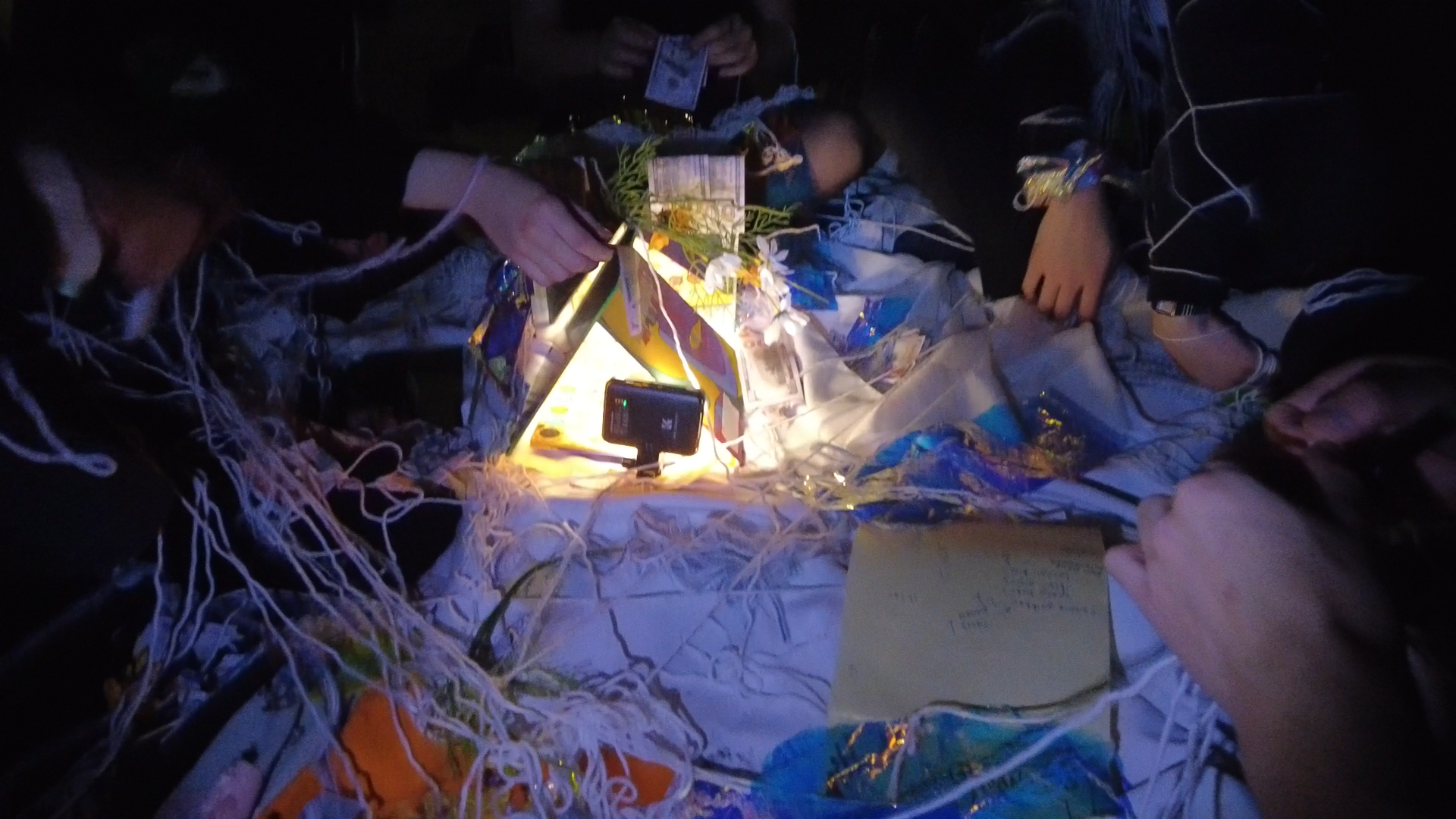
participants making a glowing little house (?)

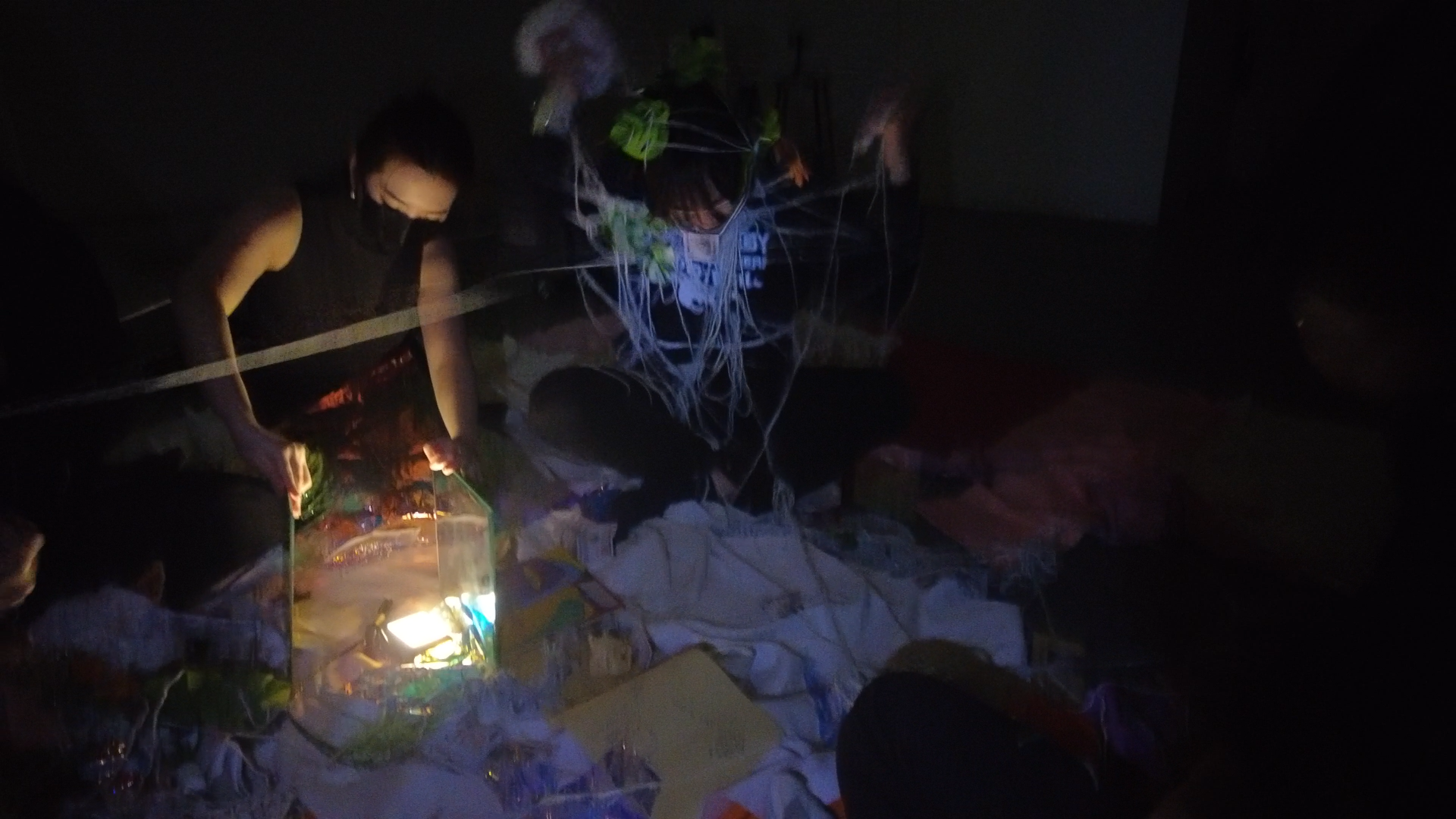

the glowing little house (?)
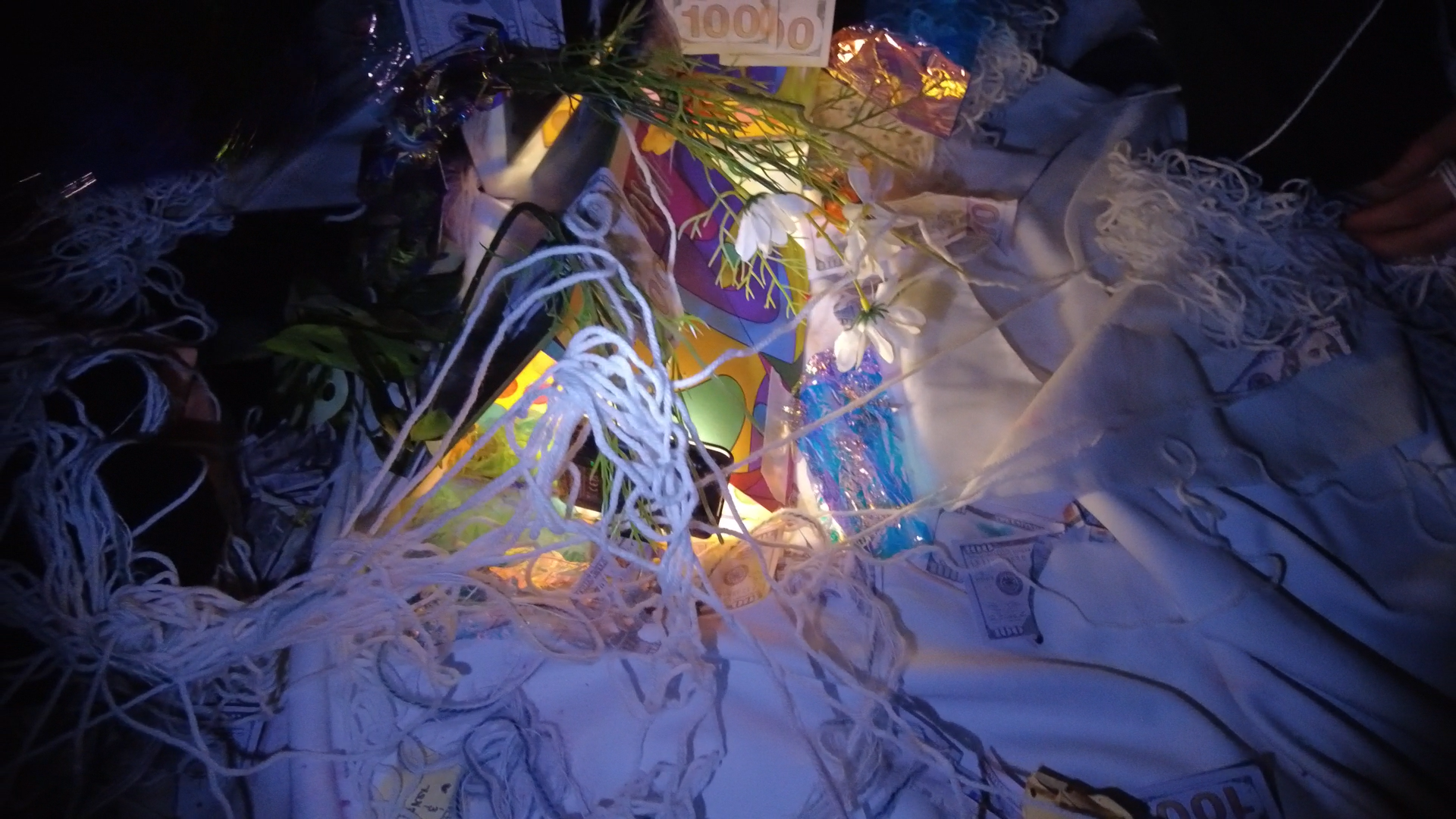
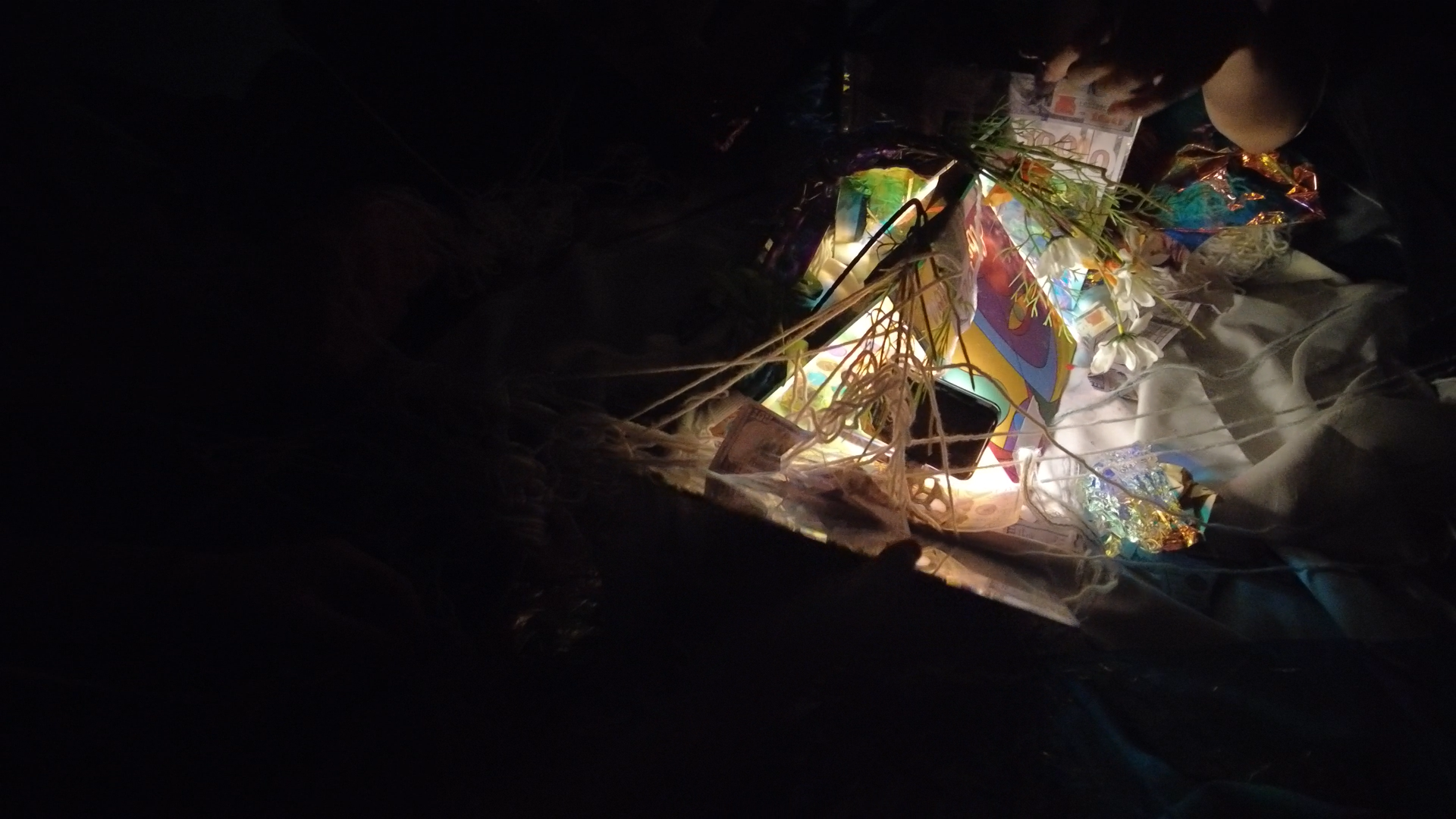
...keep glowing
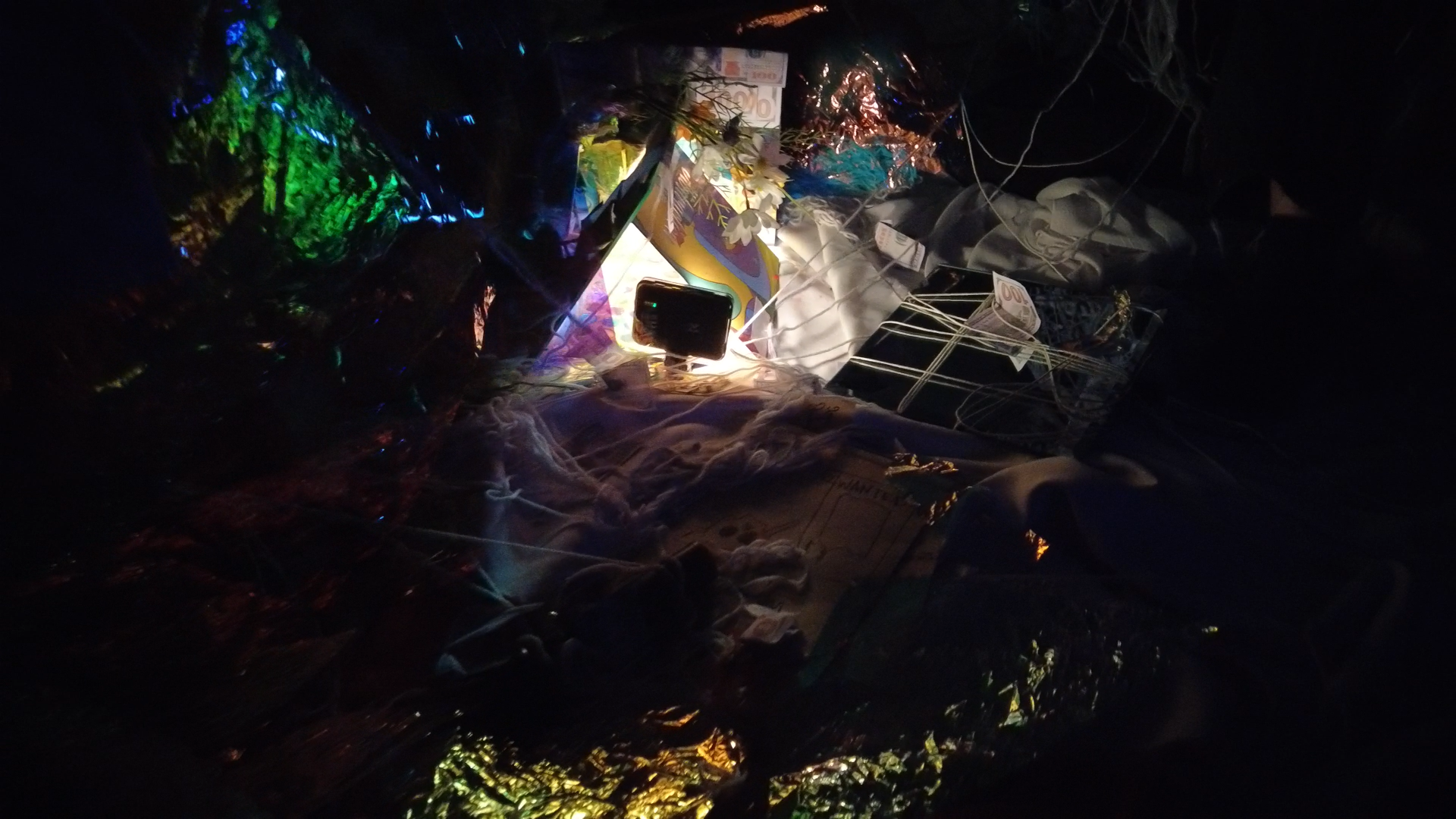
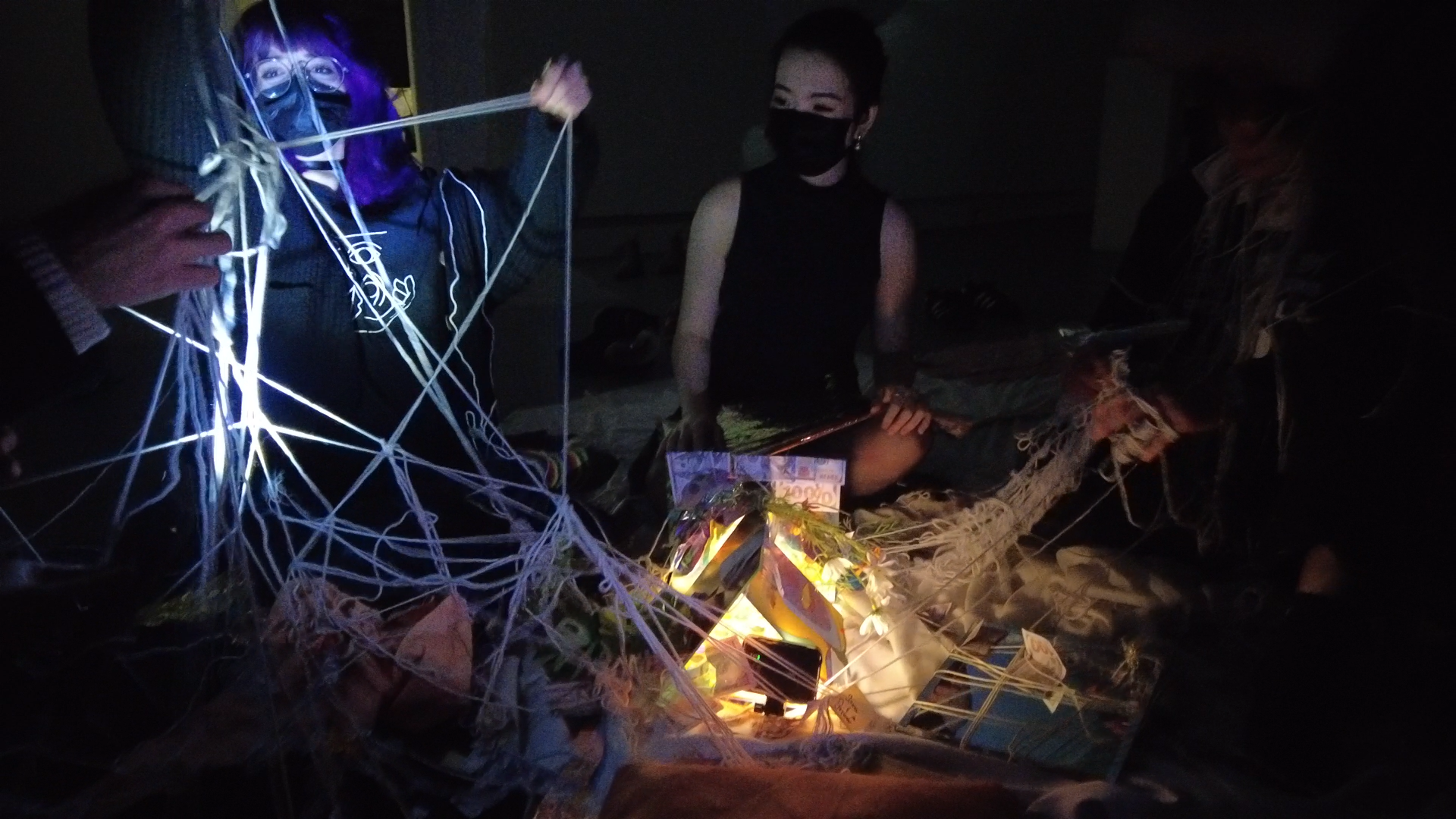


participants are playing the string game called "cat's cradle"(翻花绳)
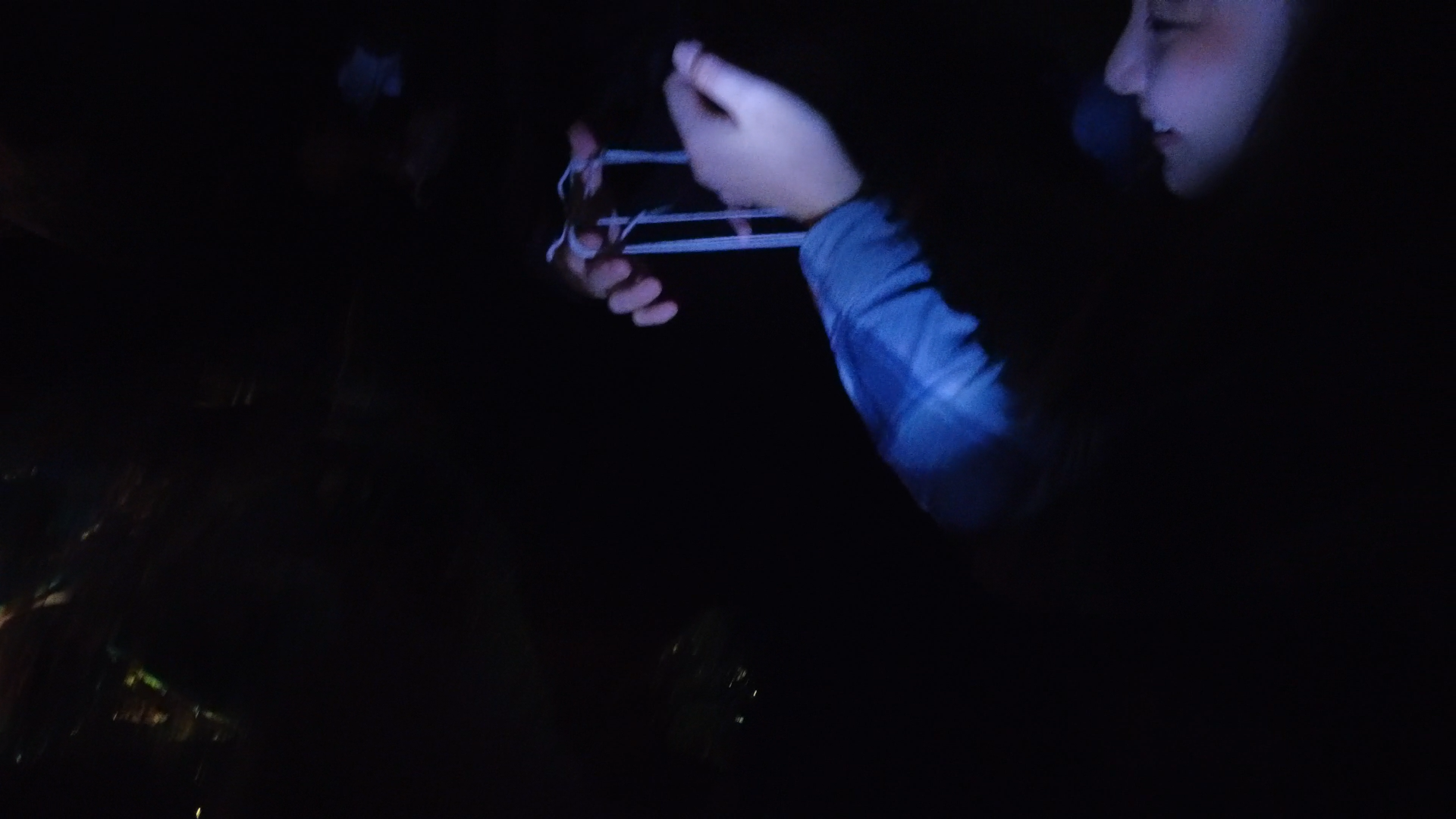

... on-the-spot teaching


Explanation & the Theories Referred
After the previous iteration of this work, I realized that although the actions themselves were engaging, the work lacked a concrete conceptual context. I started simplying wanting to do a “social experiment” without verbal communication to explore new forms of relations due to my dissatisfication with a kind of social indifference rooted in societal norms.
A few months later after reading Marx, Malabou, and some Derrida, I began to understand Capitalism as a fundamental structure shaping labor, value, politics, and especially human relationships, and was then able to contextualize this dissatisfication. I came to see interpersonal alienation not as a personal problem, but as structurally produced, and this became the real motivation for performing again and exploring “new forms of relation”.
The previous iteration also confirmed my decision to shift artistic authority into a facilitative role: participants with full agency, and the work’s trajectory remains contingent on their actions. Rather than operating as passive triggers, participants and artist meet as equals, jointly shaping a temporary social contract through embodied interaction.
The previous iteration also revealed practical limits that motivated some design changes:
Changes in the object set, as in the trial there’s too much emphasis on craft-making.
Added familiar anchors to make the space more comfortable: familiar music playlist, explicit right to exit at any time, low-light environment, and offering of masks to reduce discomfort with camera documentation.
Changes in the object set, as in the trial there’s too much emphasis on craft-making.
Added familiar anchors to make the space more comfortable: familiar music playlist, explicit right to exit at any time, low-light environment, and offering of masks to reduce discomfort with camera documentation.
___
Specifically, one of Capitalism’s most direct impacts on society lies in its effect on people within society: commodities are not merely objects, but carry abstract relationships between people. Marx observed that “relations between things mask relations between people,” (Marx, Capital, p. 60) and how it exists as a very fundamental structure—for example, how people decide to allocate their time (the daytime hours occupied by the 8-hour workday), how people decide their pursuits (capital accumulation such as money), and macroscopically, how Capitalism determines economic structure and largely influences how Politics operates, etc. And as capitalism further evolved into the more systematically implemented neoliberal capitalism, this alienation objectifies people as objects in the production chain, dulling our perception of genuine interpersonal bonds (Marx, 1844 Manuscript).
I observed that my dissatisfaction is this systematic societal alienation happening in the context of capitalism and the top-down, vertical, rigid power structures it produces. I cannot provide a concrete vision or solution for this status quo, but inspired by Malabou’s realization of how new structures emerge through praxis rather than theory (Malabou, Stop Thief! Anarchism and Philosophy, p. 214), I wanted this work to provide a platform, incorporate some of my ideas about the possibilities of a new structure, and throw the power to answer this question to the participants, observing together with them the answers their actions provide (i.e., a “social experiment”).
Also, through carefully selecting the interactive object set, I categorize these objects into a “lexicon” which I call “social agents”. This is because they are both commodities (since I bought them and they cannot be discussed without their characteristics as commodities) and can be mediums that trigger “relationships,” replacing verbal communication. Yarn doesn’t need to be used to knit clothes, eyeshadow doesn’t have to be applied to eyelids, ice cubes can be used for purposes other than lowering temperature... only then can objects have new identities.
While providing an “object lexicon,” I also banned verbal communication in the instructions prior to the performance, to force participants to rely on the physicality and symbolism of the object set to communicate. These two designs attempt to create a sense of unfamiliarity for participants, so they can leave the real world and enter this temporary, unique “new possibility.”
This context removed the conceptual ambiguity from the work, transforming what it pursues from “any new possibility of relationship” into a non-verbal, decentralized “micro-utopia”, a temporary community that denies alienated reality (all objects originate from the capitalist production system) and attempts to create a brief “state of exception”.
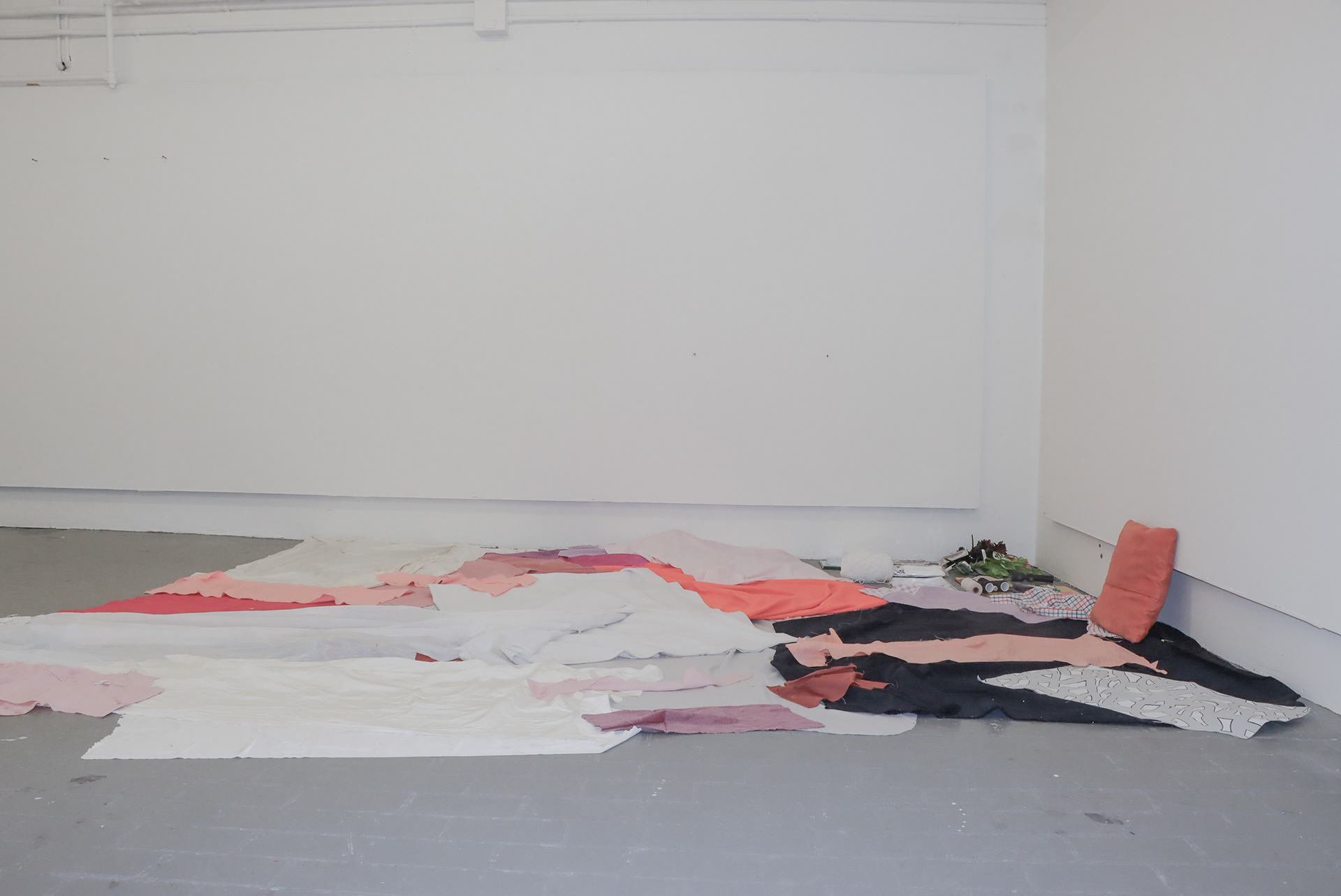
Before...

The setup
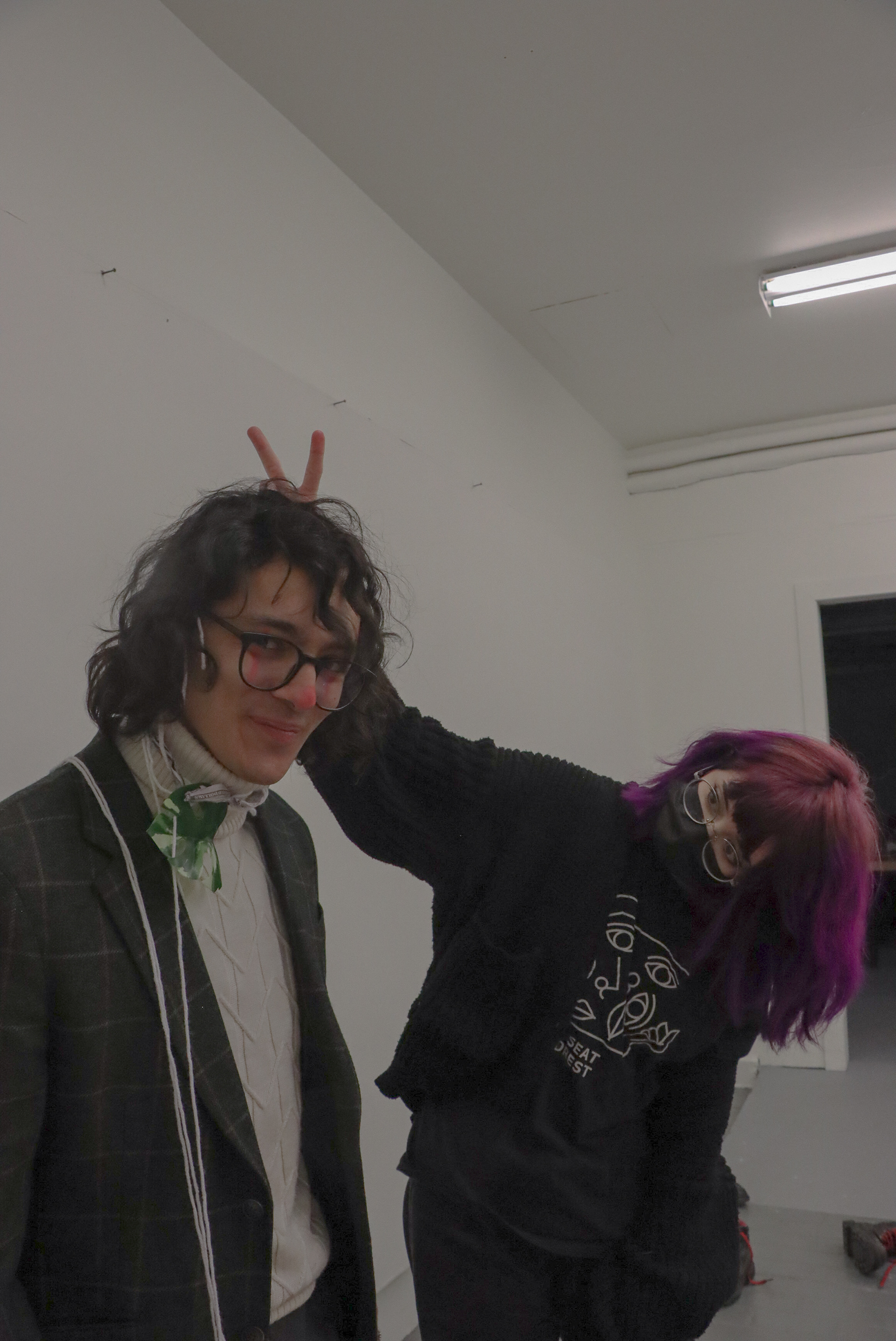

After...

After...
The Process Design
Prior to the beginning of the event, participants are offered masks to wear if they wish to hide their identities as the event is throughtoutly documented. They are then invited to sit in a circle in the dark, with me joining them as part of the group. Background music plays from a playlist built by the participants, who contribute songs prior to the event.
Prior to the beginning of the event, participants are offered masks to wear if they wish to hide their identities as the event is throughtoutly documented. They are then invited to sit in a circle in the dark, with me joining them as part of the group. Background music plays from a playlist built by the participants, who contribute songs prior to the event.
When the artwork starts, the following instructions are given to them:
- They are free to act in any way and do anything as they wish.
- This work is classified as performance art, yet they are not performers (i.e., they are not performing for the camera, as it serves only a documentary purpose); so, they are participants, simply exploring and having fun.
- Speaking is not allowed during the event.
- They may reject any form of physical contact (e.g., if they do not wish for me to draw on their face using eyeshadow) and are free to leave the room at any time to withdraw from the event.
- They are free to act in any way and do anything as they wish.
- This work is classified as performance art, yet they are not performers (i.e., they are not performing for the camera, as it serves only a documentary purpose); so, they are participants, simply exploring and having fun.
- Speaking is not allowed during the event.
- They may reject any form of physical contact (e.g., if they do not wish for me to draw on their face using eyeshadow) and are free to leave the room at any time to withdraw from the event.
Then, I will perform a series of actions using prepared objects. The sequence, in order, includes:
1. Hand a participant a flashlight.
2. Distribute ice cubes to some participants.
3. Give a participant a light with colored plastic filter pieces.
4. Provide a participant with a pocket camera in selfie mode, set to record.
5. Distribute a deck of fake money to each participant.
6. Show two participants an eyeshadow compact with 72 colors, using a small UV flashlight to reveal the label "eyeshadow, this is applicable to skin" written in UV marker. Then, using a cotton swab dipped in eyeshadow, I draw patterns on their faces, and lastly pass the swabs and compact to another participant.
7. Cut fake flowers and branches using a scissor and hand them to some participants, and then pass the scissor and fake plants to another participant.
8. Loosely wrap yarn around some participants and then hand the yarn to another.
9. Distribute small pieces of mirrors to some participants.
10. Give holographic foil sheets, cut into strips, to some participants.
11. Hand out additional mirrors to participants.
12. Write "Hi" with a UV marker on a scratch paper pad, then pass the pen, marker, and paper to a participant.
13. Distribute more strips of holographic foil to participants.
14. Wrap more yarn around some participants.
1. Hand a participant a flashlight.
2. Distribute ice cubes to some participants.
3. Give a participant a light with colored plastic filter pieces.
4. Provide a participant with a pocket camera in selfie mode, set to record.
5. Distribute a deck of fake money to each participant.
6. Show two participants an eyeshadow compact with 72 colors, using a small UV flashlight to reveal the label "eyeshadow, this is applicable to skin" written in UV marker. Then, using a cotton swab dipped in eyeshadow, I draw patterns on their faces, and lastly pass the swabs and compact to another participant.
7. Cut fake flowers and branches using a scissor and hand them to some participants, and then pass the scissor and fake plants to another participant.
8. Loosely wrap yarn around some participants and then hand the yarn to another.
9. Distribute small pieces of mirrors to some participants.
10. Give holographic foil sheets, cut into strips, to some participants.
11. Hand out additional mirrors to participants.
12. Write "Hi" with a UV marker on a scratch paper pad, then pass the pen, marker, and paper to a participant.
13. Distribute more strips of holographic foil to participants.
14. Wrap more yarn around some participants.