An Exhibition to the Wildlife (2025), Site-specific Time Installation; 4 days (May 28-31); canvases, acrylic paints, turkey feather, blanket; 2.5m x 2m x 3m; under the chestnut tree, Nelson, Canada
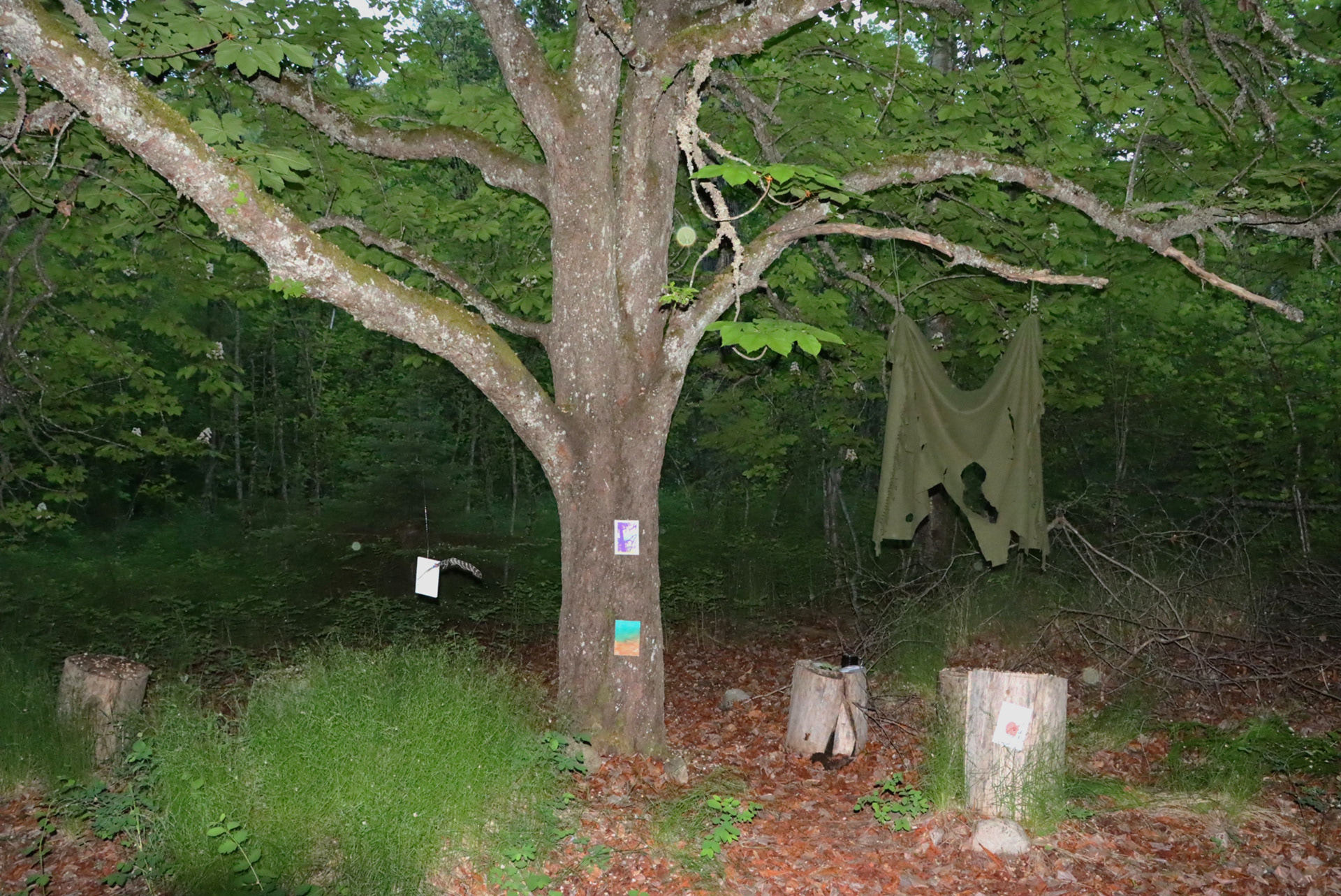

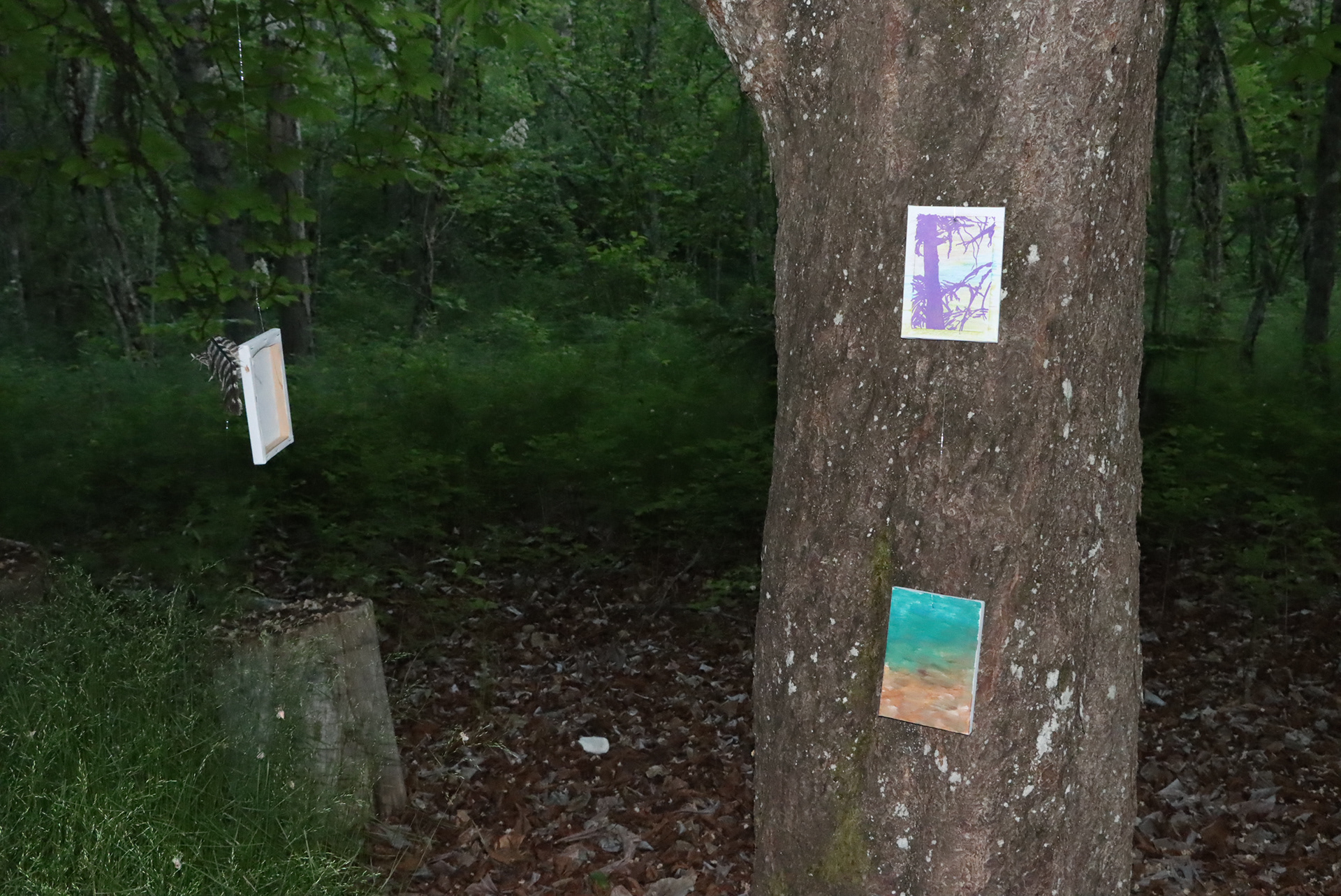
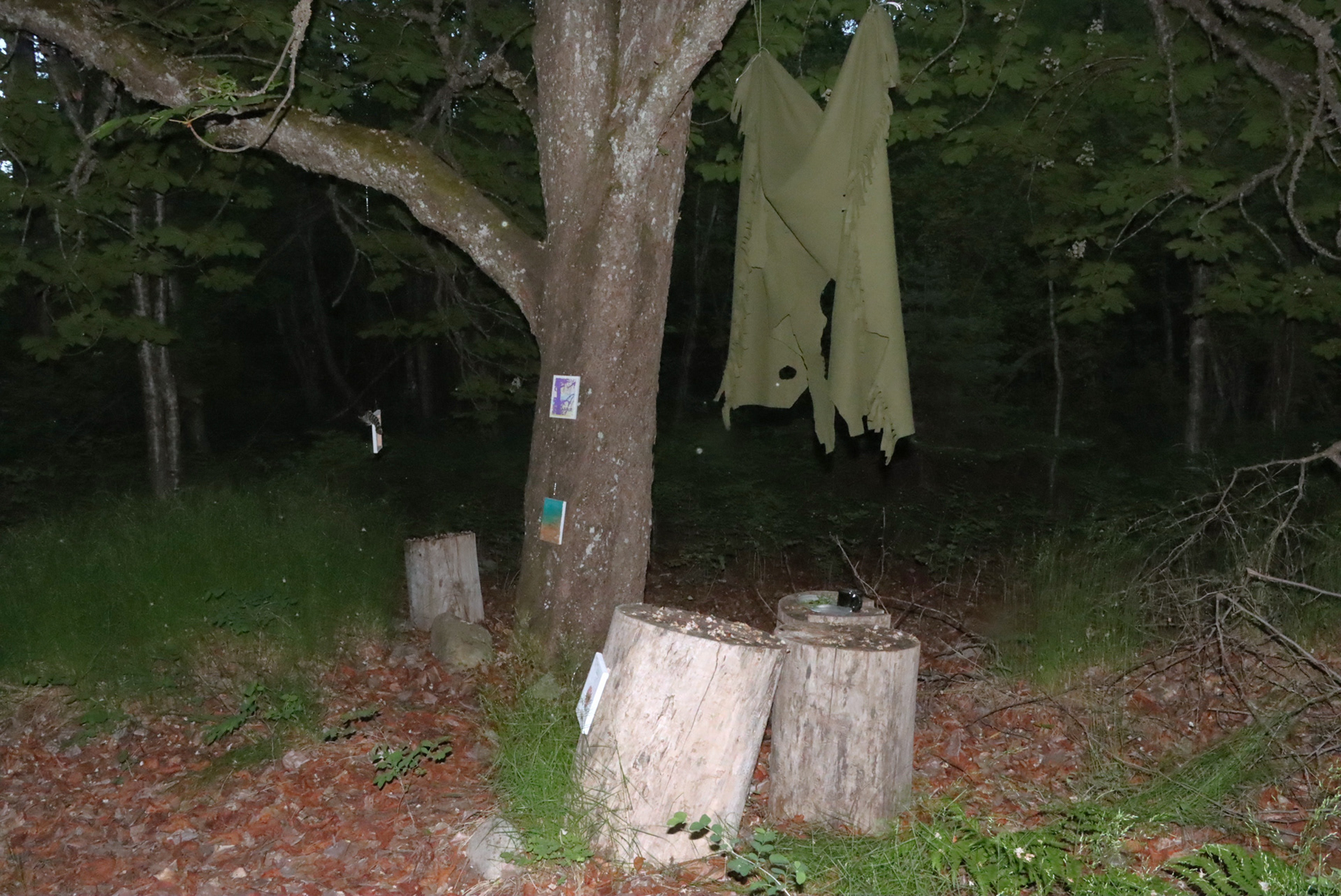
Photo Documentation
Installation process documentation (on May 28, 2025):

The chestnut tree prior to installation
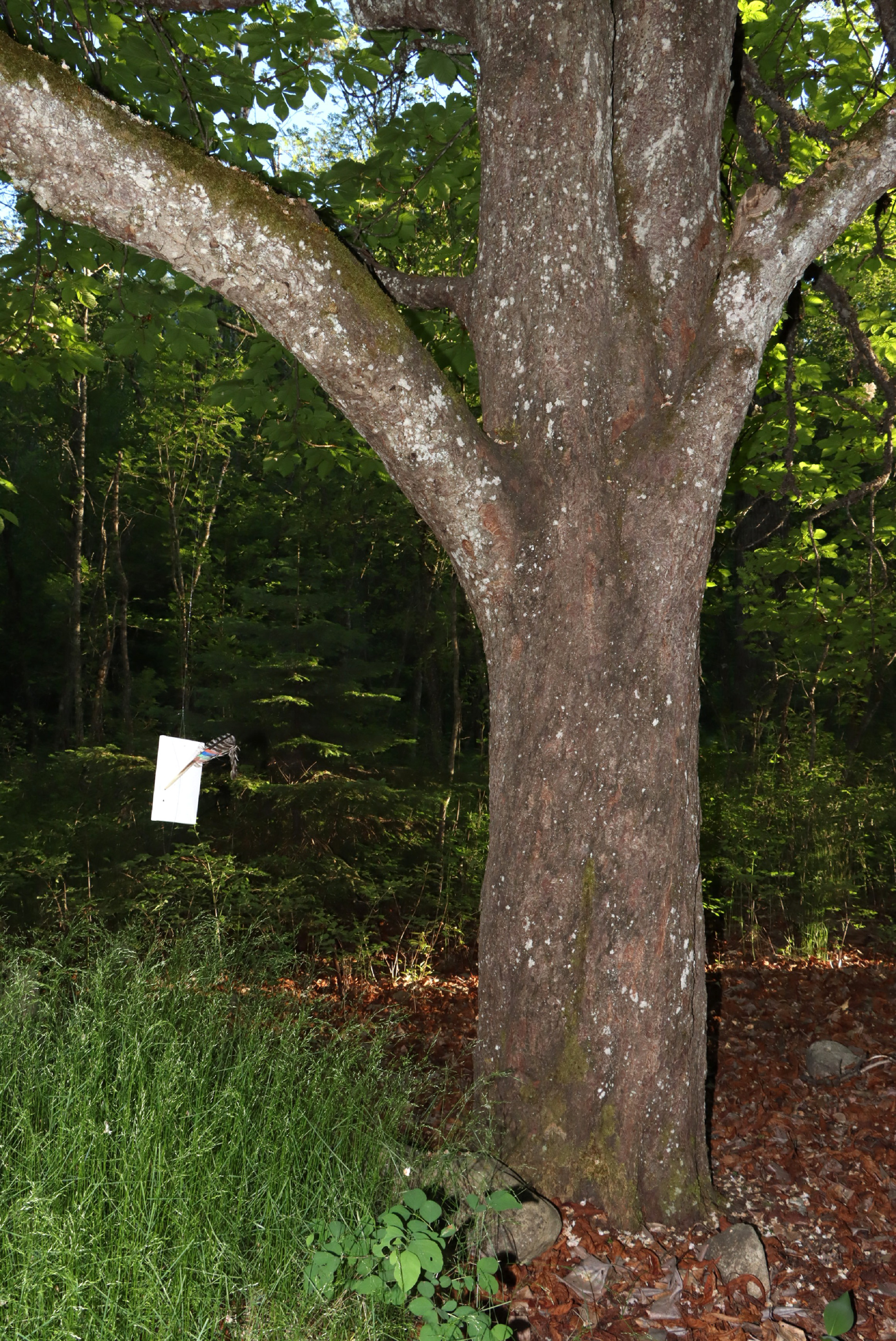
installing process documentation
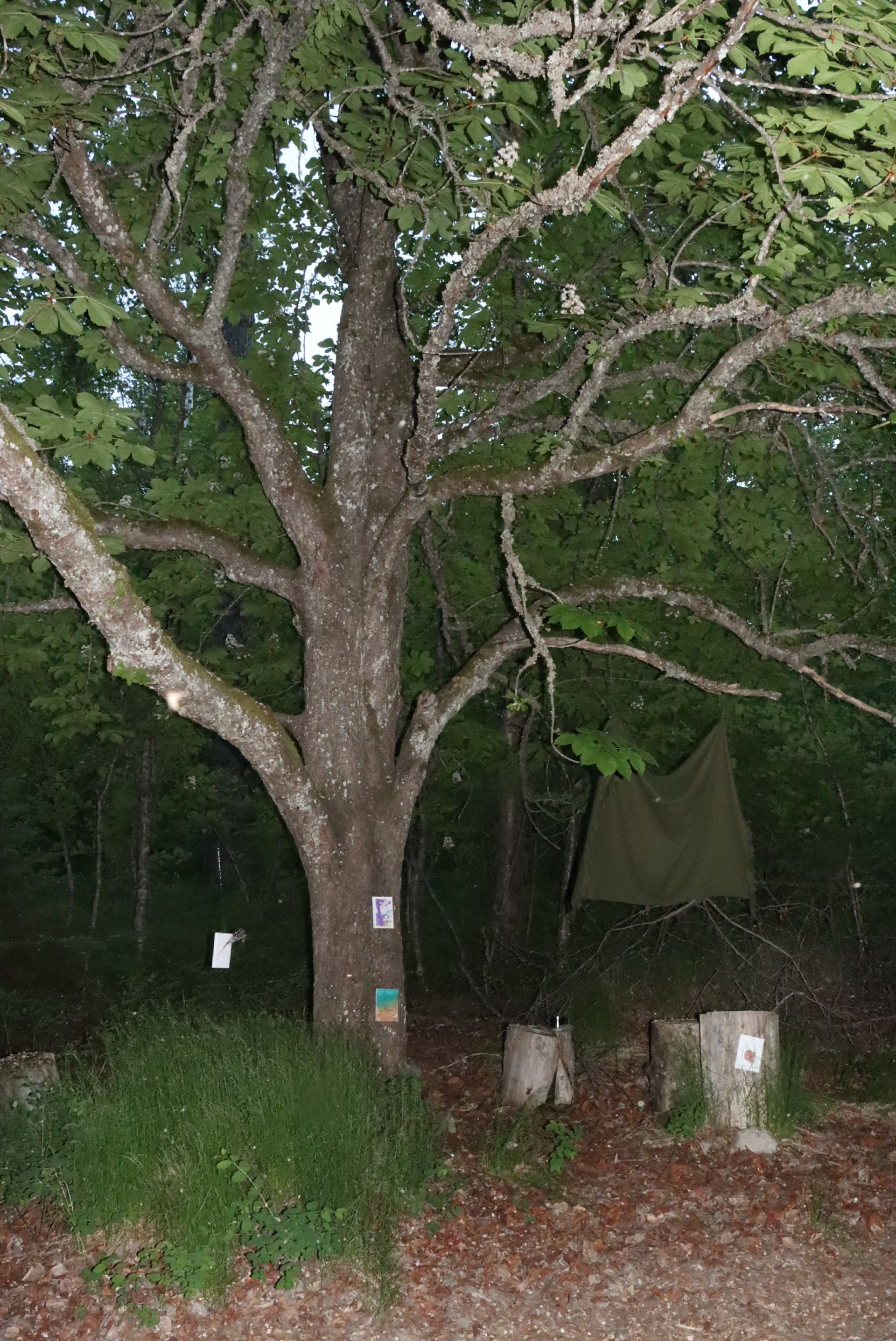

Detailed documentation of the six individual artworks in this exhibition/artwork:
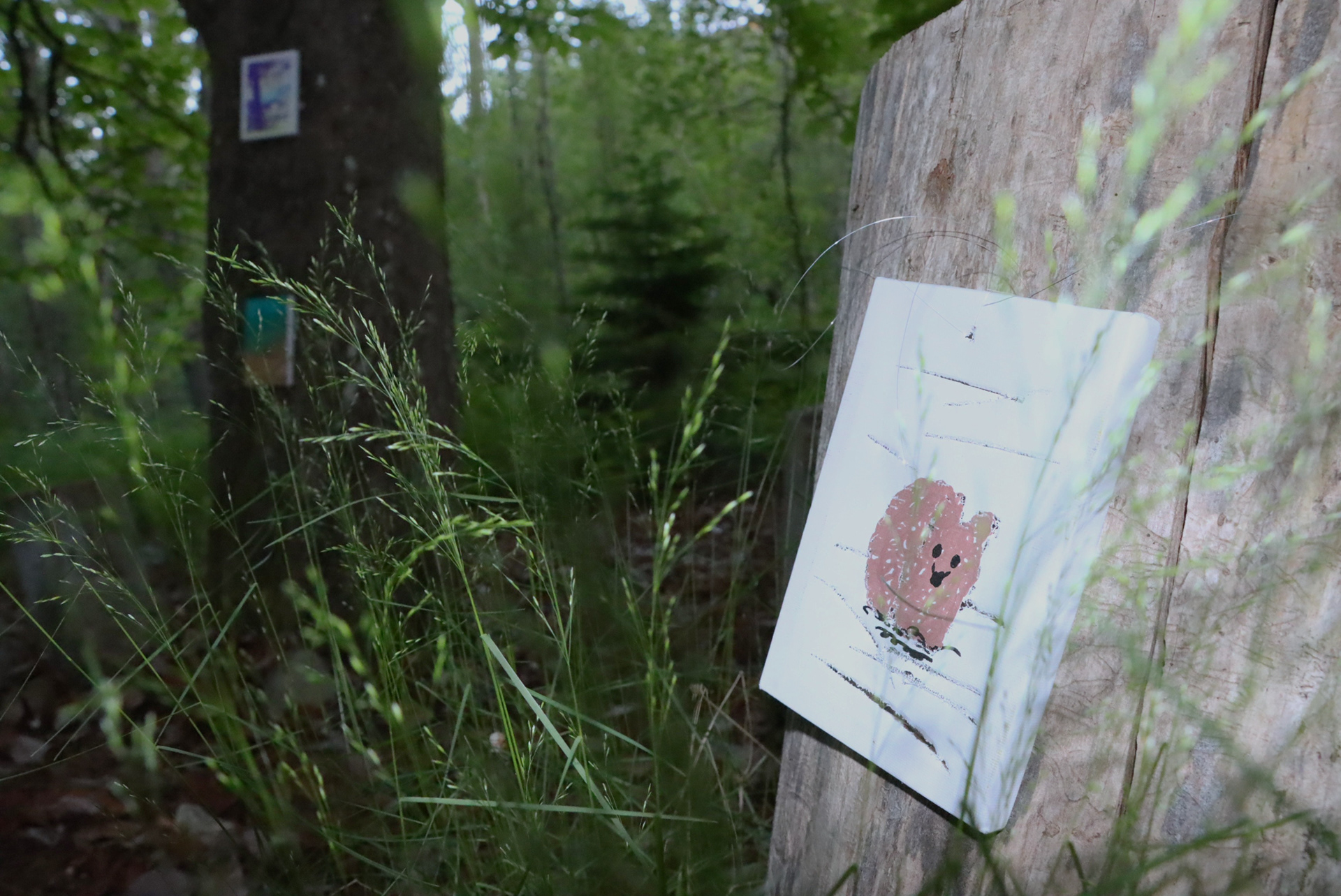
Untitled I (2025), mixed media: colored markers and scissor-cut canvas, 13 × 18 cm, by Yolanda Ren.
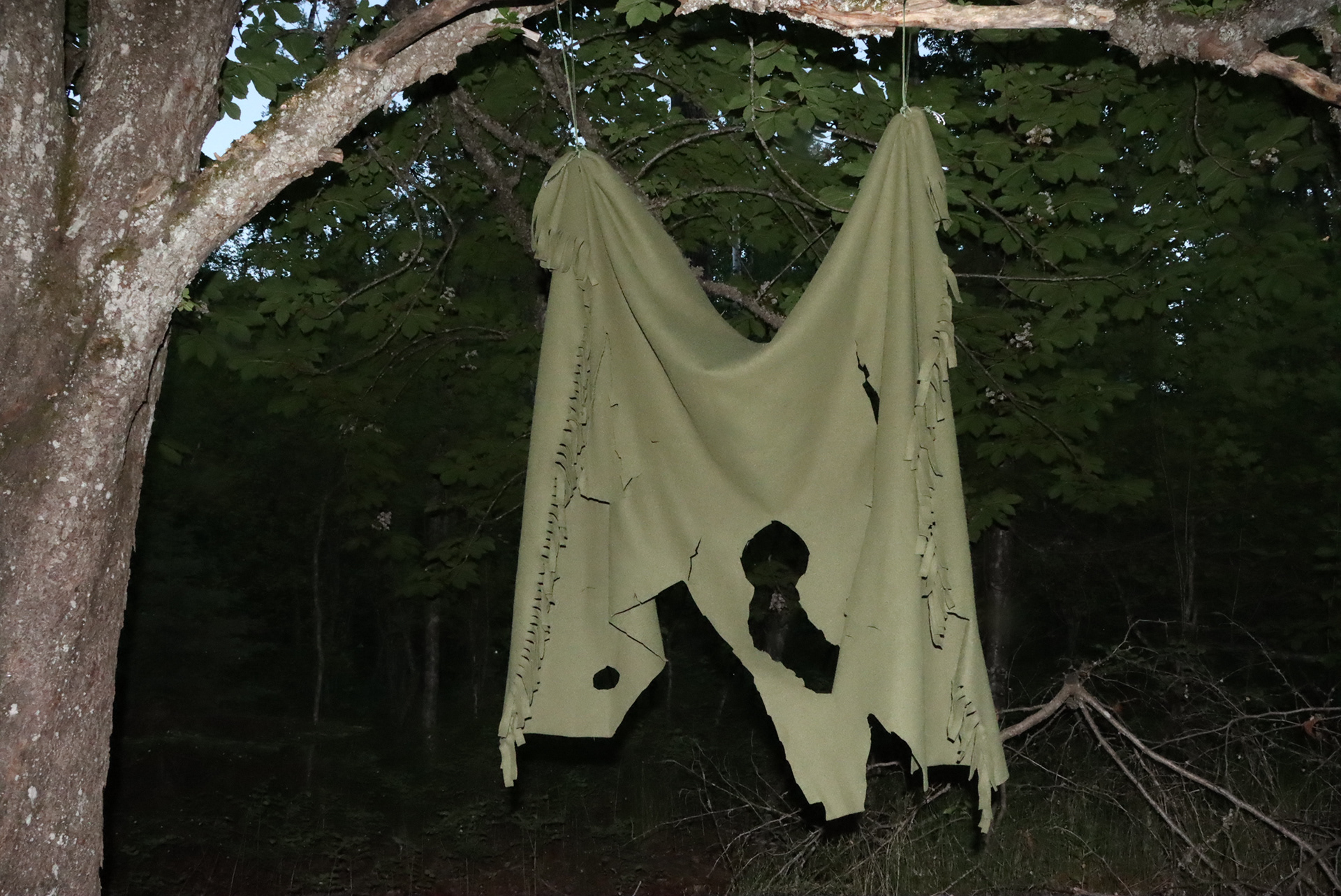
Untitled II (2025), installation, by Yolanda Ren.
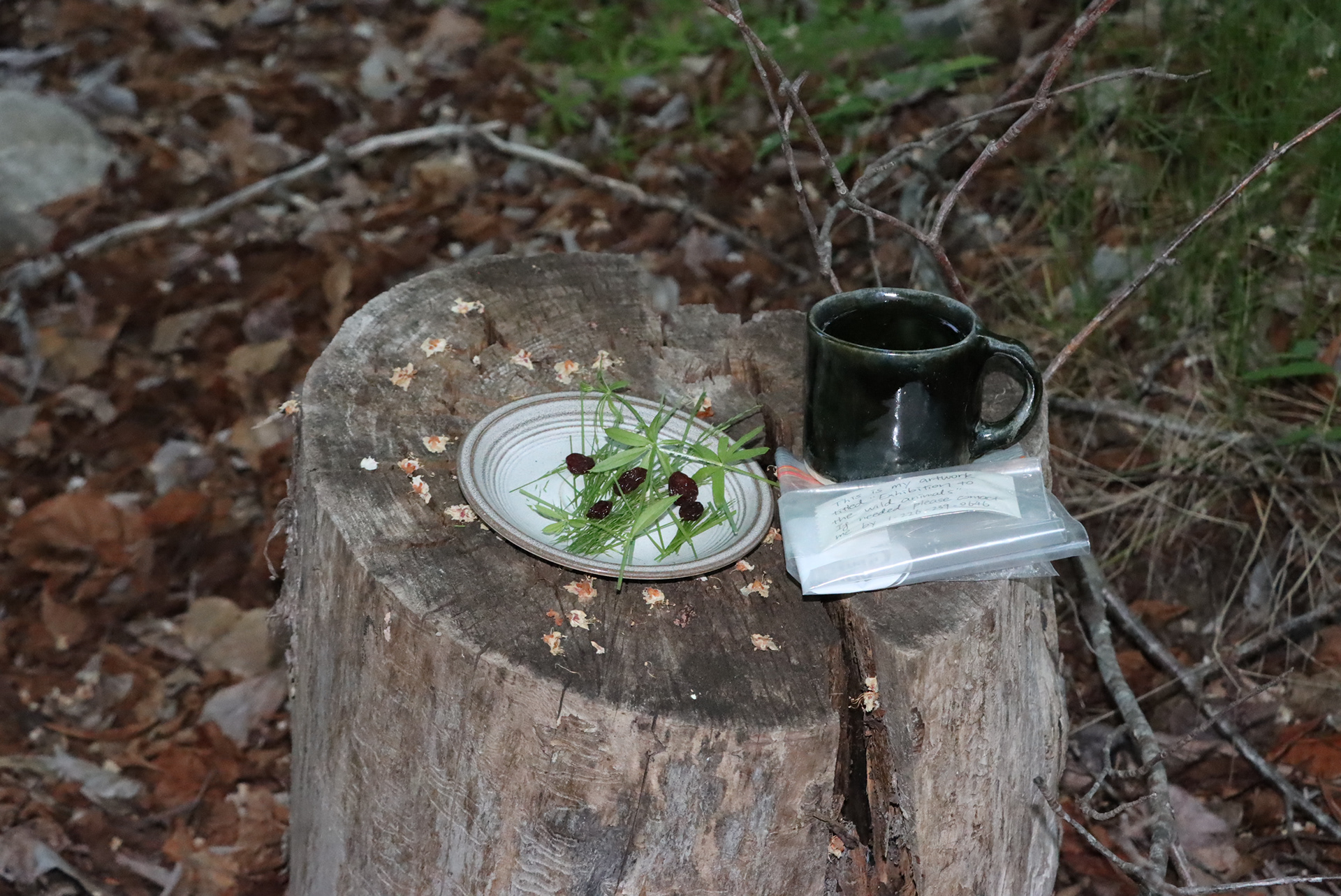
Untitled III (2025), interactive installation, by Yolanda Ren.
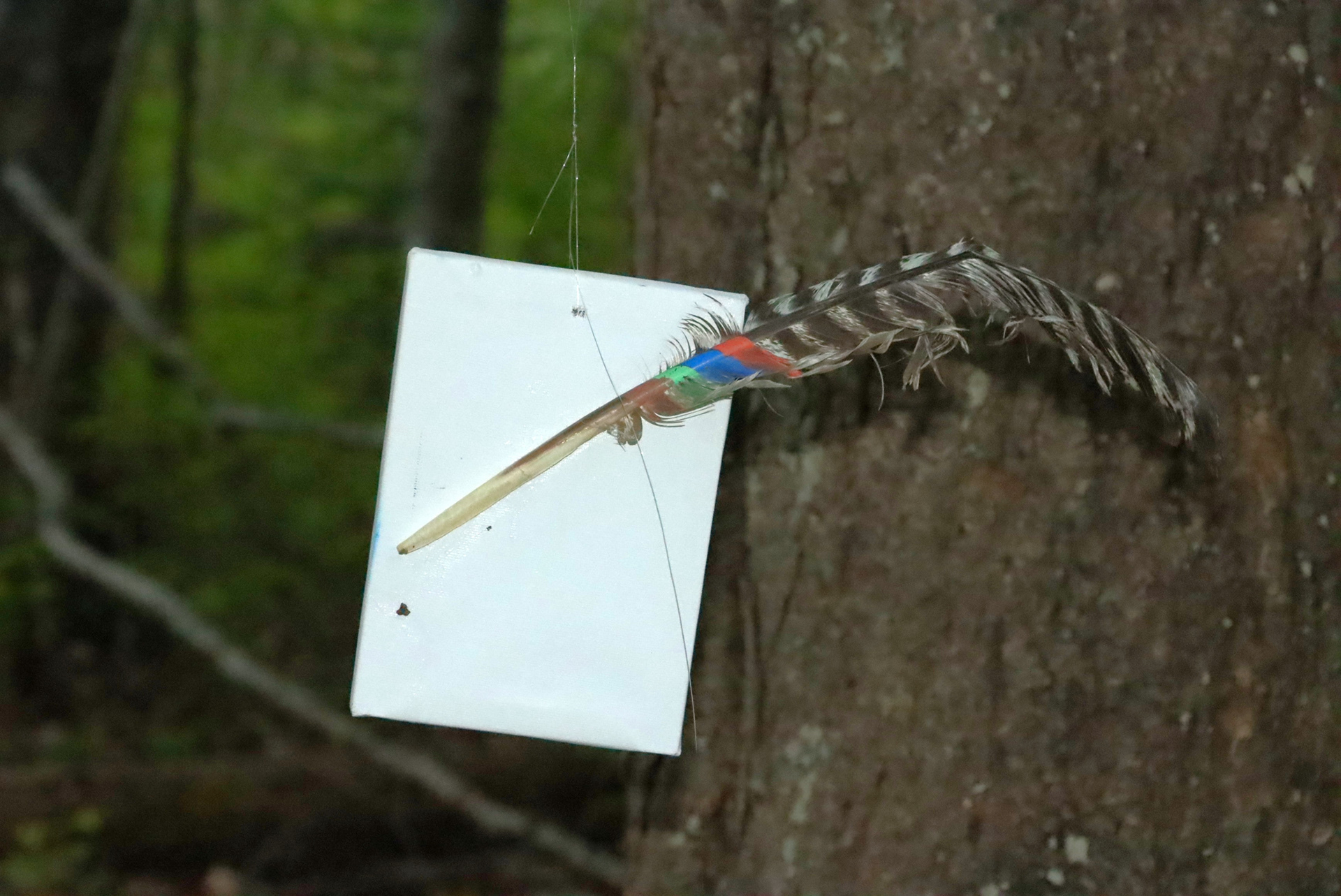
Untitled IV (2025), mixed media: painted turkey feather (colored marker), 13 × 18 cm, by Yolanda Ren.

Untitled V (2025), acrylic, 13cm x 18 cm, by Yolanda Ren.
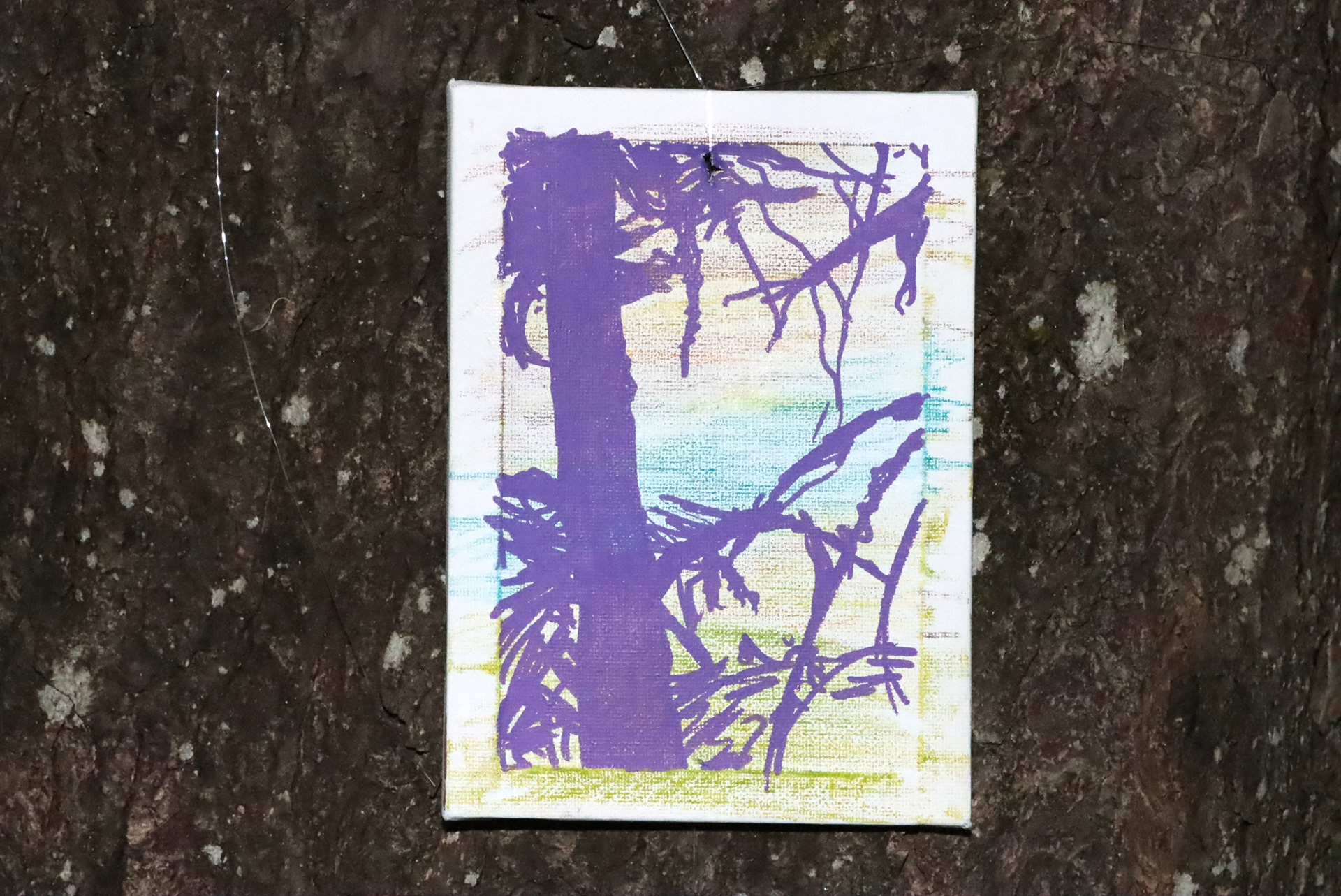
Untitled VI (2025), acrylic and colored marker, 13cm x 18 cm, by Yolanda Ren.
Documentation 0f the work by the end of this "exhibition" (on May 31, 2025), and observable traces of wildlife interactions with this artwork/this exhibition:
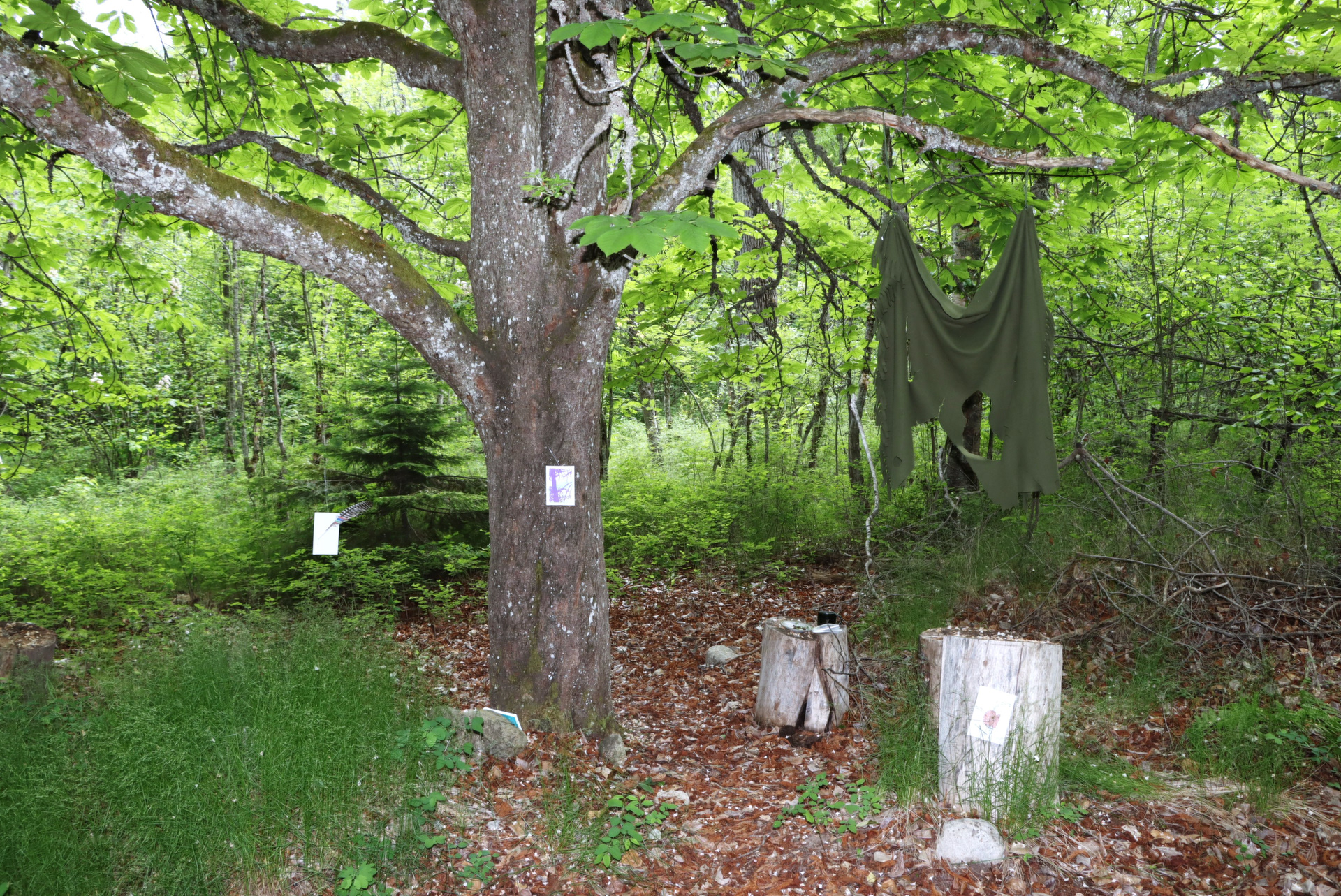
The artwork by May 31
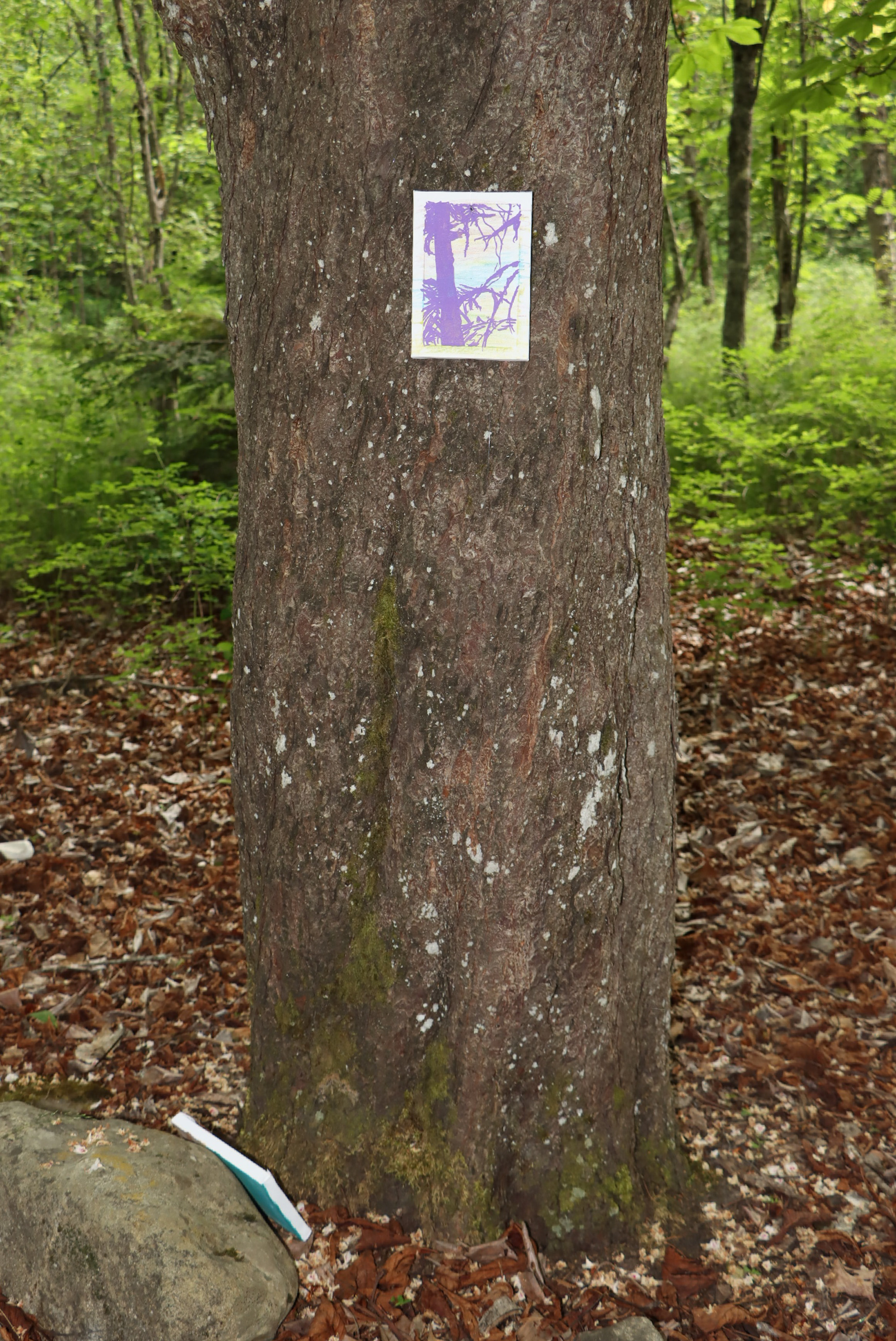
One drawing fell

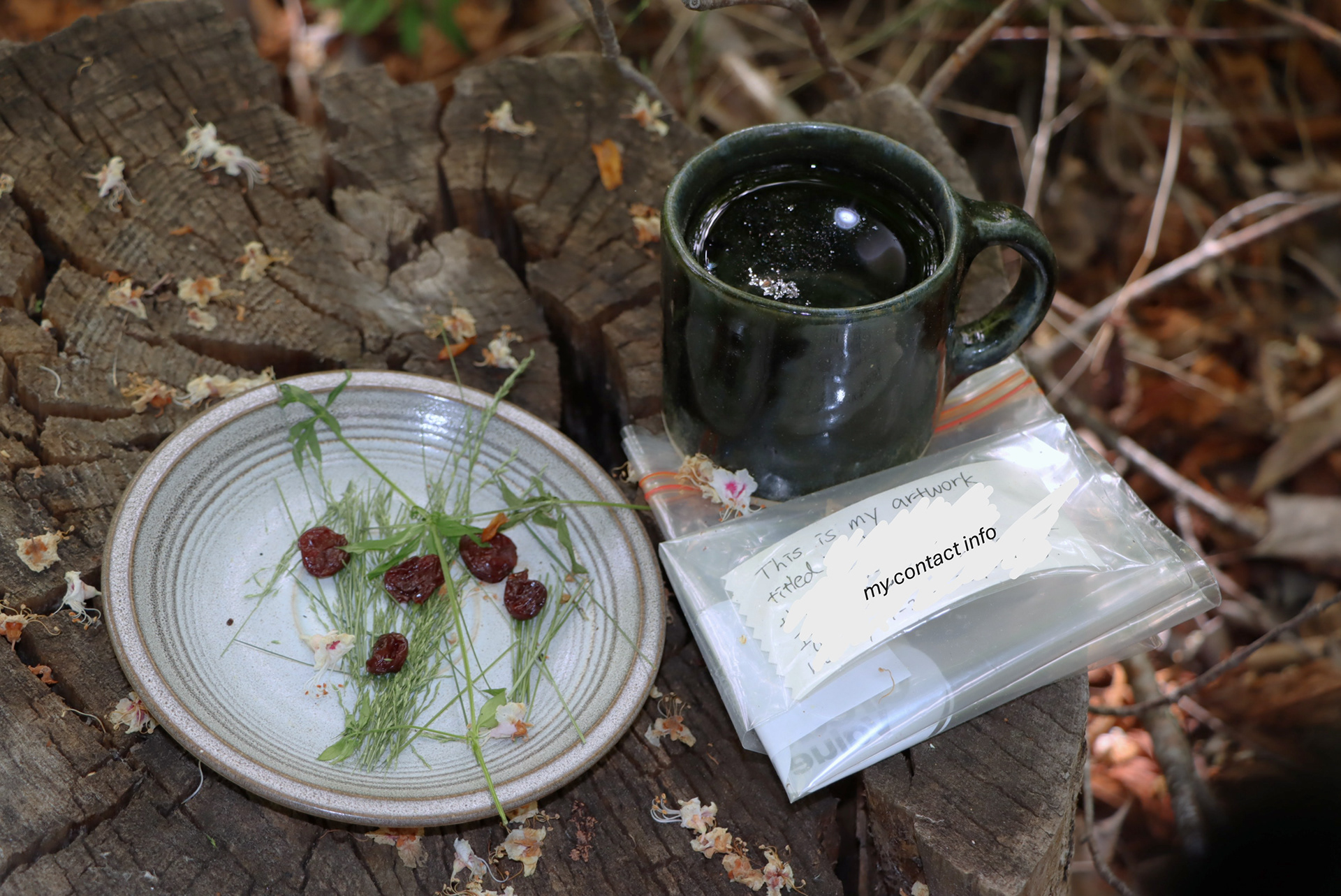
The food was barely touched (surprisingly)
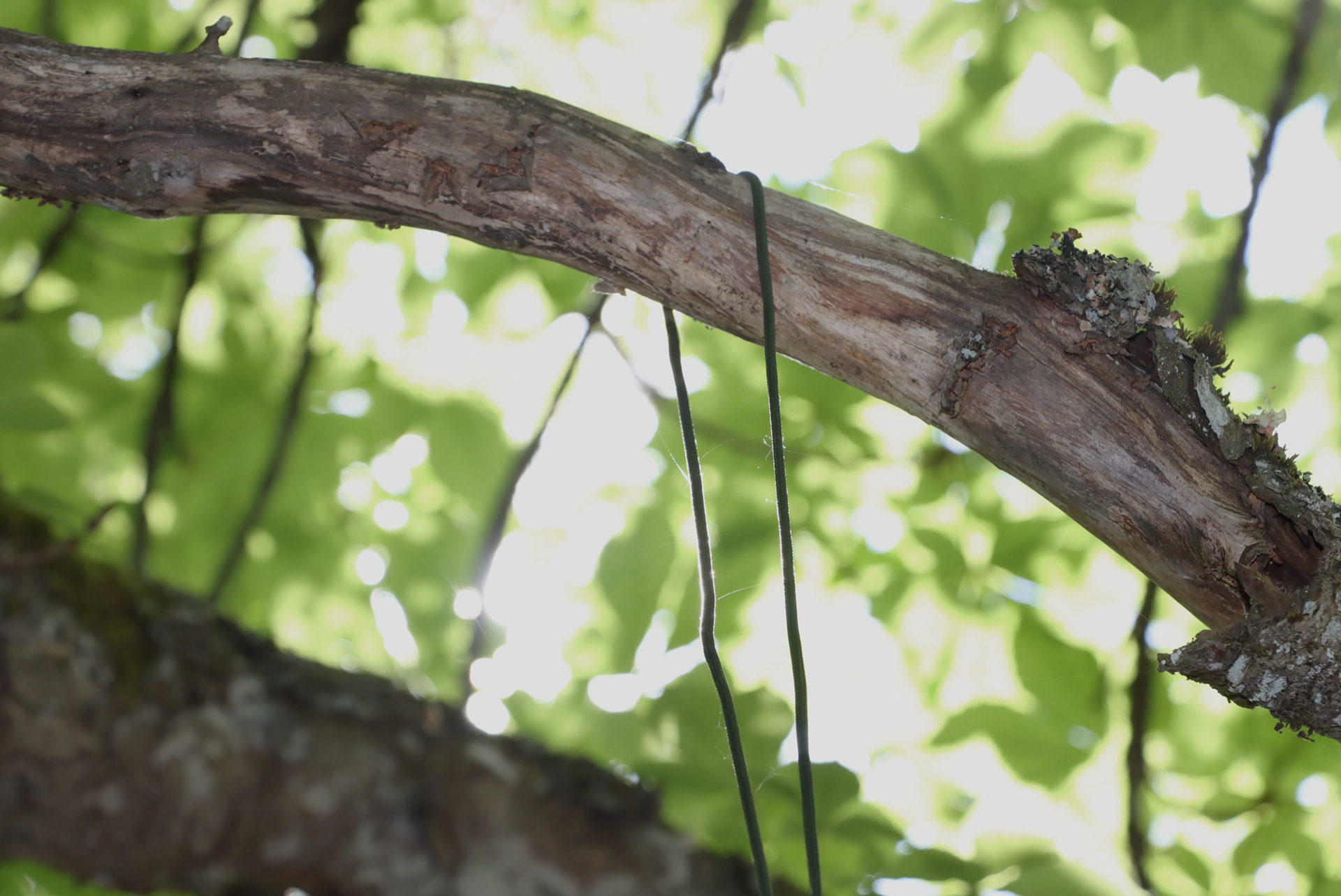
Spiders have spun webs on the artwork
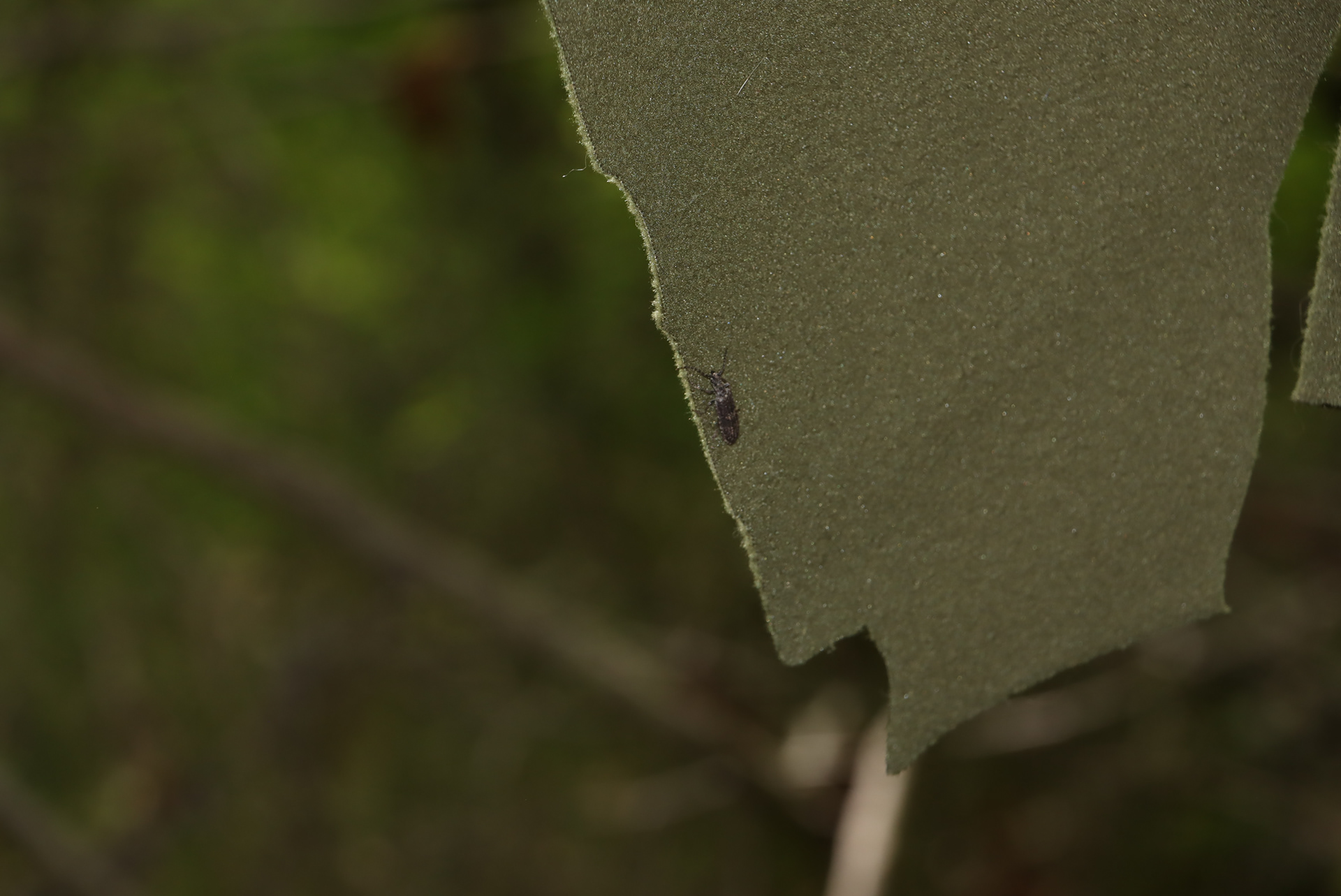
Insects decided to settle on the artwork.
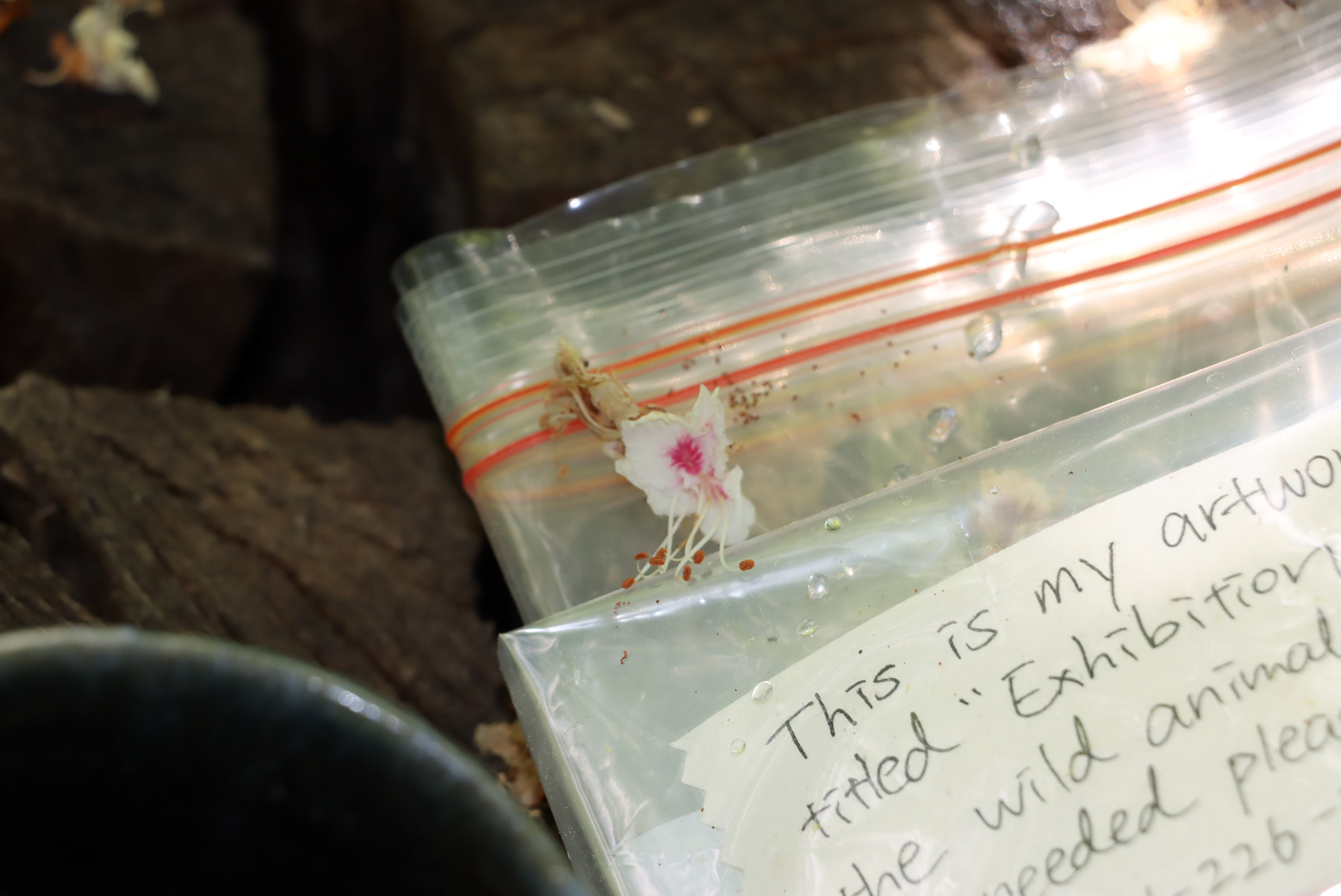
Chestnut flowers falling all over the artwork
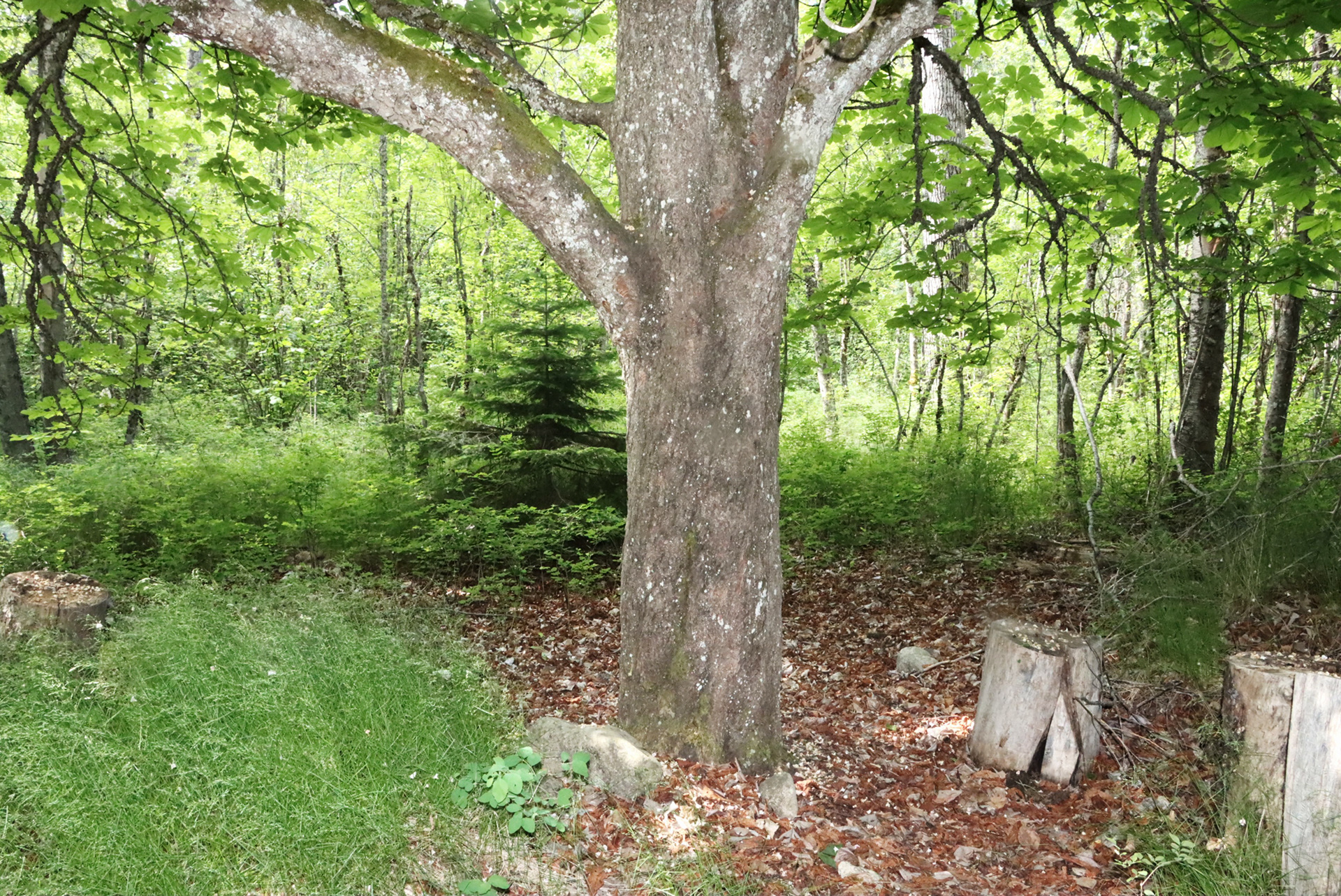
The chestnut tree after the deinstallation of the work
Artist's Statement
This interactive installation is framed as an exhibition whose primary viewers are the forest's wildlife. A separate set of documentary photographs, with humans as their audience (including you), invites us to imagine how animals might interpret human actions, i.e., the exhibition itself.
This challenge to the assumed boundaries, conventions, and sites of “exhibitions” or “art events,” operating counter to the gallery, empties out the power structures that grant meaning and legitimacy to such events. In doing so, this work not only offers a non-anthropocentric perspective but also functions as an experiment, prompting us to ask: after four days in the forest, would any traces reveal the presence of its viewers, the wildlife? Would those traces compel us to redefine “exhibition” as an event capable of evoking wonder and dialogue across species? Or would this work render the very idea of an exhibition bizarre and absurd, a human social invention that seems conceptually and terminologically hollow, its physical form whatever the artist (in this case, myself) wishes it to be?